© 2026 Blaze Media LLC. All rights reserved.
Wes Huff: Why the historical evidence demands that we take Jesus’ resurrection seriously
April 06, 2026
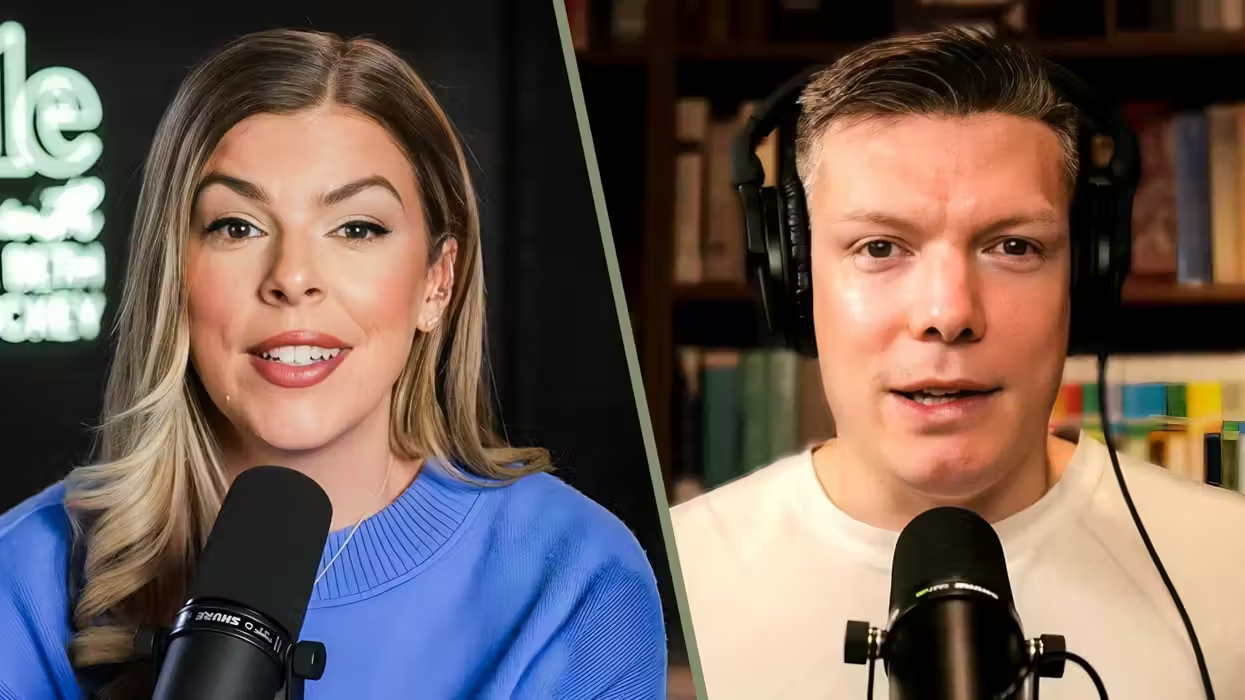
The Christian apologist joined Allie Beth Stuckey on an episode of 'Relatable' to unpack the strong historical evidence that Jesus truly rose from the dead.
Yesterday, Christians across the globe celebrated the resurrection of Jesus Christ on Easter Sunday.
Nonbelievers and skeptics reject this central claim, believing the bodily resurrection to be impossible or made up.
But the evidence for Christ’s supernatural arising from the dead goes well beyond the millions of people who celebrate it as the cornerstone of their faith. Historical evidence paints a compelling picture.
On this episode of “Relatable,” Allie Beth Stuckey speaks with Christian apologist Wes Huff about the strongest reasons to believe Jesus really rose from the dead.
Huff begins with the reliability of the Gospel accounts.
“It seems that the gospel authors get the details right — the small details, things like geography and name correlation and even plant life in some instances,” he notes, “and so if they get the small details right, I don't think it's that big of a leap to say that they get the big details right.”
He argues that the Gospels rest on early eyewitness testimony. The disciples were either "deceived," “deceivers,” or “telling the truth.” Given the evidence, Huff believes they were telling the truth because what they experienced radically transformed them.
“When you start to stack up the evidence of what's going on, I don't think they were deceivers. I don't think they were deceived. And I do think that everything points to their life radically changing in a powerful way because they encountered their rabbi getting murdered and then rising from the dead,” he tells Allie.
The disciples were so profoundly transformed by what they had experienced, in fact, that they returned boldly to Jerusalem — the very city where Jesus was crucified — to proclaim the gospel, fully aware of the deadly risks they faced. Even after the martyrdom of Stephen served as a “warning shot,” they went back to “ground zero” and kept preaching.
“Jesus truly died. That's a historical fact. … And then he appears to his disciples alive again. That's a historical question: Dead, buried ... seen alive. What do we do with that? How do we answer that historically? And I think there needs to be given an account for the disciples’ actions afterwards. They saw something, and it completely, radically changed their world,” says Huff.
He then addresses the “swoon theory” skeptics, who argue that Jesus was placed in the tomb badly wounded but not actually dead.
“If there's one thing that the Romans were really good at. It was crucifixion — and making sure that people suffer and die,” Allie says.
“Every Roman guard, centurion, soldier who was responsible for Jesus' death would have been on the hook if he did not die, and their lives would have been forfeit," Huff agrees.
To hear more, watch the video above.
Want more from Allie Beth Stuckey?
To enjoy more of Allie’s upbeat and in-depth coverage of culture, news, and theology from a Christian, conservative perspective, subscribe to BlazeTV — the largest multi-platform network of voices who love America, defend the Constitution, and live the American dream.
Want to leave a tip?
We answer to you. Help keep our content free of advertisers and big tech censorship by leaving a tip today.
News, opinion, and entertainment for people who love the American way of life.
BlazeTV

BlazeTV Staff
News, opinion, and entertainment for people who love the American way of life.
@BlazeTV →more stories


Sign up for the Blaze newsletter
By signing up, you agree to our Privacy Policy and Terms of Use, and agree to receive content that may sometimes include advertisements. You may opt out at any time.
Related Content



© 2026 Blaze Media LLC. All rights reserved.
Get the stories that matter most delivered directly to your inbox.
By signing up, you agree to our Privacy Policy and Terms of Use, and agree to receive content that may sometimes include advertisements. You may opt out at any time.