Ben Brewer/Bloomberg/Getty Images
The hits just keep on coming in a recent court case that relied on expert testimony.
Lawsuits stemming from a 2020 industrial disaster have had plaintiffs, family members, and defendants pointing fingers at each other, with varying results. However, a discovery in one of the lawsuits turned everything on its head in a matter of just a couple of hours.
'I have no idea how it works.'
The story comes from the Watson Grinding explosion that happened roughly six years ago in Houston, Texas.
A massive explosion killed three people and injured dozens, ABC 13 reported, due to faulty equipment. Federal authorities determined the explosion was caused by a "degraded and poorly crimped rubber welding hose" that leaked the flammable gas propylene throughout the building overnight.
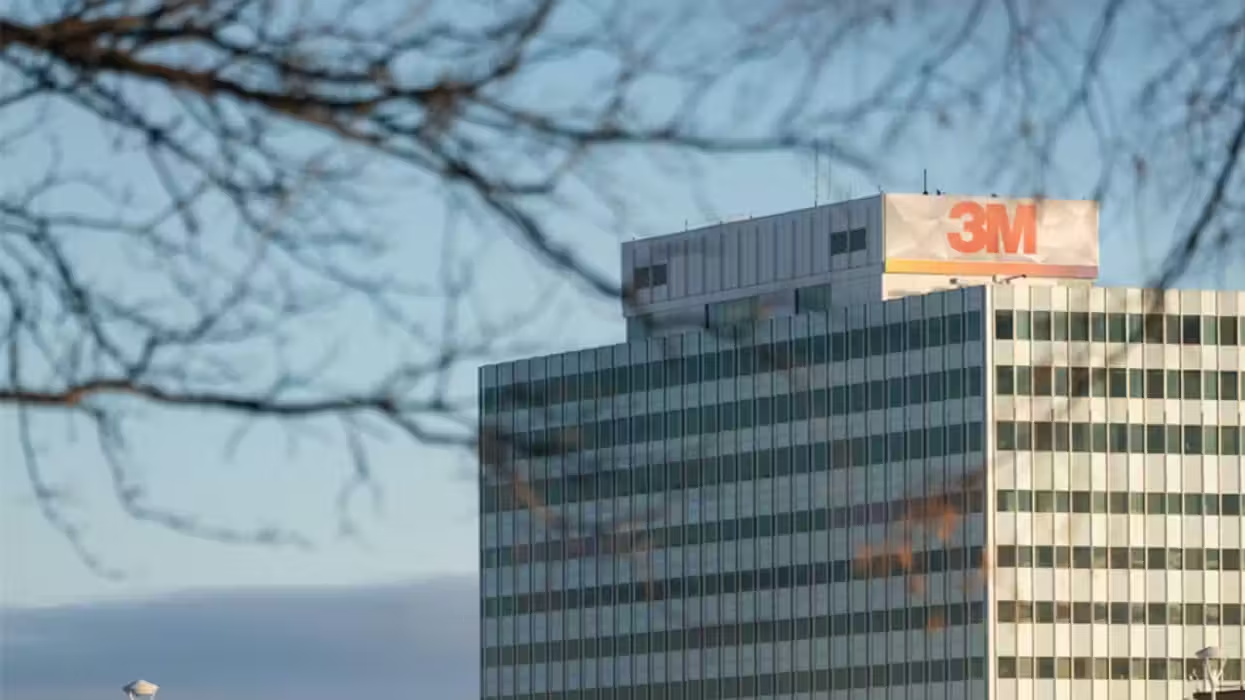
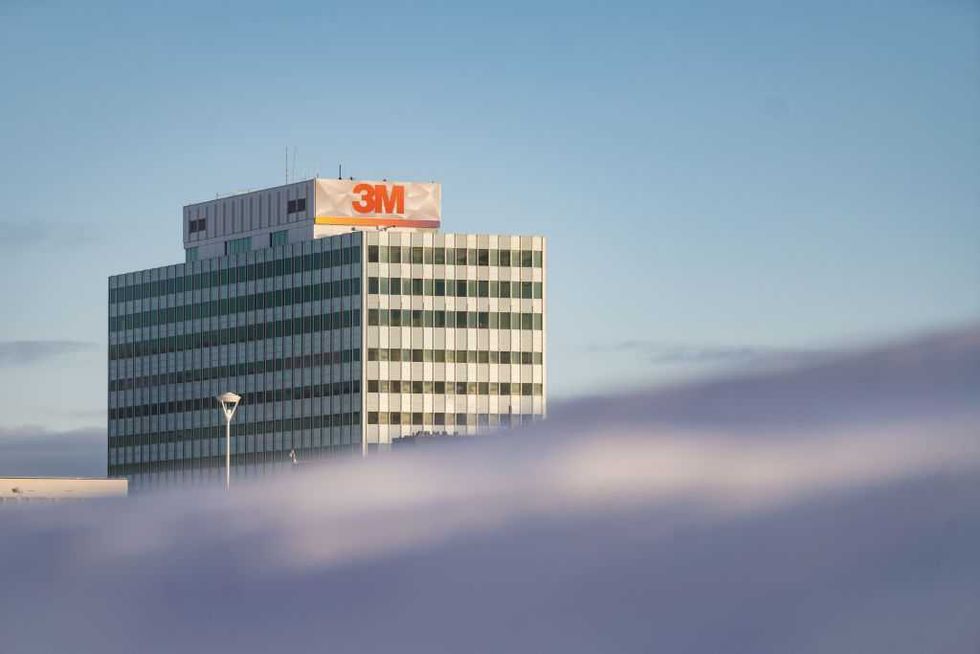
Massive industrial company 3M was hired to inspect and maintain the gas detection systems that allegedly failed at Watson Grinding, leading to a huge lawsuit from victims against the company.
According to 404 Media, 3M hired one Josh Autenrieth from KnightHawk Engineering to prepare an expert witness report about the explosion. During questioning, one of the plaintiffs' lawyers noticed a document from the defense that appeared to have been AI generated, and according to the court transcript, he simply searched its content to find that Autenrieth's ChatGPT prompts were all available online.
"Well, do you realize, sir, that your chat right now is still publicly available?" the lawyer says in the transcript.
"I have no idea how it works," Autenrieth said in response.
The deposition was paused for three hours to gather all the prompts. This revealed a treasure trove of ChatGPT content that is still publicly available online, where Autenrieth had the AI develop his report nearly entirely.
"I am being retained as a professional expert witness by 3M in defense of them in their lawsuits," the first prompt read. "I need to create an expert witness report to defend 3M's standard of care for their work in calibrating and commissioning (return to operations / RTO) the iTrans gas detectors. I need to show that 3M met the standard of care and why."
RELATED: Wi-Fi. Microwaves. Electromagnetism. It's all connected — and so is the damage.
Shockingly, after uploading hundreds of documents for the chatbot to review, the user asked the AI to "show how 3M is 0% at fault for the explosion at watson grinding."
Unsurprisingly, the report draft concluded that "3M met the applicable standard of care" and was "0% responsible for the January 24, 2020, explosion."
Attorney Will Moye told 404 Media that the expert "relied on AI not as an assistive device, but exclusively relied on ChatGPT to form his opinions and write his report."
"He acknowledged [at trial] the prompts he put in were biased toward 3M to help 3M win the case […] it's really egregious,” Moye added.
It was also revealed through court documents that Autenrieth billed his company for at least 174 hours in the case. He said that he is salaried but that his work has a $475 per hour rate. This totals at least $82,650 of work.
RELATED: Harvard researchers just found out the dark truth about how to simulate the entire world
 Ben Brewer/Bloomberg/Getty Images
Nathan Knight, vice president of KnightHawk Engineering, told Blaze News in response that Autenrieth utilized AI as only a tool and stands behind his work. Knight further described isolated questions and excerpts from the trial as "fake news" that does not provide the complete story.
His comment, in full, is below:
AI is a tool that is used extensively in today's work environment, and its use will continue to increase as technology advances. Mr. Autenrieth utilized this technology as a tool to assist in reviewing questions, arguments, and counterarguments related to the case. AI did not replace his engineering judgment. Mr. Autenrieth developed and presented his own professional opinions and stands behind those opinions.
What has been presented is a selective and negative snapshot that, without the complete context, can fairly be characterized as "Fake News." Looking at isolated questions or excerpts does not tell the complete story of the analysis, the expert report, or what was ultimately presented in court.
The opposing side challenged Mr. Autenrieth's qualifications and attempted to prevent him from offering his opinions. Those challenges were unsuccessful, and Mr. Autenrieth was permitted to testify and present his professional opinions to the jury.
Technology continues to advance, whether we like it or not, and AI is here. Engineers and other professionals will increasingly use modern tools to assist them in their work. What matters is that the professional evaluates the information, exercises independent judgment, and takes responsibility for the opinions ultimately presented. Mr. Autenrieth did exactly that.
KnightHawk stands behind the professionalism and integrity of its engineers. We strongly disagree with any characterization suggesting that the selective use of AI excerpts somehow replaces or invalidates Mr. Autenrieth's independent engineering judgment or professional opinions.
Last week, a Harris County jury awarded $61.5 million to 24 plaintiffs in the case, one of several verdicts that have come against 3M.
In June 2025, $38 million in damages was awarded to five victims of the explosion, while another $118 million was awarded to seven victims in November 2025.
3M did not respond to Blaze News' request for comment.
Like Blaze News? Bypass the censors, sign up for our newsletters, and get stories like this direct to your inbox. Sign up here!