© 2026 Blaze Media LLC. All rights reserved.
Although trenches were used in the American Revolutionary War and the U.S. Civil War, World War I is commonly known as the first large-scale trench war. Although trenches offered some protection to troops on both sides from automatic weapons and artillery, World War I was still a bloodbath.
The recent October 7 Israeli-Hamas conflict, by contrast, will probably be remembered as the first tunnel war. It was an asymmetric war because, compared to Israel, Hamas, poorly equipped and organized, adopted a strategy of mostly hiding underground and engaging in periodic guerrilla assaults.
The Hamas tunnel strategy slowed the Israeli counteroffensive, but it ultimately failed. Does this mean an end to tunneling as a major strategic concept?
Unlikely.
While drones have us looking up, we must not forget to look down as well.
For decades, a number of U.S. adversaries have tied their military and strategic future to digging deep. China, North Korea, Iran, Russia, Hamas, and Hezbollah, in particular, have excavated thousands of miles of tunnels, equipping them with military manufacturing plants, airfields, and underground living, training, and strategic missile storage facilities. They have created cities under the earth that are difficult to detect and complicated to destroy.
Although the tunnel lengths in China, North Korea, Russia, and Iran are classified, many experts believe they are vast. A somewhat dated 2011 study by Georgetown University estimated that China had over 3,000 miles of ballistic missile tunnels. It also has over 35,000 miles of multiple-use traffic tunnels.
Specialists on North Korea say it has at least 5,000 tunnels. The Hamas tunnels are estimated by the Modern War Institute to be some 350-450 miles in length with 5,700 entry and exit shafts. North Korea and Iran are reported to have provided tunnel expertise to Hamas.
The Israelis, having infiltrated, explored, and destroyed hundreds of miles of Hamas tunnels, probably have a good idea of what Iranian and North Korean innovations Hamas has incorporated. One assumes that Israel has shared its tunneling insights with U.S. Army engineers.
Some well-publicized tunneling activity dates back to WWII, including the construction of Churchill’s underground bunker in London. Many countries have been prolific diggers. Nazi Germany put many of its aircraft and munitions manufacturing facilities underground. Russia also digs tunnels. It has, for example, a dedicated, deep emergency-evacuation subway system in Moscow reserved for the strategic use of its elite political and military leaders.
The United States has not relied as much on military/strategic tunneling, but, in the future, the U.S. and its European and Asian allies may have to look down to protect their weapons and facilities from the all-seeing drones and satellites.
To plan for the future, the U.S. and allied governments must fund ongoing research to develop much more efficient and economical tunneling machines and construction techniques. We may also need to create specialized military and civilian units with the expertise to dig in the most cost-effective manner.
The 2026 cancellation of the proposed New York/New Jersey Gateway train tunnel under the Hudson River, partly due to high costs, is a striking example of the need to improve the economics of tunneling.
RELATED: The empire cannot drone-strike its way out of decline
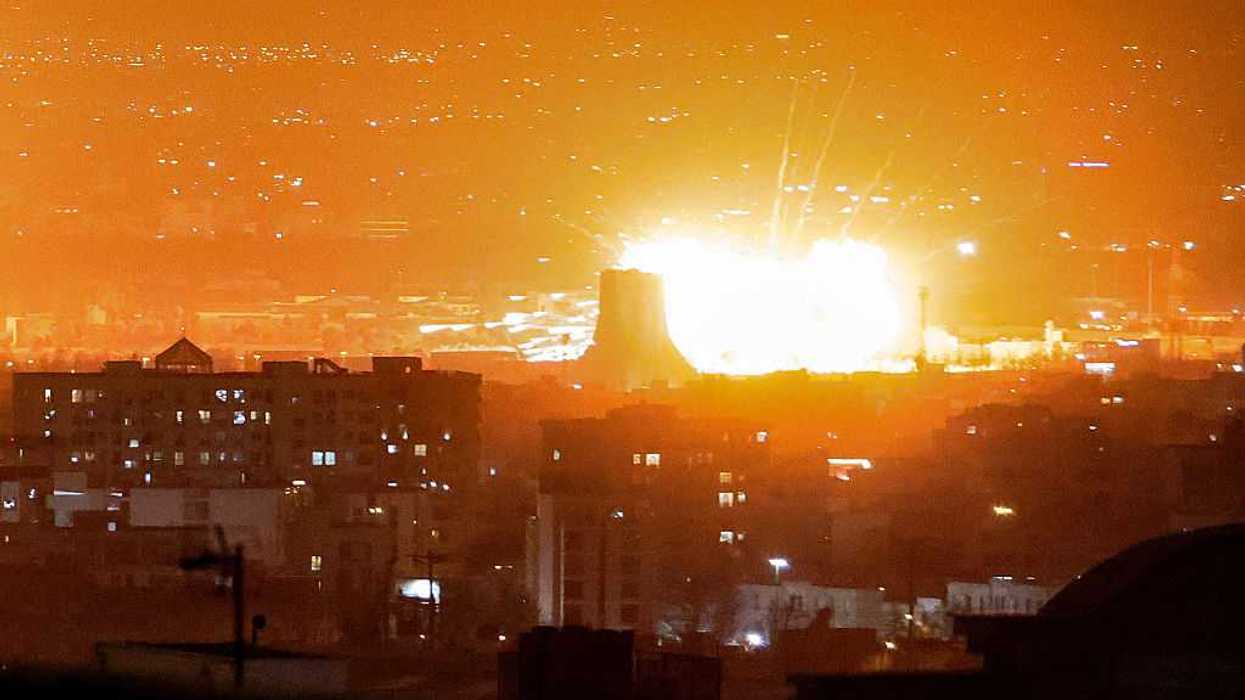
Although the U.S. has a variety of classified detection methods, including satellites, American and allied intelligence almost certainly need more sophisticated remote detection hardware and software to locate and analyze our adversaries' underground networks. AI advances may help improve detection. Sophisticated foreign agents, on or underground, will also be required.
The United States, however, is not without innovative assets.
As Elon Musk dominates the space launch business, his relatively obscure Boring Company, which provides innovative tunneling solutions, may play a significant role in future underground initiatives. The Germans and the Swiss have also manufactured highly efficient tunneling machines,
One long-term benefit of improved U.S. tunneling experience may be realized when the U.S. begins colonizing the Moon and Mars. To survive on both celestial bodies, astronauts and long-term settlers will almost certainly need to dig residential tunnels to avoid deadly solar radiation and survive underground.
For the present, while drones have us looking up, we must not forget to look down as well.
Editor’s note: This article was originally published by RealClearDefense and made available via RealClearWire.
James S. Fay is a semi-retired lawyer and university administrator. He served as a U.S. Army intelligence officer.
Want to leave a tip?
We answer to you. Help keep our content free of advertisers and big tech censorship by leaving a tip today.
Want to join the conversation?
Already a subscriber?