cherezoff via iStock/Getty Images
One of the most consequential developments of 2025 has received far less scrutiny than it deserves: the steady surrender of executive authority to an unelected judiciary.
President Trump was elected to faithfully execute the laws of the United States, yet his administration increasingly behaves as if federal judges hold final authority over every major policy decision — including those squarely within the president’s constitutional and statutory powers.
Judicial supremacy thrives on abdication. It advances because presidents comply, lawmakers defer, and voters are told this arrangement is normal.
By backing down whenever district courts issue sweeping injunctions, the administration is reinforcing a dangerous precedent: that no executive action is legitimate until the judiciary permits it. That assumption has no basis in the Constitution, but it is rapidly becoming the governing norm.
The problem became unmistakable when federal judges began granting standing to abstract plaintiffs challenging Trump’s deployment of the National Guard to protect ICE agents under attack. Many assumed such cases would collapse on appeal. Instead, the Supreme Court last week declined to lift an injunction blocking the Guard’s deployment in Illinois, signaling that the judiciary now claims authority to second-guess core commander-in-chief decisions.
Over the dissent of Justices Samuel Alito, Clarence Thomas, and Neil Gorsuch, the court allowed the Seventh Circuit’s decision to stand. That ruling held that violent attacks on ICE agents in Chicago did not amount to a “danger of rebellion” sufficient to justify Guard deployment and did not “significantly impede” the execution of federal immigration law.
That conclusion alone should alarm anyone who still believes in separation of powers.
No individual plaintiff alleged personal injury by a Guardsman. No constitutional rights were violated. The plaintiff was the state of Illinois itself, objecting to a political determination made by the president under statutory authority granted by Congress. Courts are not empowered to adjudicate such abstract disputes over executive judgment.
Even if judges disagree with the president’s assessment of the threat environment, their opinion carries no greater constitutional weight than his. The commander in chief is charged with executing the laws and protecting federal personnel. Courts are not.
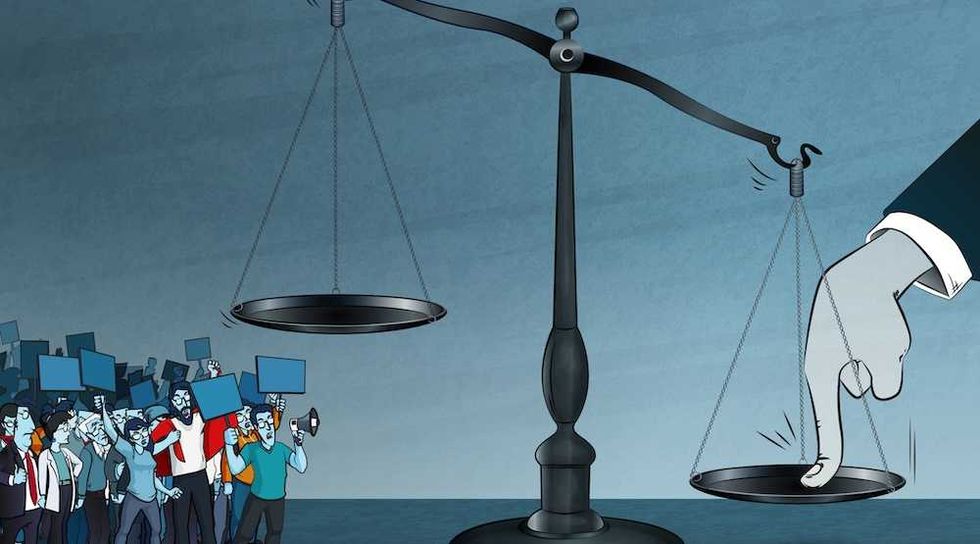
If judges can decide who has standing, define the scope of their own authority, and then determine the limits of executive power, constitutional separation of powers collapses entirely. What remains is not judicial review but judicial supremacy.
And that is precisely what we are witnessing.
Courts now routinely insert themselves into immigration enforcement, national security decisions, tariff policy, federal grants, personnel disputes, and even the content of government websites. The unelected, life-tenured branch increasingly functions as a super-legislature and shadow executive, vetoing or mandating policy at will.
RELATED: Judges break the law to stop Trump from enforcing it
 Cemile Bingol via iStock/Getty Images
What, then, remains for the people acting through elections?
If judges control immigration, spending, enforcement priorities, and foreign policy, why bother holding congressional or presidential elections at all? The Constitution’s framers never intended courts to serve as the ultimate policymakers. They were designed to be the weakest branch, confined to resolving concrete cases involving actual injuries.
Trump’s defenders often argue that patience and compliance will eventually produce favorable rulings. That belief is not only naïve — it is destructive.
For every narrow win Trump secures on appeal, the so-called institutionalist bloc on the court — Chief Justice John Roberts, Brett Kavanaugh, and Amy Coney Barrett — uses it to justify adverse outcomes elsewhere. Worse, because lower courts enjoin nearly every significant action, the administration rarely reaches the Supreme Court on clean constitutional grounds. The damage is done long before review occurs.
Consider the clearest example of all: the power of the purse.
Congress passed a budget reconciliation bill explicitly defunding Planned Parenthood. The bill cleared both chambers and was signed into law. Under the Constitution, appropriations decisions belong exclusively to Congress.
Yet multiple federal judges have enjoined that provision, effectively ordering the executive branch to continue sending taxpayer dollars to abortion providers in defiance of enacted law. Courts have not merely interpreted the statute; they have overridden it.
That raises an unavoidable question: Does the president have a duty to enforce the laws of Congress — or to obey judicial demands that contradict them?
Continuing to fund Planned Parenthood after Congress prohibited it is not neutrality. It is executive acquiescence to judicial nullification of legislative power.
The same pattern appears elsewhere.
Security clearances fall squarely within executive authority, yet the first Muslim federal judge recently attempted to block the president from denying clearance to a politically connected lawyer. Immigration, long recognized as a sovereign prerogative, has been transformed by courts into a maze of invented rights for noncitizens — including a supposed First Amendment right to remain in the country while promoting Hamas.
States fare no better. When West Virginia sought to ban artificial dyes from its food supply, an Obama-appointed federal judge intervened. When states enact laws complementing federal immigration enforcement, courts strike them down. But sanctuary laws that obstruct federal authority often receive judicial protection.
Heads, illegal aliens win. Tails, the people lose.
RELATED: The imperial judiciary strikes back
 Moor Studio via iStock/Getty Images
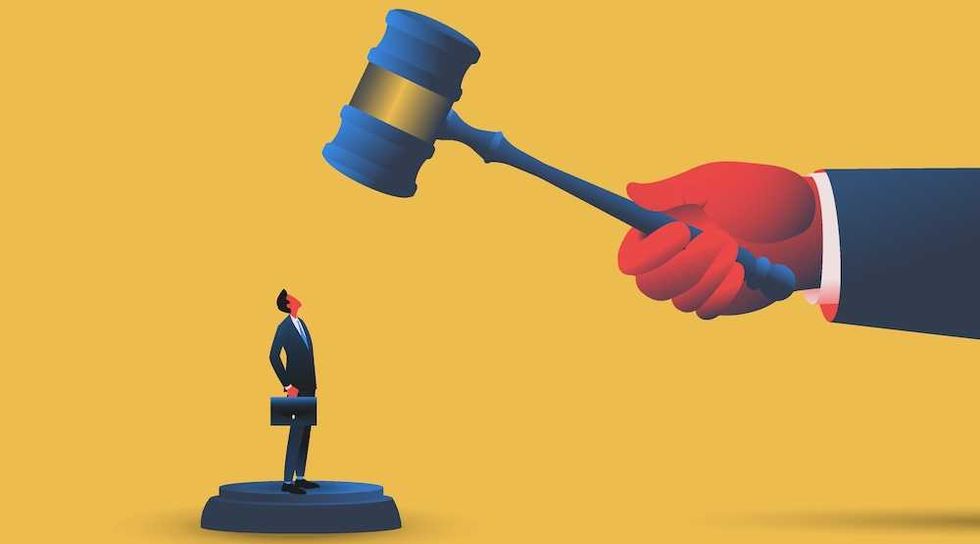
What we are witnessing is adverse possession — squatter’s rights — of constitutional power. As Congress passes fewer laws and the executive hesitates to assert its authority, courts eagerly fill the vacuum. In 2025, Congress enacted fewer laws than in any year since at least 1989. Meanwhile, judges effectively “passed” nationwide policies affecting millions of Americans.
This did not happen overnight. Judicial supremacy thrives on abdication. It advances because presidents comply, lawmakers defer, and voters are told this arrangement is normal.
It is not.
Trump cannot comply his way out of this crisis. No president can. A system in which courts claim final authority over every function of government is incompatible with republican self-rule.
The Constitution does not enforce itself. Separation of powers exists only if each branch is willing to defend its role.
Right now, the presidency is failing that test.