Photo by Smith Collection/Gado/Getty Images
China’s aggression in the Indo-Pacific no longer comes in bursts. It has become dangerous and systematic for America.
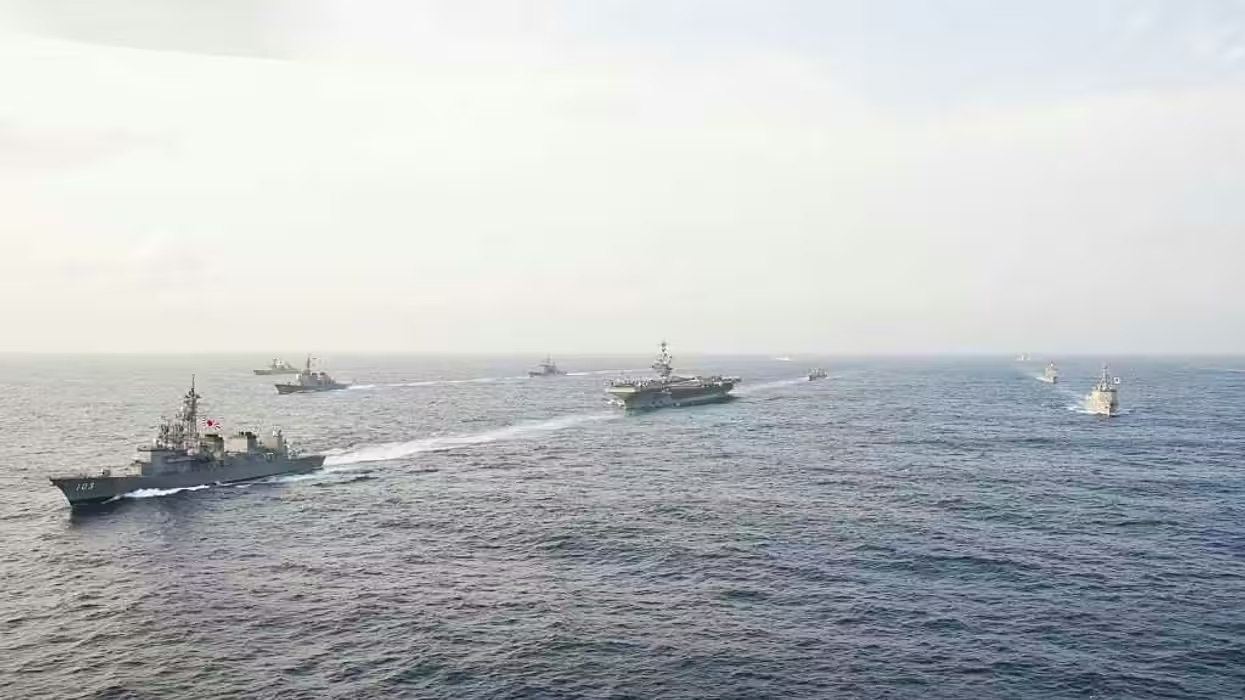
A recent long-range patrol by Chinese forces, conducted alongside Russia, prompted Japan to scramble fighter jets. It marked the latest in a string of incidents after months of heightened Chinese military activity around the Senkaku Islands.
If Washington and Tokyo keep strengthening this partnership, they can make the Indo-Pacific more difficult for Beijing to bully and far more stable for everyone who depends on it.
These shows of force don’t happen by accident. China uses them to normalize military pressure, probe red lines, and test the unity of U.S.-led alliances.
This latest episode also made one thing clear, at least: The Trump administration is watching closely.
In a visible show of solidarity with Tokyo, U.S. strategic bombers joined Japanese fighter aircraft for high-profile drills. Days earlier, Chinese military aircraft conducted takeoffs and landings inside Japan’s air defense identification zone and shadowed Japanese aircraft with their radar off near Okinawa. Secretary of State Marco Rubio’s State Department expressed concern and reaffirmed its commitment to a “strong and more united” U.S.-Japan alliance.
Washington increasingly recognizes what Tokyo has understood for years: China’s behavior doesn’t just destabilize the region. It challenges the security order that has kept the Indo-Pacific from tipping into open conflict.
That reality puts a premium on reliable partnerships. No partnership matters more than the U.S.-Japan alliance.
Nowhere does that matter more than Taiwan. China’s large-scale military exercises, dubbed Justice Mission 2025, have pushed tensions in the Taiwan Strait to the highest levels in decades. Beijing aims to intimidate Taipei, warn off “external interference,” and alter the status quo through pressure rather than persuasion.
The Trump administration’s National Security Strategy arrived in that environment. While headlines still focus on Europe and the Middle East, the document makes the administration’s priorities clear: The Indo-Pacific remains central to U.S. strategy.
The NSS describes the Indo-Pacific as a critical economic hub that accounts for nearly half of global GDP. It commits the United States to a “free and open” Indo-Pacific by securing sea lanes and upholding international law.
RELATED: Inside China’s plan to beat the US at big tech forever
 MF3d via iStock/Getty Images
That framework didn’t start in Washington. Japan first advanced the concept of a free and open Indo-Pacific, and the region later adopted it through partnerships such as the Quad — the informal grouping of the United States, Japan, India, and Australia.
Rather than announcing a new direction, the NSS reinforces a familiar one: Alliances form the core of deterring China. Unlike the Trump playbook in Ukraine, the administration treats alliances as the bedrock of Indo-Pacific security against Beijing’s expanding military reach.
Japan sits at the heart of that network.
China pressures Japan across its waters and airspace, making Tokyo a frontline state. Japan also serves as the United States’ indispensable partner in the region, with basing, interoperability, and shared strategy that no other ally can match at the same scale. Under new conservative leadership, Japan has begun acting with urgency.
Japan’s defense minister, Shinjiro Koizumi, has emphasized that urgency, warning that the country now faces its most severe security environment since World War II. Japan has deepened coordination with the U.S. and other like-minded partners while strengthening its military capabilities by accelerating security reforms and easing restrictions on defense equipment transfers.
Japan has also moved up its plan to raise defense spending to 2% of GDP — from 2027 to now. That headline matters less than where the money goes.
Tokyo has prioritized capabilities suited for a long-term, high-risk environment: unmanned aerial vehicles, expanded surveillance platforms, and submarines equipped with vertical-launch missile systems.
RELATED: Hypersonic missiles are the new arms race. Can America catch up?
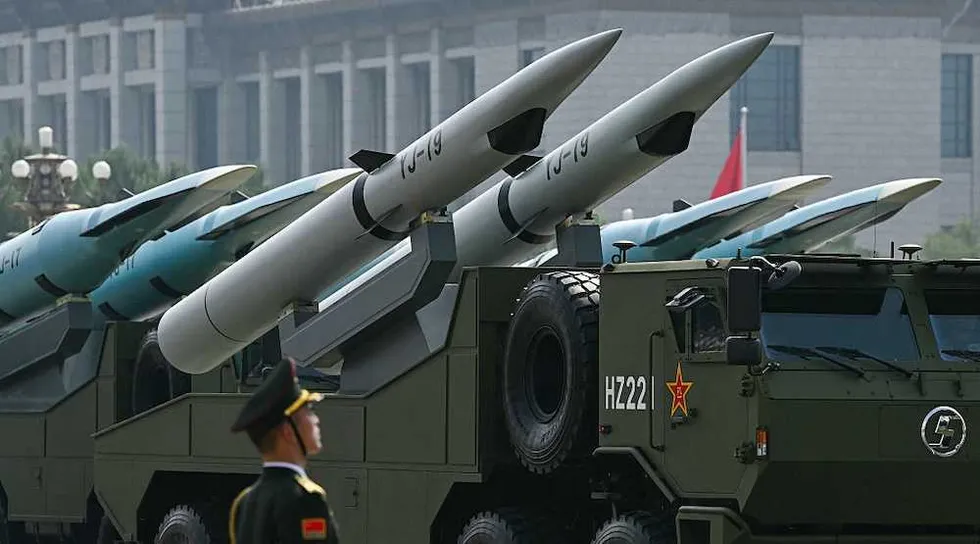 Photo by GREG BAKER/AFP via Getty Images
Japan’s objective looks straightforward. It aims to become a more capable military partner that complements U.S. forces rather than relying on them by default. That shift aligns with President Trump’s demand that allies reduce dependence on American power by strengthening their own defense industries and readiness.
The U.S.-Japan alliance has also moved beyond drills and declarations toward defense-industrial cooperation. Expanded maintenance and repair coordination, along with eased export controls, have begun laying the groundwork for a durable security partnership.
This collaboration marks a shift from rhetoric to endurance. Aligning strategy with industrial capacity won’t eliminate risk. It will raise the cost of Chinese coercion and reduce the chances that Beijing miscalculates.
Koizumi has stressed that 80 years after World War II, the U.S.-Japan alliance still embodies reconciliation and remains the best instrument to deter China’s rising aggression.
If Washington and Tokyo keep strengthening this partnership — in capability, production, and resolve — they can make the Indo-Pacific more difficult for Beijing to bully and far more stable for everyone who depends on it.