Douglas Rissing / Getty Images
The latest statistics show the U.S. economy is improving steadily, particularly in the shift from government employment to private-sector jobs and toward new hires going to native-born Americans instead of immigrants. Opinion polls, however, show Americans are displeased with the current state of the economy, and young people are turning toward socialism.
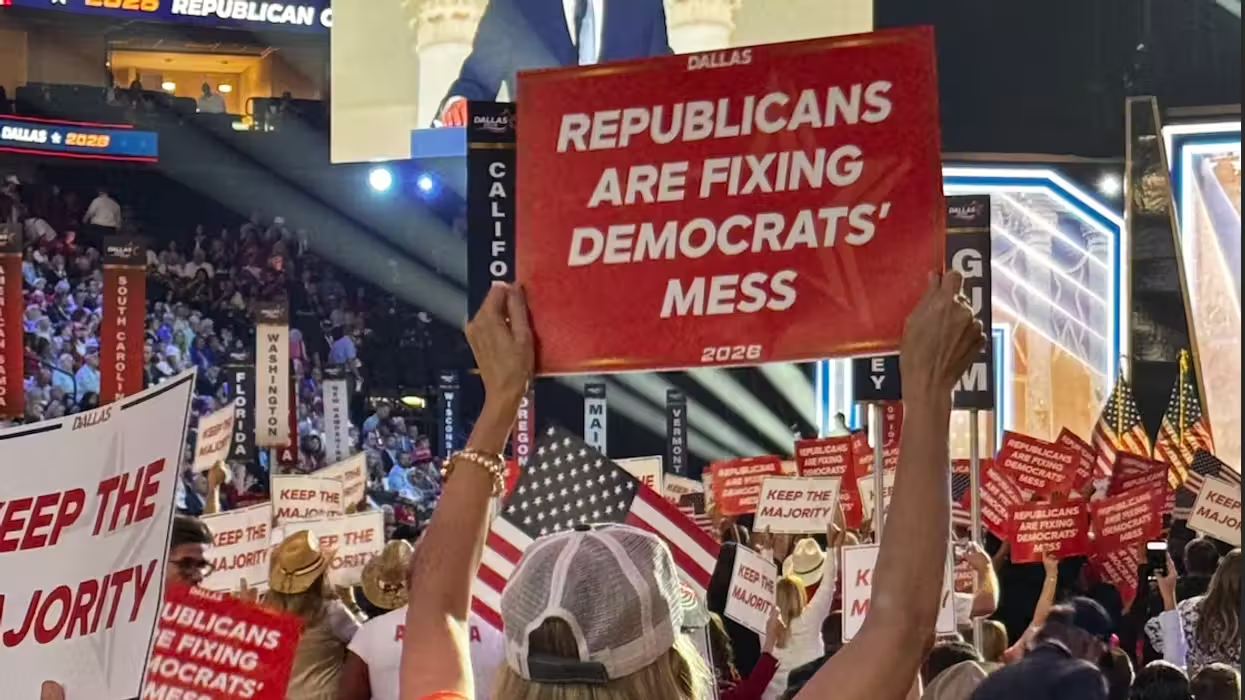
The smart course for the Republicans would be to pass major reforms to shrink the welfare state and cut federal spending and regulation instead of mildly reducing scheduled increases.
The concerns about the economy reflect three major factors: one, stubborn economic distortions caused by longtime government policies; two, the lingering effects of acute Biden-presidency price inflation; and, three, dishonest media reporting.
The average inflation rate during the Biden administration was 5%, nearly double the current rate. Real, inflation-adjusted average weekly earnings in private-sector jobs decreased by 4% while Biden was in office. Home prices rose by 37.4%, sparking a housing affordability crisis. Publicly held federal debt increased by one-third, igniting the price inflation.
That has changed dramatically in just one year. “Since President Trump took office, headline inflation has been running at 2.4% (much lower than 3% inherited from Biden) and core inflation has been running at 2.4% (much lower than 3.3% inherited from Biden),” the White House stated correctly last month.
Slowing inflation does not lower prices however. It only reduces the increases. The Biden-era price rises were worst in basic necessities, and the only way to moderate that is for wages to rise. Fortunately, that is starting to happen.
Employment numbers confirm a positive movement from part-time work to full-time work and away from the government into the productive private sector. “Initial jobless claims in the U.S. fell by 9,000 from the previous week to 198,000 on the week ending January 10,” the second-lowest number of job losses in two years, and initial unemployment claims by federal employees rose by more than one-third, Trading Economics reports.
The movement from part-time work to full-time employment in better jobs that pay more and include benefits is of course a highly positive trend. “In December, the number of part-time jobs declined by 740,000, while full-time employment shot up by 890,000,” Unleash Prosperity notes.
Labor productivity in the nonfarm business sector increased by 4.9% in the third quarter of last year, with output rising by 5.4% and hours worked increasing by 0.5%. Manufacturing-sector labor productivity and output are rising markedly after declining during the Biden administration. Overall U.S. industrial production has increased, rising 0.4% month-over-month in both November and December, and manufacturing output rose by 0.2% in December.
Continued improvements in employment and private-sector productivity are the real solution to the affordability crisis. In light of those trends, the Federal Reserve Bank of Atlanta raised its estimate of fourth-quarter annualized real Gross Domestic Product growth to an impressive 5.3%. In addition, mortgage interest rates are down to their lowest level since 2022.
Naturally, the regime media are desperately trying to spin all this good news into a mythical calamity, to cast doubt on the conclusively proven value of market-empowering reforms. “CNN, true to form, immediately tried to make a relatively good report out to be a bad one in a January 13 X post: ‘U.S. inflation remained at 2.7% in December, underscoring persistent cost of living challenges,'” Newsbusters reports.
When inflation was an awful 6% in February 2023, CNN characterized it as good news, saying, “U.S. inflation is still high, but it’s falling. Last month’s Consumer Price Index measured 6%, down from January’s 6.4%,” as Daily Wire reporter Cabot Phillips noted in an X post. Coverage by all the regime media has reflected this bias.
While just under a year’s worth of economic reforms and (disappointingly mild) efforts to hold the line on inflation are showing real progress, the previous four years did major damage to the private, productive sectors of the U.S. economy. It will take some time for the public to feel the full benefit of the policy changes they voted for in 2024.
RELATED: The debt bomb is ticking, and DC spent the blast shield
 Artoleshko / Getty Images
Although people should hardly be surprised that Trump and the Congress have not yet fully reversed the economic destruction of the prior four years, poll numbers indicate an impatience that reflects the media’s spin: “Most, 64%, say [Trump] hasn’t gone far enough in trying to reduce the price of everyday goods,” CNN reports.
Trump and the congressional Republicans understandably feel a strong urge to be seen as doing everything possible to fix the economy, though the only thing that will really unleash American prosperity is a full retrenchment of the enormous federal welfare state that Obama and Biden did so much to expand.
Democrats understandably view the economic stagnation that they themselves caused as a terrific political opportunity that could restore them to majority rule in Congress, with a chance to impeach Trump multiple times and block desperately needed reforms to shrink the government.
The smart course for Republicans would be to pass major reforms to shrink the welfare state and cut federal spending and regulation instead of mildly reducing scheduled increases. That would accelerate the economic improvements we are already seeing. It would also make the recent reforms permanent, given that a Democratic congressional majority would not be able to reverse them, given Trump’s veto power.
Those moves would benefit the American people greatly.
The wise course for the Democrats would be to sit back, go quiet, and let the public reject an ineffectual GOP in this November’s elections.
Many decades of American politics have taught us what is most likely to happen: Neither party will do the smart thing, much less the right thing.