Maine lobstermen who disappear beyond the shore and descend, trap by trap, into another world. | Shane Cashman
It was August in Maine, the night before I was supposed to go lobstering with a few guys who live like pirates jumping back and forth from Sebago Lake to the Atlantic, doing drywall, fixing boats, and building docks.
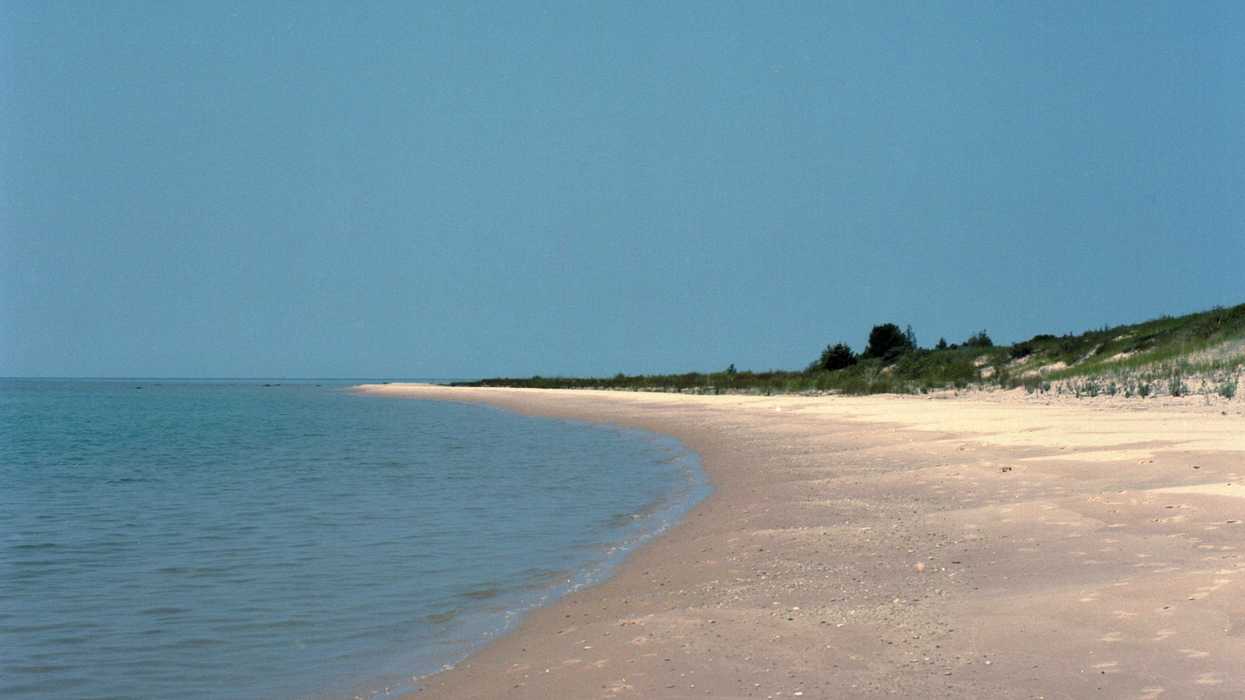
They brought me to the part of the big lake where two British World War II fighter planes, Vought F4U Corsairs, crashed on May 16, 1944. They pointed at the water where the pilots and their planes sank three hundred feet. Nothing was ever recovered.
Roy, the older of my two companions, made most of his living as a sternman on a lobster boat. The younger one, Zach, liked making lobster money but was prone to seasickness.
“You make big money real quick doing commercial fishing,” Roy said as we anchored. “But someone is always awake; it’s 25–30 hours of fishing straight, way out there,” he said, waving to the ocean hiding beyond the horizon.
"On those big boats, one guy stays behind the wheel for an hour and a half, then you go wake up the next guy. There’s this button you have to press every 30 minutes. Keeps you awake. At first, if you don’t hit it, it’ll flash and beep. But it gets louder and louder until it’s like nuclear alarms going off. I had one friend sleep through it, and I go find him asleep in the captain’s chair with a lit cigarette in his mouth. Then the cherry fell on his sweatpants, so his sweatpants caught fire. That’s how the offshore jobs go,” Roy explained.
I got maybe two or three hours of sleep. I woke up to Roy leaning on the horn of his truck in the quiet lake community. I pulled on my boots and overalls, grabbed some water, kissed my sleeping wife, son, and daughter goodbye, then climbed into the backseat littered with empty Budweiser bottles. Zach sat shotgun. I couldn’t tell if he’d drunk them that morning, the night before, or if he’d slept at all. There was no one else on the road at that hour, and he swerved in and out of his lane the whole way to the dock in Portland.
The lobsterman knows there are a thousand shipwrecks below him.
Captain Reid was waiting for us in the shadows of the pier. He squinted at me in the dark with a face that said: You sure you want to join us, because I’m not paying you?
After the men used a pulley to lower three large drums of dead fish onto the stern of the lobster boat, the captain steered through the dark toward the lighthouse and Roy, having assumed the role of the sternman, said, “There’s no turning back now.”
 Bugs from the Abyss.Shane Cashman
I had just come from my hometown at the base of Storm King Mountain in New York’s Hudson Valley, where a flood had ripped through the three old river towns along the banks.
Roads and bridges were swept away. Cars fell into sinkholes. Boulders crashed down the mountain. A friend of mine, nine months pregnant, abandoned her car in the rising water and was pulled to safety, only to find her house lost to a landslide. The dam on the lake where I learned to fish was destroyed. The little bridge next to my parents’ house was gone, its steel beams piled where the water left them. There were condemned signs on multiple homes. The mayor said the damage to town property alone was $34 million.
Last month, I was baptized in the Shenandoah River in West Virginia—a symbol of my own death and rebirth that had me thinking about the time I drowned in a pool when I was five. The water closed over me, and someone dragged me back up and resuscitated me.
Needless to say, water—that symbol of both life and death, both peace and chaos, both form and formlessness—was on my mind.
And I couldn’t shake it.
So when these pirates in Maine told me they were lobstermen, I asked if I could join them in the morning.
The boat was 45 feet long, and it growled like a truck. We pushed off the old wooden pier before sunrise. Portland disappeared behind us.
Roy’s been lobstering for 11 years. The captain’s been at it for 48.
According to Maine law, it is illegal to haul traps “During the period 1/2 hour after sunset until 1/2 hour before sunrise from June 1st to August 31st.” We moved 20 knots through the water on our way to the first set of traps. Commercial lobstermen in Maine are allowed to have up to 800 traps out at once. Captain Reid and Roy have 20 traps connected to each of their buoys.
“Why would God make anything that can kill us?”
The boat had an open stern. The Atlantic was right at our feet. If you slip and fall in, the water will eat you. I held on to the edge of one of the drums of dead fish for balance.
We put on our bright orange waders, waterproof boots, and thick blue gloves. The gloves offer some protection from the lobster claws.
These guys know the ocean the way a farmer knows his land. As we made our way towards the first set of traps, I asked Roy how he fared out here without the GPS technology in the cabin.
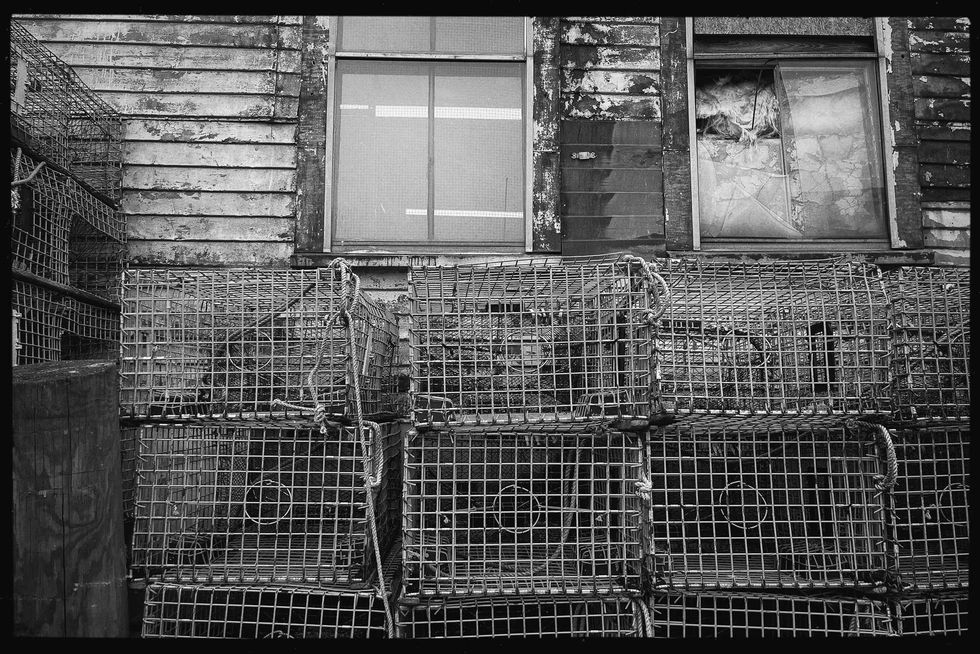 Heavy cages stacked three deep on the pier, waiting for their next foray into the depths.Shane Cashman
“I can navigate these waters with my eyes closed,” he told me. Zach took a seat on a bench in the helm, and I figured he was trying to fix his sea legs before the sick got to him. The smell of the dead fish probably didn’t help.
In short order, it was time to get to work hauling the lobster traps.
This is the process for hauling the traps: The captain steers the boat to his buoy. He takes a hook attached to a long pole and grabs the rope attached to the buoy. He pulls the buoy onto the boat and runs the rope through a mechanized pulley system. He switches on the pulley, and it automatically starts to hoist in the rope. Roy walks the buoy to the back of the stern and lays it down by the large metal tank filled with ocean water, where we will drop the day’s catch.
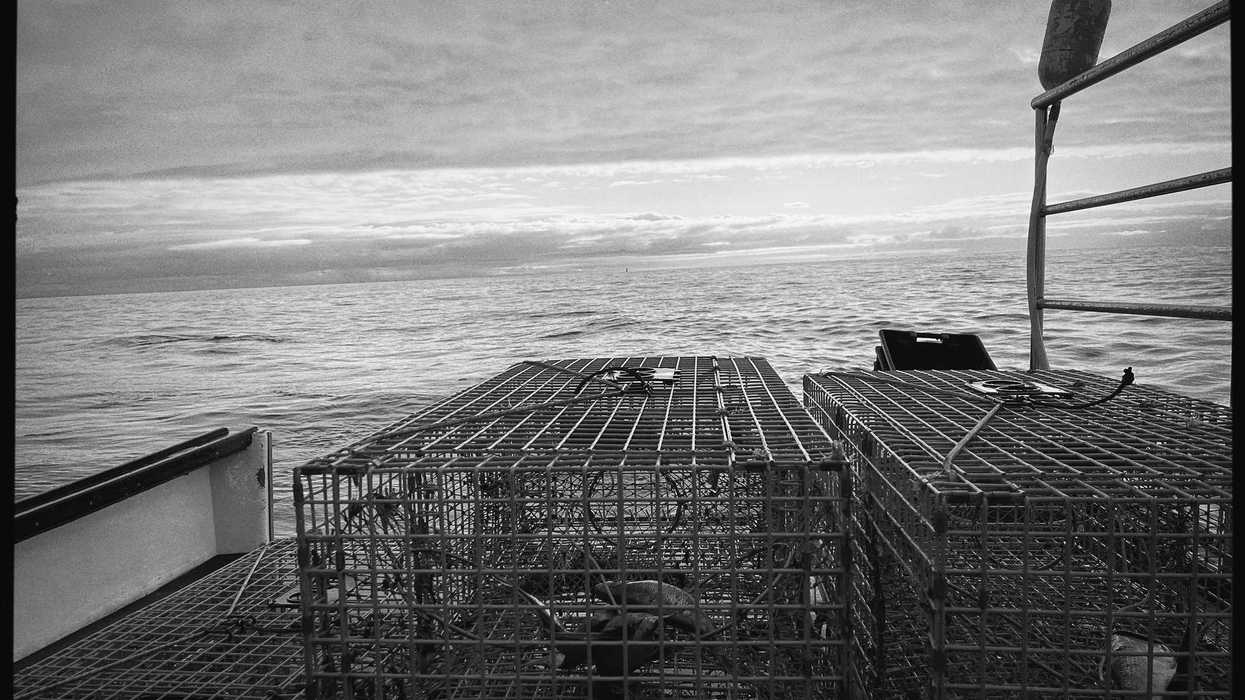
As the rope begins to pile up at the captain’s feet, we look overboard, waiting for the first trap to emerge. The traps are metal cages filled with bait—typically dead, salted pogies, a.k.a. menhaden. The lobsters will crawl in through the trapdoor to eat the fish and typically have trouble finding their way back out. The hydraulic hauler revolutionized the industry by mechanizing the back-breaking work of pulling traps by hand.
The captain reaches down to pull the heavy trap out of the water and places it on the gunwale. He and Roy get to work.
As the captain plucks the lobsters from the cage to inspect them for size, Roy drives a small iron spear through the gills of four pogies at once, threading it through the rope into the trap and shutting the opening. They toss the lobsters that are too small back into the water. The captain places the lawfully sized lobsters in a basket behind him. He uses a gauge to measure each lobster.
A legal lobster in the State of Maine has a carapace, or body shell, length between 3 5/16 inches and 5 1/4 inches. The measurement is made between the extreme rear of the eye socket to the end of the carapace. This protective shell functions like armor against predators.
The next traps emerge. There are no breaks. It is constant and grueling work. Roy stacks all 20 traps on the stern.
We caught a “breeder” in one of the traps. These are legally protected and must be tossed back into the water to help conserve the populations. Breeders can carry up to 100,000 eggs depending on the size. The eggs are tiny black spots, sometimes referred to as “berries.” They are stuck to the swimmerets under the tail. The tail must be clipped in a V-shape by the lobsterman before tossing it back out, so future lobstermen know it is a breeder if there are no eggs when it wanders into a trap again.
Roy handed me the breeder to look at before we dropped her back into the water. Her claws were massive.
“She’ll chop your hand off,” he said.
The price of lobster fluctuates like the price of gold. In 2025, the state landed 78.8 million pounds worth $461 million at the dock—still the backbone of Maine’s commercial fishery even as the catch has fallen for four straight years.
The whole time we’d been hauling traps, the captain had Ozzy’s Boneyard Sirius Radio station blasting on the boat speakers. They say lobsters can detect low-frequency sounds. If that’s the case, the first noises they heard as they joined us were Black Sabbath, Guns N’ Roses, and The Misfits. Low-frequency sound travels far through water.
The stern was slick after the first haul. As the captain throttled off towards the next buoy, everything loose shifted back. Unless you have the sea legs of the captain or the sternman, you hold onto the drum of dead fish or the side of the boat so you don’t slide down off the open stern into the ocean.
I asked Roy if anyone’s ever fallen overboard.
“Just me,” he said. “We had 100 traps on the boat.”
Each stack was six traps high (unlike today, when it was four to a stack.) The first two traps slid back into the ocean without a problem, but then something happened, and the next two went out simultaneously. The rope pulled the whole next stack down and knocked him so hard in the hip that he got thrown into the water.
The night before, when I told my son that I was going lobstering, he told me to be careful about whirlpools or hurricanes.
“Why would God make anything that can kill us?” he asked me.
Roy gave me the basket of lobsters to band their claws shut. There was a distinct and overwhelming stench of dead fish and live lobsters—that, paired with the salt air and the swaying of the boat, makes seasickness understandable. I kept my wits about me. The waves were brutal. Zach helped release empty cages from the stern even though he looked gray.
Some of the day’s catch were missing limbs. Lobsters can regenerate limbs. I could see where new claws were beginning to bud.
To band a lobster, I found it’s easiest to hold the claws over the lobster’s head while its long legs and tail try to push me away.
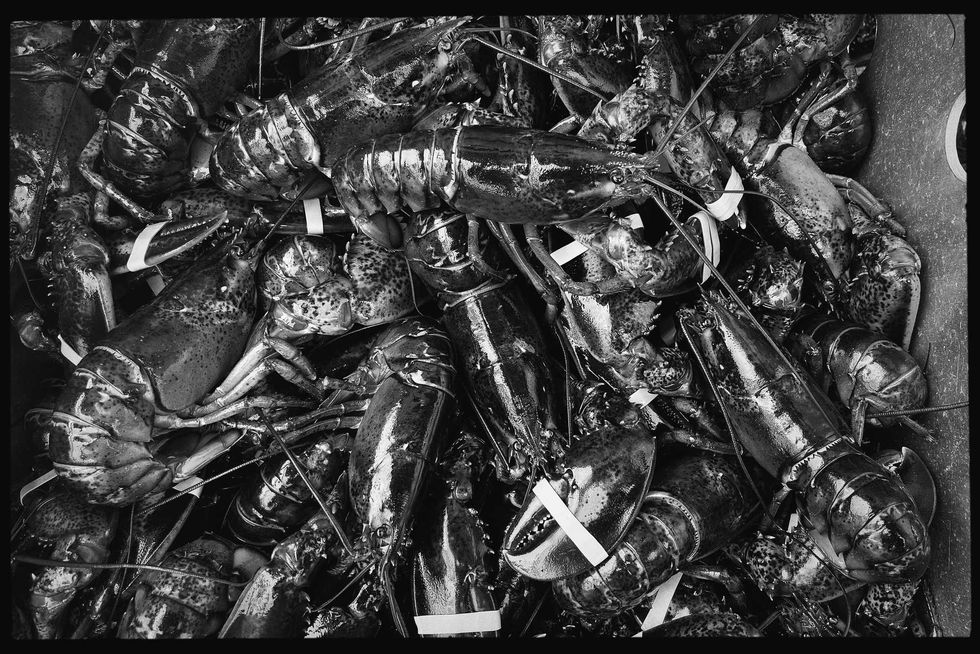
When I pulled some from the basket, they were clamped to one another. Lobsters are also cannibals. Especially in captivity. So, the rubber bands protect us, but they also protect them from each other.
Once each lobster’s claws were banded shut, I dropped them in the tank. The tank held a few hundred gallons of ocean water. As the boat picked up speed, the water spilled out, and I felt the cold even through the thick boots.
Zach looked at me and said, “I want to drive this bait hook into my temple.” I took that to mean the seasickness was kicking in.
Roy pushed the traps off the stern and back into the ocean. Roy was careful about where everyone’s feet were placed so no one got yanked into the ocean. The rope moved fast from the stern into the ocean as the traps started to sink. Once all 20 were back on the ocean floor, the only thing left was the buoy.
“How much has politics gotten in the way of lobstering?” I asked the captain.
“All this whale shit is the problem,” he said.
“What’s wrong with the whales?” I asked.
“They wanted to pass a law restricting vertical lines in the water. How are you supposed to haul a trap out without vertical lines?”
He was referring to the ropes. There were politicians saying that the ropes on traps were catching whales.
They eventually scrapped the proposal.
“I can’t catch a fucking whale,” the captain said.
The more traps the captain opened, the more fish bones started to litter the boat—leftovers from inside the traps and chunks of fish that got speared and placed into the traps before being tossed back.
There was a point in the day when the fog had become so thick you couldn’t see land. In that fog, I felt like I was being swallowed, the way Jonah was taken down into the dark of the great fish.
The water constantly rocked the boat. There have been days when these men have worked against 10-foot waves hitting the boat every 12 seconds.
We dropped some traps in the water somewhere off Peaks Island—a place filled with mansions and their nice oceanfront properties. As the large windows and manicured lawns watched us return to shore, Roy spilled the blood and guts from the empty bait drums back into the water.
Kids waved at us from their tables in the restaurants along the pier. The gulls shrieked along the pier.
“I can navigate these waters with my eyes closed.”
It was high tide, and we weighed the bugs on the dock. Roy and the captain divided up the day’s catch, knowing certain buyers want specific amounts.
“Was this a good day or a bad day?” I asked the captain.
“A shit day!” Roy answered before the captain could.
“Not terrible,” the captain said, looking at the whole catch for the first time. “It’s a lot of bugs,” he said.
There were already people lining up to buy lobsters. One young woman showed up with a cooler. When she saw the captain, she yelled to her mother to come and say hello. The mother said she was glad to see the captain was out and about—it turns out he had recently had a quadruple bypass.
On the way home, near Sebago Lake, we pulled into Pat’s Pizza. This was Roy’s routine. We took a seat at a table with two older men. They were talking about the preference for a lake over the ocean. One look at Roy’s white shirt covered in blood and guts affirmed their love of the lake. The entire place could smell us—salt, dead fish, lobster.
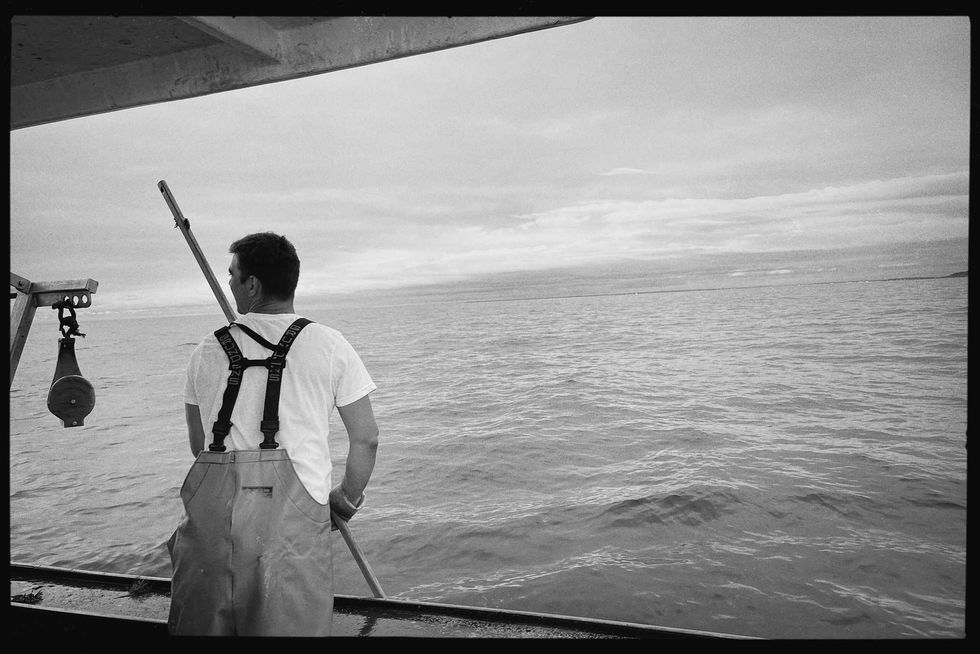 Danger and livelihood both stretch endlessly from the boat.Shane Cashman
The bartender placed a pint on the table and dropped a five-gallon bucket of ice at Roy’s feet. He took a swig, got up, and took the ice to dump into the cooler of lobsters in the bed of his truck.
“I’ve gone 55 days without a day off,” Roy said.
In the winter, the days will be longer. The lobsters migrate about an hour further from shore.
“On the days we don’t fish,” Roy said. “I sell lobsters.”
Roy runs his own lobster shack—The Trailside Lobster Pound. He says people will drive past three other lobster pounds just to get to his. He thinks it’s because he is selling and cooking lobsters that are caught that day or the day before. They’re all fresh, and he steams them in seawater. A lot of people in Maine believe cooking bugs in saltwater makes all the difference.
“I’m handpicking these things,” he said.
He keeps the lobsters in a two-tiered red tank that pumps ocean water through it.
He doesn’t mind the early days. He can be back on land anywhere between 11 a.m. and 1 p.m.
He’s waiting to get his lobster license from the state. There’s a long waitlist. He’s been on it since 2015 or 2016. A lady with Maine’s Marine Resources once called to ask if he was still interested in obtaining a license. She told him lots of people on the list had died or were too old and didn’t care to fish anymore. So he moved up the list.
There are ocean men, and there are lake men. The two old men at our table tell us they prefer the lake, even though it can have its rough days. Both waters are predictable to the men who navigate them daily.
It’s funny how living near various bodies of water affects your life. I grew up near a few small lakes and a wide section of the Hudson River. The lakes were stocked with rainbow trout, so we could fish—but the lakes also hid giant snapping turtles. But we took our chances in the water when we would take our horses from the barn into the lakes for a swim.
The river, on the other hand, was filled with PCBs—and we were all explicitly told not to swim in the water or to eat the fish. Only the wildest kids would dance off the ledge of the rocks by the river for a swim. They’d all come back—but we’d watch them closely to see if any extra limbs began to grow.
When we were on the Atlantic, consumed by fog, pulling bugs from the water, Roy and the captain seemed more like astronauts than fishermen. The water is an abyss that far out. And the lobsters, these giant reddish, brownish, blueish, yellowish marbled bugs with powerful claws, do not look like they originated here.
When I was banding the lobster claws, their eyes and antennae moved in tandem. They don’t have brains, but they looked like they were trying to understand. They don’t have great eyesight either. If anything, I was only a shadow tightly holding them. At that distance from shore, neither of us felt like we were on Earth.
Roy will have a beer or two after a day of fishing and then head over to the pound. There could be 40 orders lined up waiting for bugs to be steamed.
He took another swig of beer and said, “I just need an hour to forget about the bugs.”
We drove further inland to Roy’s lobster pound—with all his lobsters. He had dozens of tanks pumping ocean water in a constant cycle, filtering out the waste.
Later, we walked down to Sebago Lake. This was where I had taken my son fishing for the first time, earlier that same trip. I told him he might cast the line out and get nothing, that he had to be patient. He nodded and cast. Within moments something tugged hard. He looked at me, surprised but determined. I talked him through reeling it in. There, in his hands, was his first fish—a rainbow trout. We took a photo, then tossed it back. He was ready to try again. I told him that might be the only one of the day, that some men sit out here for hours without a single bite. He cast again. Another tug. Another fish. It happened four more times.
A blues band of old men played in the boathouse on the lake, the way they do every Saturday at sunset.
I’ve seen baptismal waters change the souls of men. I’ve seen floodwaters rushing down the mountain, devouring my hometown. And I’ve seen the same sea that tried to throw us overboard lie still enough to hold the reflections of the clouds. Between those extremes the traps go down and the line keeps running. The lobsterman knows there are a thousand shipwrecks below him. He knows the water that feeds him could also be his fate.