© 2026 Blaze Media LLC. All rights reserved.
Eating steaming-hot bowls of rich pimento grits in Charleston’s almost unbearable summer swelter just sounds wrong. Ten minutes down Meeting Street, my clothes had already turned into a glorified sweat towel, and the only thing that sounded appetizing was air conditioning and a tall glass of ice water.
Locals seemed unbothered. College of Charleston sorority girls partied down King Street during rush week with perfect hair and impeccably coordinated outfits. This must be a skill you learn young here. You couldn’t catch a lady who wasn’t donning a perfectly curated combination of a boldly colored, flowy dress, matching jewelry, hair, a designer purse, and makeup seemingly untouched by the heat.
In the evening, King Street turned into a sea of bobbing, floppy hats accompanied by a chorus of clicking wedge heels. You’d even catch a glimpse of a suit or two, dapper gentlemen totally unfazed by the radiating heat. What was their secret? Are they built differently, or does a combination of hairspray and grit keep everything in place? Perhaps it’s a combination of both.
The Charleston accent, if you’re lucky enough to catch it, is just as elegant as the locals themselves. It’s that rare breed of old, Southern-style you won’t find in big inland cities, a melodic incantation that draws you in and warms you from the inside. The hard “r” in “Charleston” melts away into “Chawlston,” a remnant of their English heritage. They don’t rush through their words just like they don’t rush through their streets. What’s the hurry, anyway? After all, you’d just get sweatier.
I finally ducked into Eli’s Table, drawn in by the A/C like a bear to honey. Then I saw it. Grits with pimento cheese. I could have gone for a salad. Heavy Southern cooking on a 98-degree evening sounds like cruel and unusual punishment. But how could the culinary gods forgive me if I passed on grits for a generic salad in Charleston? So I caved. And somehow, even after walking in what felt like a toaster oven, that golden bowl of decadent, pimento-laced, buttery grits sent me back into the hot, muggy evening with a deep, satisfied grin.
Contradiction Has A Flavor
In Charleston, things that shouldn’t work together do. Boggy swampland and cash crops, humble ingredients and Michelin-star restaurants, summer evenings and pimento grits. Those contradictions forged Charleston out of the marsh and still define the way the city eats.
Paradox is baked into Charleston’s landscape. The city sits in the heart of the Lowcountry, the flat, humid crescent of tidal marsh, barrier islands, and blackwater rivers that stretches along the South Carolina and Georgia coast. At first glance, this buggy, waterlogged swampland looks uninhabitable, certainly unable to grow a crop that would turn Charleston into one of the wealthiest cities in early American history. Charleston started out as a strategic military port meant to ward off the Spanish, unlike the northern settlements intent on cultivating the land.
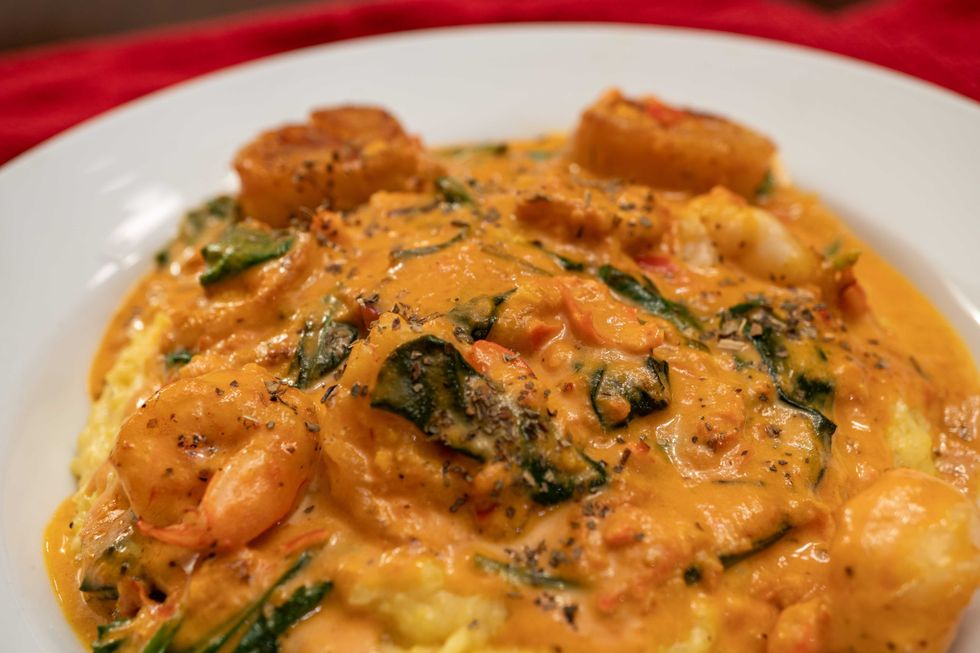 Shrimp and grits is a Southern classic, elevated to art form in Charleston.
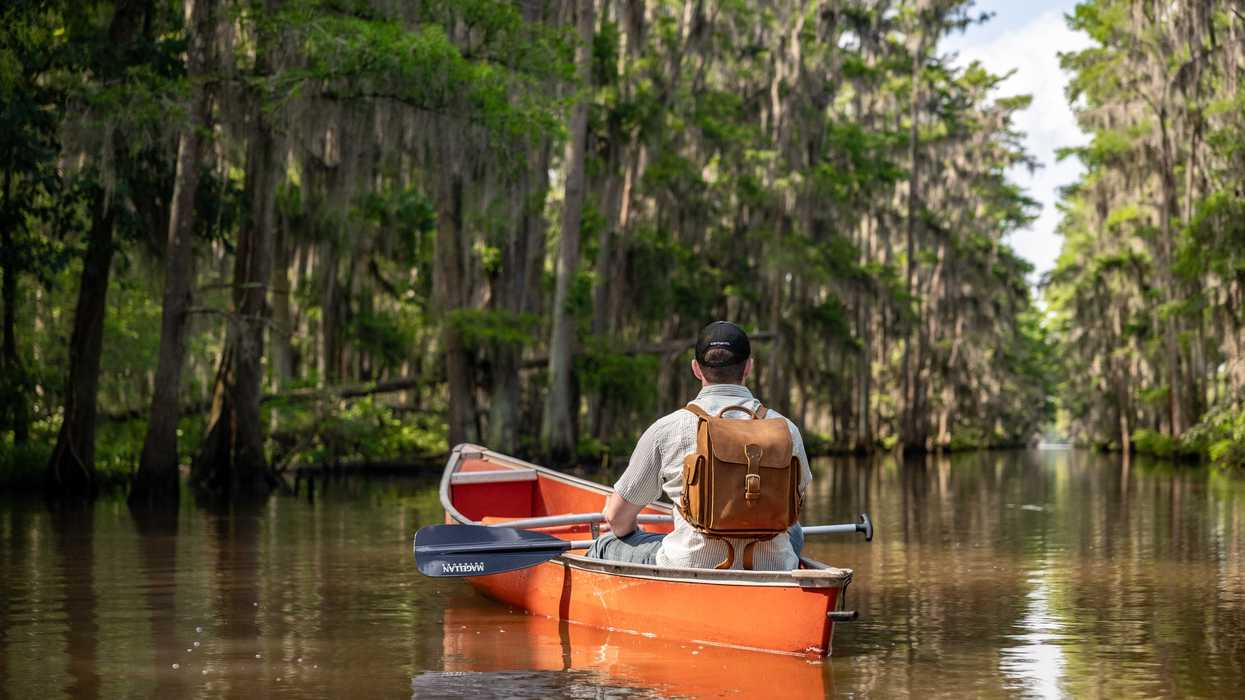
Pluff mud smells like sulfur at low tide. Spartina grass, and little else, bends in the wind rolling up the coast. Oak canopies drip Spanish moss over rivers that rise and fall with the Atlantic twice a day.
And yet $20 million mansions rise straight out of that marshland today. King and Meeting Streets are home to elite social clubs, Michelin-starred restaurants, five-star hotels, and designer stores that wouldn’t look out of place on Rodeo Drive.
Presidents George Washington, Andrew Jackson, Teddy Roosevelt, William Howard Taft, and John F. Kennedy have all been guests at Charleston’s soirées, and Confederate heavyweights like Robert E. Lee and John C. Calhoun spent significant stretches of their lives here.
By 1861, Charleston was fabulously rich. Then Confederate batteries opened fire on Fort Sumter in its harbor, starting the Civil War.
Carolina Gold
But a remarkable group, unwillingly brought to Charleston’s shores, had the generational expertise to turn mud into “Carolina Gold.” For nearly two centuries, the Lowcountry ran on a strain of rice, Carolina Gold, so demanding to cultivate that English planters had no idea how to grow it themselves.
The knowledge came from West Africa, carried by captive slaves who had already mastered tidal rice cultivation along the region’s rivers and wetlands long before they ever saw the Carolina coast. Growing rice in chest-deep water, flooded in from the rivers and precisely filtered from the salt water, required exactly the expertise that turned a swamp into the wealthiest colony in British America.
It was not gentle work. Workers battled alligators and poisonous snakes in the paddies, and, as my tour guide Klara put it, would sometimes “lose a toe or two to a snapping turtle.” By the eve of the Civil War, Charleston had more millionaires per capita than any city in the country, and much of that wealth was traceable to a crop nobody thought belonged in a swamp.
It is the same crab, dressed for an entirely different room, and both versions feel completely at home in this city.
The people most responsible for making that impossible thing work stayed closest to it. The Gullah Geechee, descendants of the West Africans who mastered those tide fields, settled for generations on the Sea Islands, cut off from the mainland.
This isolation helped preserve a remarkable amount of the culture their ancestors brought to the New World: a creole language still spoken today, religious and communal traditions found nowhere else in the country, and a food culture built entirely on what the rice fields and tidal creeks provide.
Walk toward the City Market on almost any morning and you’ll find the streets lined with Gullah men and women, many of them sixth- or seventh-generation weavers, coiling sweetgrass and bulrush into baskets the exact way their ancestors did on the rice plantations two and a half centuries ago. The craft started as a tool for winnowing rice and, over time, became an art.
Okra stew, field peas, red rice, shrimp, and grits were Gullah staples long before anyone called them Charleston cuisine. They remain its backbone today.
The same principle that brought seemingly opposed things together defines Charleston’s cuisine. One would think, for example, that a soup made from crab scraps wouldn’t be served at a presidential dinner. But in Charleston, it was.
Fit for a President
The city’s iconic “she-crab” soup, credited to the trailblazing black chef, William Deas, is built on the roe of female blue crabs in a cream broth, made decadent with a splash of sherry. He supposedly prepared it for President William Howard Taft during his visit to Charleston in 1909. The president reportedly loved it so much he asked for the recipe on the spot. Depending on who tells the story, Taft may have requested that it be served at the White House afterward. I enjoyed a bowl of this silky, sumptuous soup at The Palmetto Cafe, but you can find the classic Charleston dish served up throughout the city.
Crab is a staple of the Charleston kitchen, appearing in dishes served in places as far-flung as dive bars and five-star dining rooms. One of the city’s most famous preparations comes from the East Side: crab rice.
A few blocks off the tourist path, an unassuming building carries a hand-painted sign that reads, “Hannibal’s Kitchen.” In 1985, Robert Lawrence “Hannibal” Huger opened what has become Charleston’s most famous Gullah Geechee food institution.
Plain, wooden tables are surrounded by photos of famous guests—from Danny Glover to Hillary Clinton. You won’t find a tasting menu here, a wine list, or any chandeliers. Just a line of locals waiting for the same Styrofoam plate of crab rice.
The dish itself is simple: lump blue crab meat griddled with onion and green pepper, spooned over steamed rice. It made the New York Times’ 2021 list of the 50 American restaurants it was most excited about, calling it “definitive.”
A recipe humble enough to serve on Styrofoam earned a spot next to the country’s most celebrated kitchens. At Hannibal’s, this just works.
A mile and a half up the peninsula, at the Mills House Hotel on Meeting Street, Iron Rose takes the Atlantic blue crab and deals with it very differently.
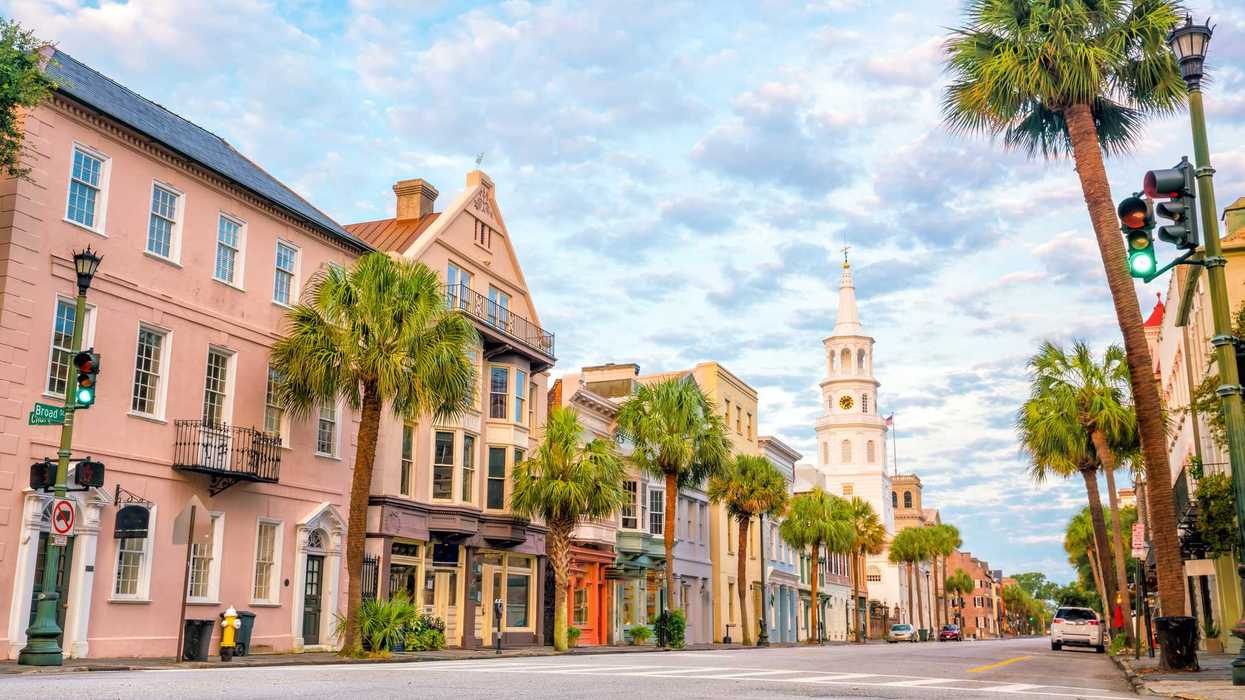
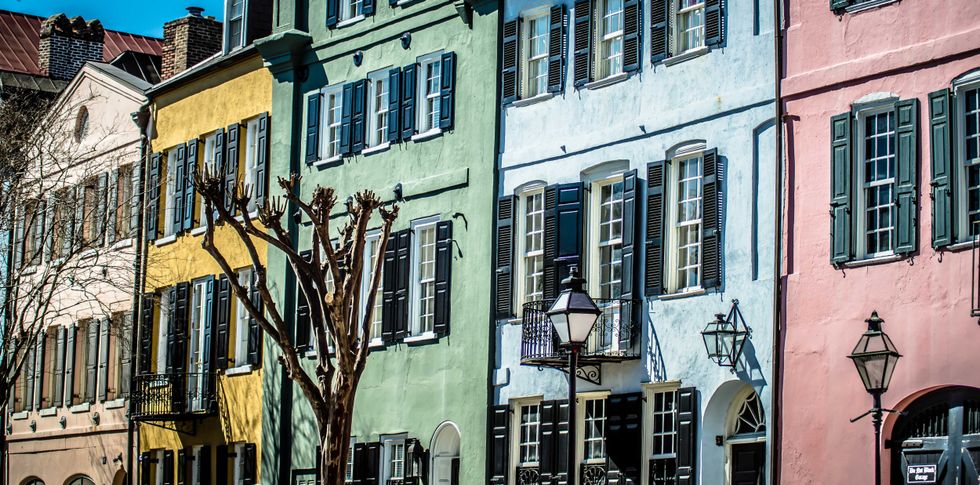 The bright colors of the historic buildings add flair and beauty for visitors.Adobe
Their crab cakes arrive golden and barely bound, set on a bed of thinly sliced fennel and grapefruit, an unexpected pairing that cuts through the crispy, sweet lump crab.
Set beneath wrought-iron chandeliers that echo the ironwork lacing Charleston’s garden gates, this crab has a much different home than Hannibal’s across town. It is the same crab, dressed for an entirely different room, and both versions feel completely at home in this city.
Charleston has room for the Styrofoam plate and the chandelier.
Trust the Lowcountry
Some things, however, do go together, like world-class oysters and Charleston’s coastline. Charleston is one of the great oyster destinations in the country, and every winter the city hosts the Lowcountry Oyster Festival, one of the largest oyster festivals in the world.
Local “Lowcountry Single” varieties like Sea Clouds and Lowcountry Cups, grown in Charleston’s rich, muddy salt marshes, yield a distinct, deeply briny flavor with a sweet finish.
As an oyster novice, I was intimidated. I relied on locals to point me in the right direction. Everyone had their favorite spot, from Leon’s, a Michelin-recognized oyster and fried chicken joint housed in a former auto body shop, to The Ordinary and The Darling, two upscale oyster bars on opposite sides of the same King Street intersection, eyeing each other like rivals.
I decided to entrust my oyster education to FIG, the restaurant most responsible for putting Charleston back on the national food map. This Michelin-recognized kitchen is the brainchild of the James Beard Award-winning chef, Mike Lata, a Massachusetts transplant whose reverence for local Lowcountry ingredients and tradition is credited with kicking off the city’s culinary renaissance.
Five Lowcountry oysters swimming in a pool of aji dulce butter, perfumed with roasted garlic and oregano. Need I say more? I could have drunk that sauce from a mug.
But the true hero of the menu was the fish stew: local fish, “fresh dug potato,” zucchini, and butterbeans floating in a cream-based saffron broth, finished, like she-crab soup, with a dash of liquor—in this case, Pernod.
Beneath the fish stew on the menu sat a cast-iron ribeye. Was I really going to pass up a prime piece of beef for what sounded like my grandmother’s garden bobbing around in a broth? I trusted the staff’s emphatic recommendation, and I’m glad I did.
Local Lowcountry ingredients, as simple as a potato and a butterbean, took on new dignity. The broth, reminiscent of Tom Kha Gai, melted into the local fish the moment it touched my tongue.
This final dish took me back to where I started, sweating through my shirt at Eli’s Table with a bowl of grits I never should have ordered on a hot summer evening.
Marshland that shouldn’t have grown a fortune. A language that shouldn’t have survived isolation on a handful of islands. A soup made from crab roe that shouldn’t have made it to a president’s table. Rice served on Styrofoam, sophisticated enough for the New York Times. A butterbean stew that outshone a ribeye. An oyster pulled out of sulfur-smelling mud that somehow tasted clean and sweet.
Charleston has spent 300 years putting unlikely things together and making them seem inevitable. On a 98-degree evening, even a steaming bowl of pimento grits begins to make sense.
Want to leave a tip?
We answer to you. Help keep our content free of advertisers and big tech censorship by leaving a tip today.