Peter Gietl
What happens when your home no longer exists? Does it melt away into memory? Is that the fate of everything?
The places we love, the people we knew, the landscapes that formed us, all condemned to survive only in the unreliable mechanism of recollection? I was born in Colorado, but returning this summer, it felt alien.
Somewhere beneath the orange and blue skies of the majestic Rocky Mountains, the magic had died. The features were all there, but something essential had departed. The mountains still stood, indifferent and magnificent, but the country beneath them had changed. Even the air tasted wrong, like ash on the tongue.
I was born in Colorado, but I certainly won’t die there.
My family came west seeking fresh air and cheap property, two things that once existed in abundance. Today the air chokes with marijuana fumes and never-ending forest fires. A starter home, 900 square feet and last updated decades ago, costs $600,000.
The mountains have become a luxury commodity, the cities a sprawling collection of dispensaries, expensive apartments, and people who arrived yesterday.
We used to call ourselves natives, those of us born within the four corners of the state. The phrase was affixed to bumper stickers and T-shirts. It was all a bit corny, but we needed some way to differentiate ourselves from the new arrivals. And they came in waves, like the tides of change, everlasting.
First came the Californians, buying up the land in Telluride and Vail, turning old mining towns into alpine showrooms for inherited fortunes. Hunter S. Thompson saw the wave years ago, retreating to Woody Creek as the après-ski crowd chased away the soul of the mountains. He understood what happens when a place becomes fashionable.
The people who made it interesting are eventually priced out by the people who want to be interesting. Then came the Texans, descending on Steamboat Springs in blue jeans and cowboy hats, skiing as though they were attending a rodeo on ice.
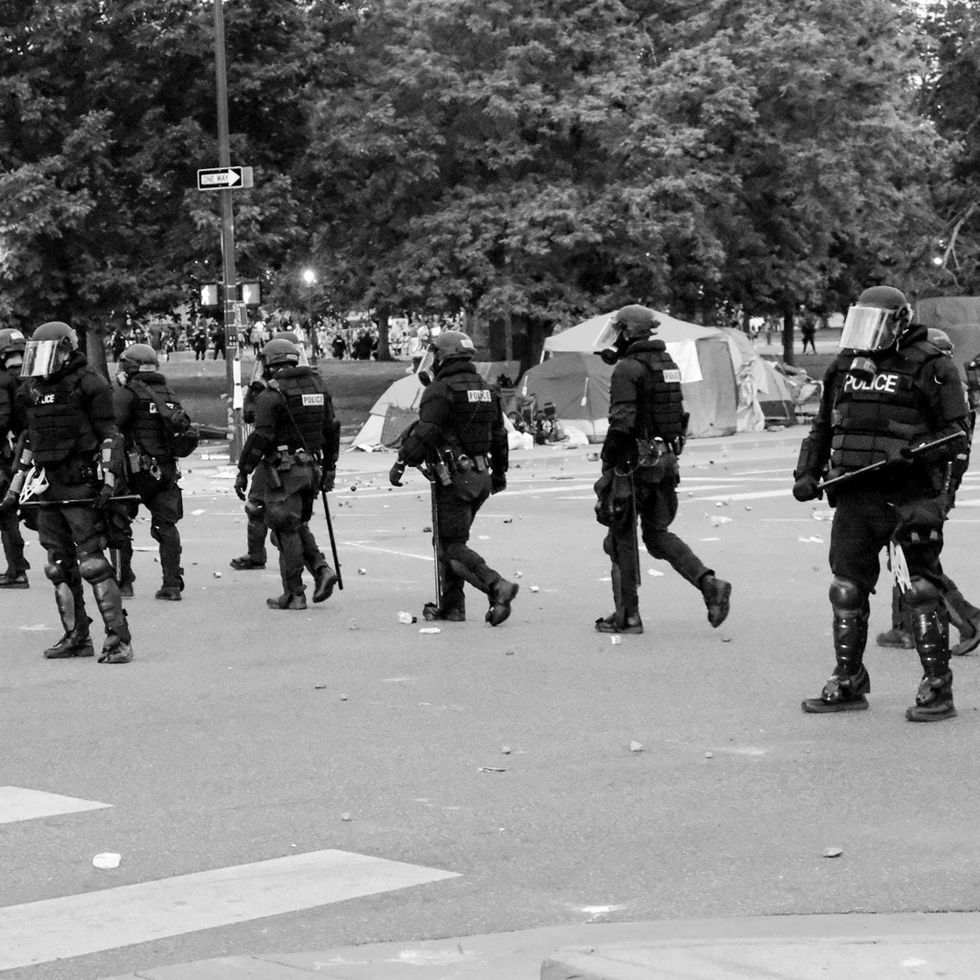
Later, the tech money gobbled up Boulder. The People’s Republic of Boulder, once a pleasantly deranged hodgepodge of hippies, climbers, radicals, and assorted eccentrics, was conquered by software money and public-health moralists. I’ve seen people ticketed for smoking a cigarette while a naked, homeless man smoked crack a few feet away.
 Peter Gietl
Then everyone else showed up.
Hordes from the Midwest arrived with professional managerial tastes, new Patagonia vests, and Jeep Grand Cherokees. They came looking for hiking and skiing instead of personalities. The mountains became something to consume, photograph, and advertise to acquaintances back home.
Now, if you don’t leave Denver by five in the morning, you can spend five hours on Interstate 70 with 150,000 other pilgrims. You wait in lines that snake around the mountains, pay thousands of dollars for the privilege, and ski down slopes crowded with people recording themselves doing it. An Instagram paradise, powdered with artificial snow.
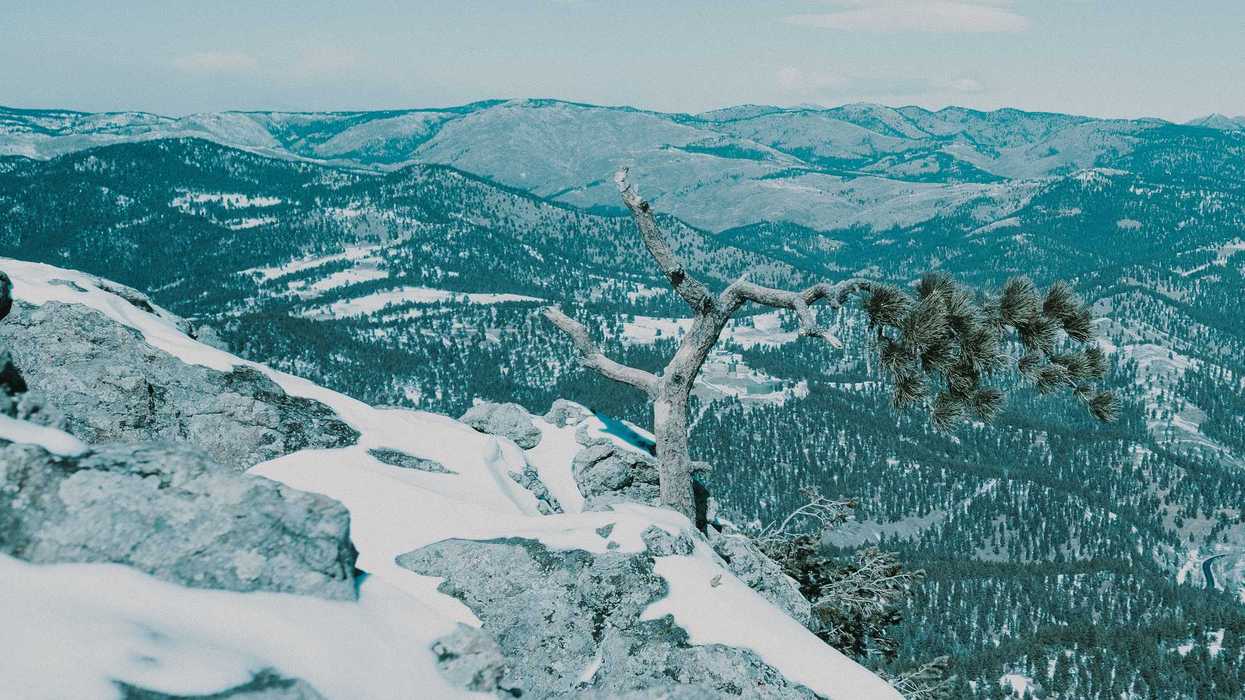
But the problem of crowded slopes may be fixing itself. For years, the snowfall has dwindled. Bindings and ski edges scrape against exposed rock. Resorts deploy massive machines to manufacture winter, spraying white crystals across brown hillsides, but it’s never enough.
The fake powder doesn’t ski right. Fake folks pretending to enjoy skiing on fake powder. The whole enterprise begins to resemble an expensive theatrical production in which the audience has agreed not to mention that the scenery is falling apart.
And there hasn’t been much rain, either.
I remember the summer storms. Every afternoon, like clockwork, dark clouds gathered over the peaks. Thunder rolled across the valleys, the temperature dropped, and rain arrived with vitriol. The smell of wet pine rose from the earth. An hour later, the sun returned, and the mountains glittered.
Now there are dust, smoke, and temperatures approaching triple digits. Even the cool mountain air seems to have fled. Climate change, overuse, development, and fires have decimated the land.
This summer I walked along Lake Dillon, where I spent summers as a boy, and found great stretches of exposed mud and half the massive lake gone. The reservoir seemed to have retreated from its own shores. A lone immigrant teenager rode a fat-tire bicycle across the lakebed. It looked like the apocalypse. The death of something, at least.
Water is at a premium everywhere.
The Colorado River quenches the thirst of the American West, from the high country to the desert cities and Mexico beyond. Every state wants more, but there is only so much to give. Endless strip malls, golf courses, subdivisions, and developments take their toll.
When the rain and snow fail, the land begins to come apart. The ground grows brittle, snapping and breaking beneath your boots. The pine beetles came years ago and decimated whole forests. You hike through acres of death, past gray trunks standing like grave markers. Blotches of brown disease spread across the mountainsides. The former beauty of the pines has been reduced to kindling.
Then the fires come.
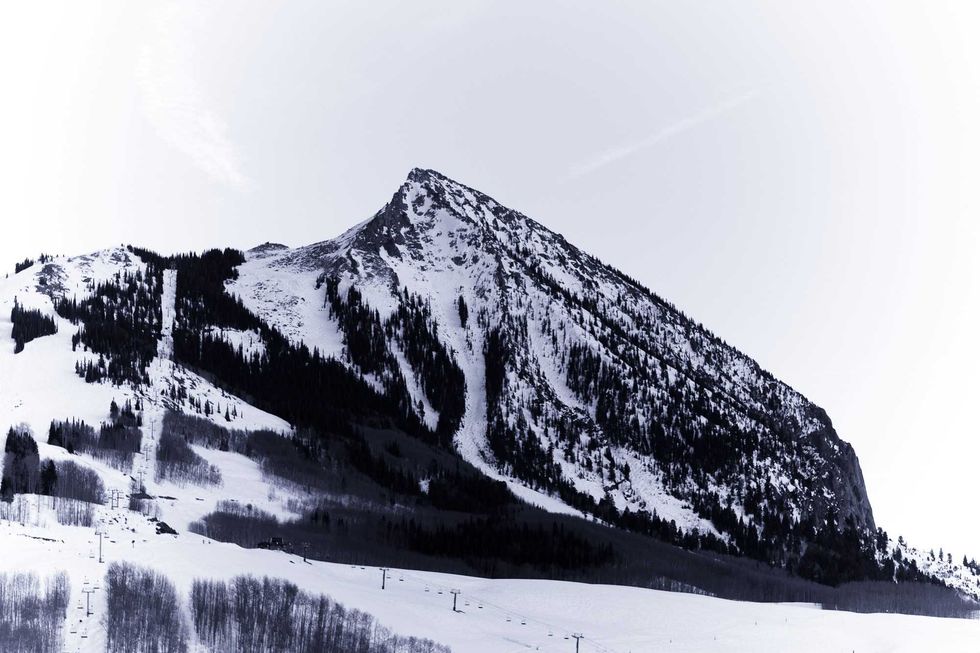
In summer, the skies choke with smoke and ash. There is no rain to clean them. The flames creep closer to the cities, devouring the dead forests. The mountains burn, and the crowds keep coming.
 Peter Gietl
You drive farther and farther into the wilderness to escape them, only to discover that the wilderness has acquired an audience. Trails I grew up walking in silence are now filled with hikers carrying Bluetooth speakers, blasting music into the cathedral of the pines.
Growing up, “leave no trace” wasn’t some sort of catchphrase.
It was a vow, a promise, inviolate. You entered the mountains as a guest. You carried out only what you carried in. You respected the silence because the silence belonged to something greater than yourself.
Now you find trash everywhere. Beneath the shadows of the colossus, refuse. The beauty of the mountains has lost some of its sheen. Hiking to gorgeous waterfalls that no longer flow causes a peculiar form of despair. I want to find those trails again, but sometimes I can’t remember where they went. Or perhaps I remember them perfectly, and the trails are simply no longer there.
Growing up in Denver, I watched the decline at close range. Denver was a cowtown people flew through on their way to ski. It was always a mildly corrupt blue city in a red state, governed by men who understood that business, oil, and natural gas paid the bills.
Federico Peña, Wellington Webb, and their contemporaries belonged to a political species now nearly as endangered as the gray wolf. It was a cowtown, but it was cheap and safe. And it was my home. An hour’s drive and you were enveloped in holy majesty.
Then we legalized weed, the first state in the country to do so. Various fringe characters descended like locusts, looking for careers in pot. Soon you couldn’t walk a block without passing a dispensary.
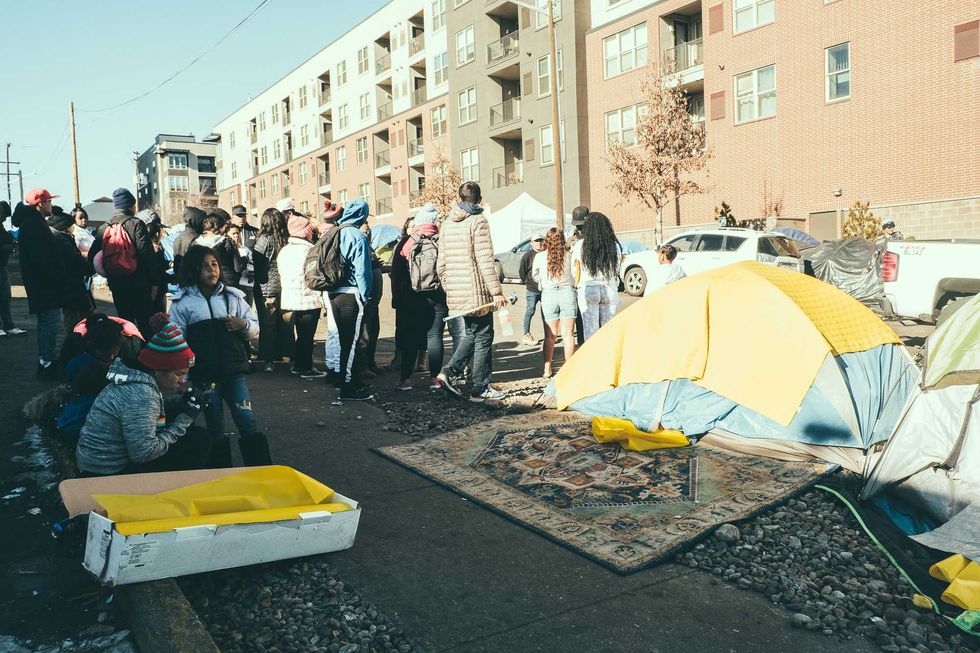
The city council appeared determined to speed-run every homeless policy San Francisco had ever conceived. Everywhere you turned, the mentally unwell wandered the sidewalks.
Crime rose. I began to feel unsafe walking through the city I had known all my life. Then came the COVID lockdowns. Downtown emptied. Businesses closed.
Housing prices exploded, and everywhere I looked I saw degeneracy, disorder, and madness. Eventually, I gave up. There are only so many indignities a person can accept. I fled to Texas and browner pastures. But the longing in the soul for the mountains remains.
 Peter Gietl
I still remember the smell of cool, mountain air, redolent of pine. The way the sun sets behind the ridgeline, the golden hour melting into the sky.
I walked those mountains and knew their secrets. I remember fishing for rainbow trout with my grandfather in the rivers, the way fresh fish tasted when cooked over a campfire. Floating down rivers too beautiful to explain.
I’ve seen bears up close in the woods and mountain lions stalking the rocky redoubts. Bighorn sheep through binoculars and massive herds of elk in rutting season. I’ve stood face to face with a mother moose and her calf, close enough to understand how little power a man possesses in the wilderness.
In the San Luis Valley, I’ve photographed some of the last wild horses in North America. At Mesa Verde, I’ve touched what remains of a lost civilization. The people vanished centuries ago, but their cliff dwellings endure, tucked beneath the sandstone as though their inhabitants might return before sundown.
At night I would stare into the mountain sky and see the infinite universe. The brushstrokes of God. On the sand dunes, hundreds of shooting stars seemed to fill the heavens. The silence was so complete you could hear your own breath. There are few places left in America where a man can feel so small.
I remember the hot springs in Steamboat, the dive bars in Rifle, the hidden groves of aspens, and the views from Rocky Mountain National Park. The conifers, the pines, the spruces. The sound of a river moving over stones in the dark. The crackling of a campfire. The particular cold that settles into a mountain valley after sunset.
I remember Colorado before the boutiques, the $50 sandwiches, the $20 beers, the millionaires in Vail, and the billionaires in Aspen. Before every overlook became a photograph and every mountain town an investment portfolio.
Perhaps some of this is nostalgia. Memory has a way of only recalling the good things. No place remains innocent forever. I am hardly the first man to mourn the arrival of strangers in a place my own family once arrived as strangers.
But knowing this doesn’t make the loss any easier.
I still remember Colorado before it was destroyed.
 Peter Gietl
I have made my peace with leaving. Or at least I tell myself I have.
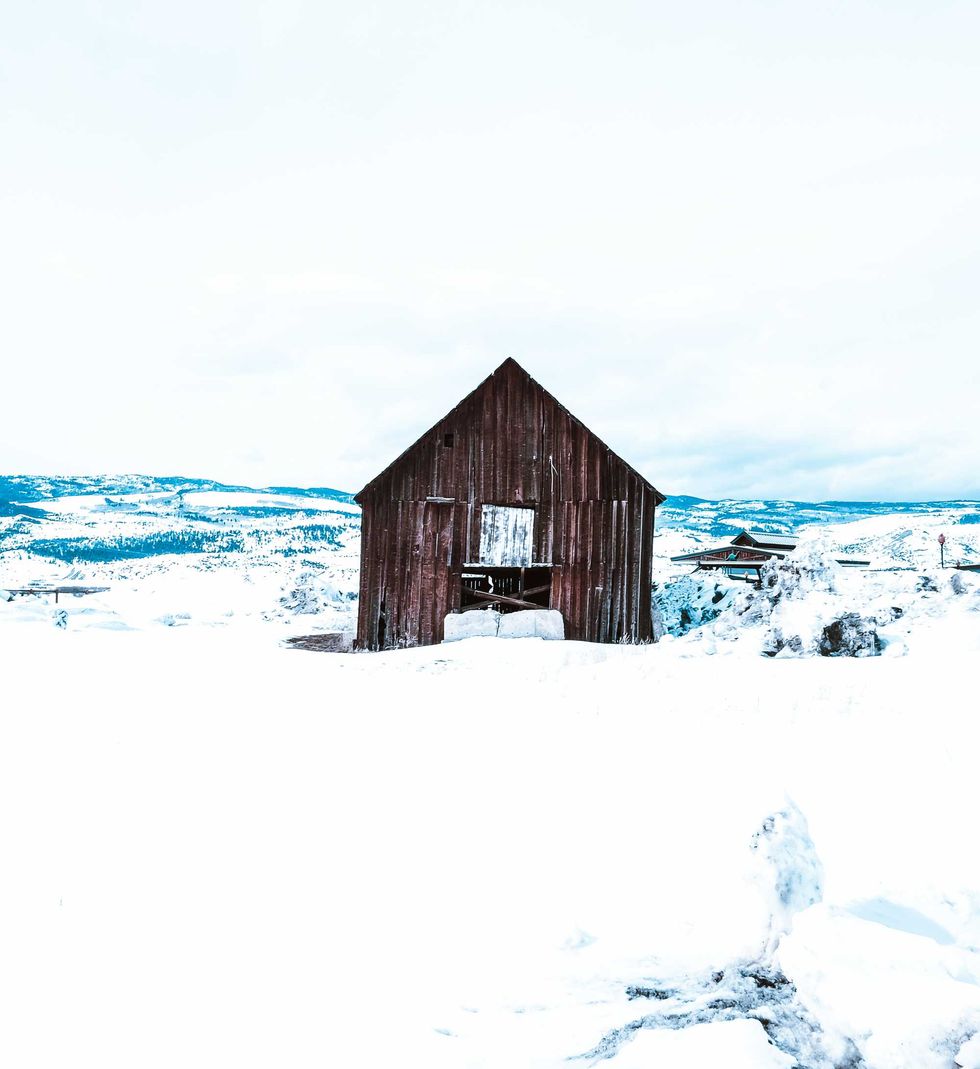
There are nights, after a few drinks, when I can still hear the river and the crackling of the campfire. I can smell the pine needles warming in the afternoon sun. I can see the ridgeline darkening against the last light of day, and for a moment, I am a boy again, with an entire wilderness waiting with my grandpa.
Then the moment passes.