© 2026 Blaze Media LLC. All rights reserved.
There are certain images of Barry Goldwater that have become inseparable from the man. The square jaw. The horn-rimmed glasses beneath the cowboy hat. The senator standing behind a lectern in 1964, accepting the Republican nomination for president and delivering one of the most famous lines in American political history:
“I would remind you that extremism in the defense of liberty is no vice! And let me remind you also that moderation in the pursuit of justice is no virtue!”
There is another image of Goldwater, less familiar but perhaps more revealing: Goldwater with a camera around his neck. He carried one almost everywhere, and his photos document the stunning vistas and denizens of the American Southwest.
His granddaughter Alison Goldwater remembers family trips to Newport Beach and Catalina Island, gatherings at home, flights around Arizona, and excursions into the desert. She and her grandfather were very close, and he loomed large in her childhood memories. There was the camera, dangling from his neck. Goldwater photographed family members and friends, but mostly he photographed the place that fascinated him for nearly his entire life: Arizona.
“My grandfather’s wish was always to show how beautiful Arizona was,” his granddaughter says. “That’s why he took these things. He wanted to share the beauty of Arizona, his beloved state.”
For a man whose political life would eventually make him one of the more famous Americans of the 20th century, photography offered something different. It wasn’t campaigning and shaking hands or making speeches. Goldwater was simply gazing at the beauty of his state behind a lens.
“If I ever did have a mistress,” he once said, “it would be the Grand Canyon.”
Goldwater grew up exploring an Arizona that scarcely resembles the sprawling state of today. His mother, Josephine, took her children into distant corners of the state when much of the traveling was still done on dirt roads. Goldwater knew Arizona as a serene collection of mountains, washes, mesas, canyons, reservations, mining towns, ranches, and people.
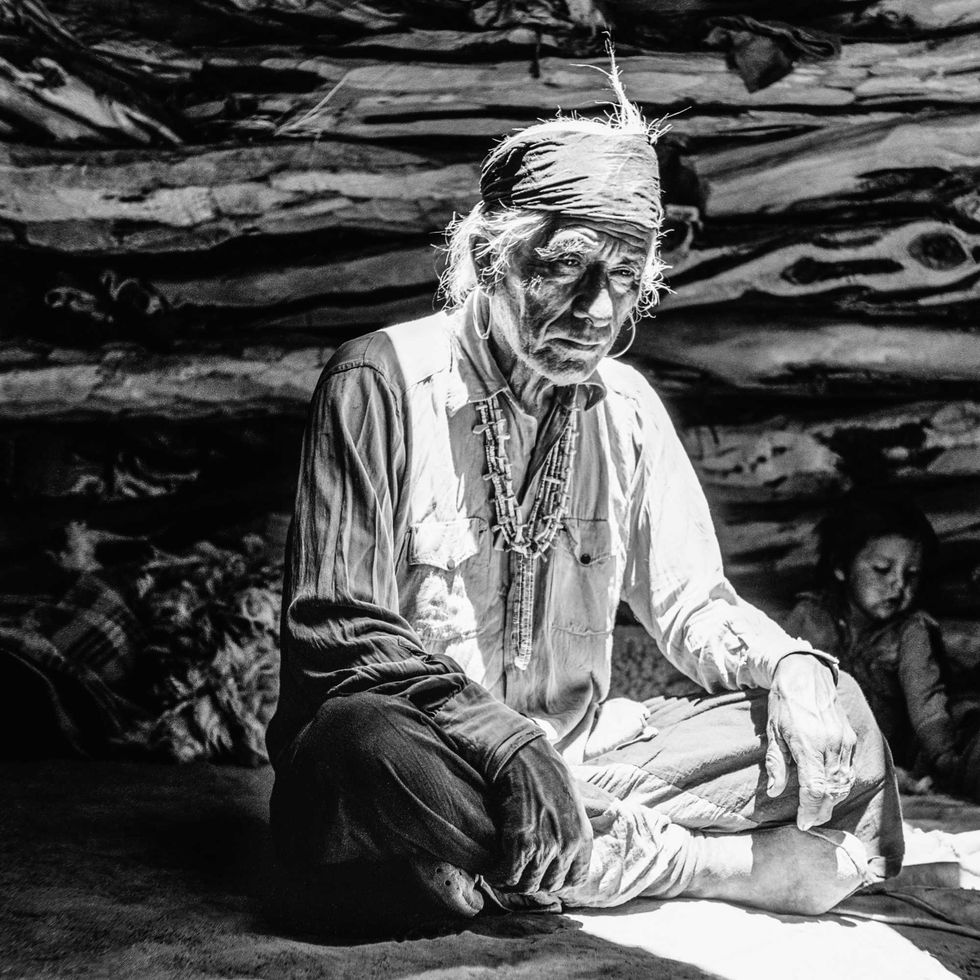 “This is a Navajo who lived up in the Paiute country. This is one of my favorite pictures. I just call it, The Chief”—Barry Goldwater.Barry Goldwater
As a young man, he acquired a Brownie camera and began taking pictures. After he married Peggy Johnson, she gave him a professional camera, fueling what would become a lifelong obsession. Photography was one of many enthusiasms for a man his granddaughter describes as something of a Renaissance man, alongside aviation, ham radio, writing, boating, and tinkering.
He loved machinery nearly as much as he adored the wilderness. He was a pilot, built model aircraft, assembled Heathkit electronics, and maintained a darkroom at home. Photography brought together the two halves of his personality: the technician and the romantic.
The great subject, however, was always the West.
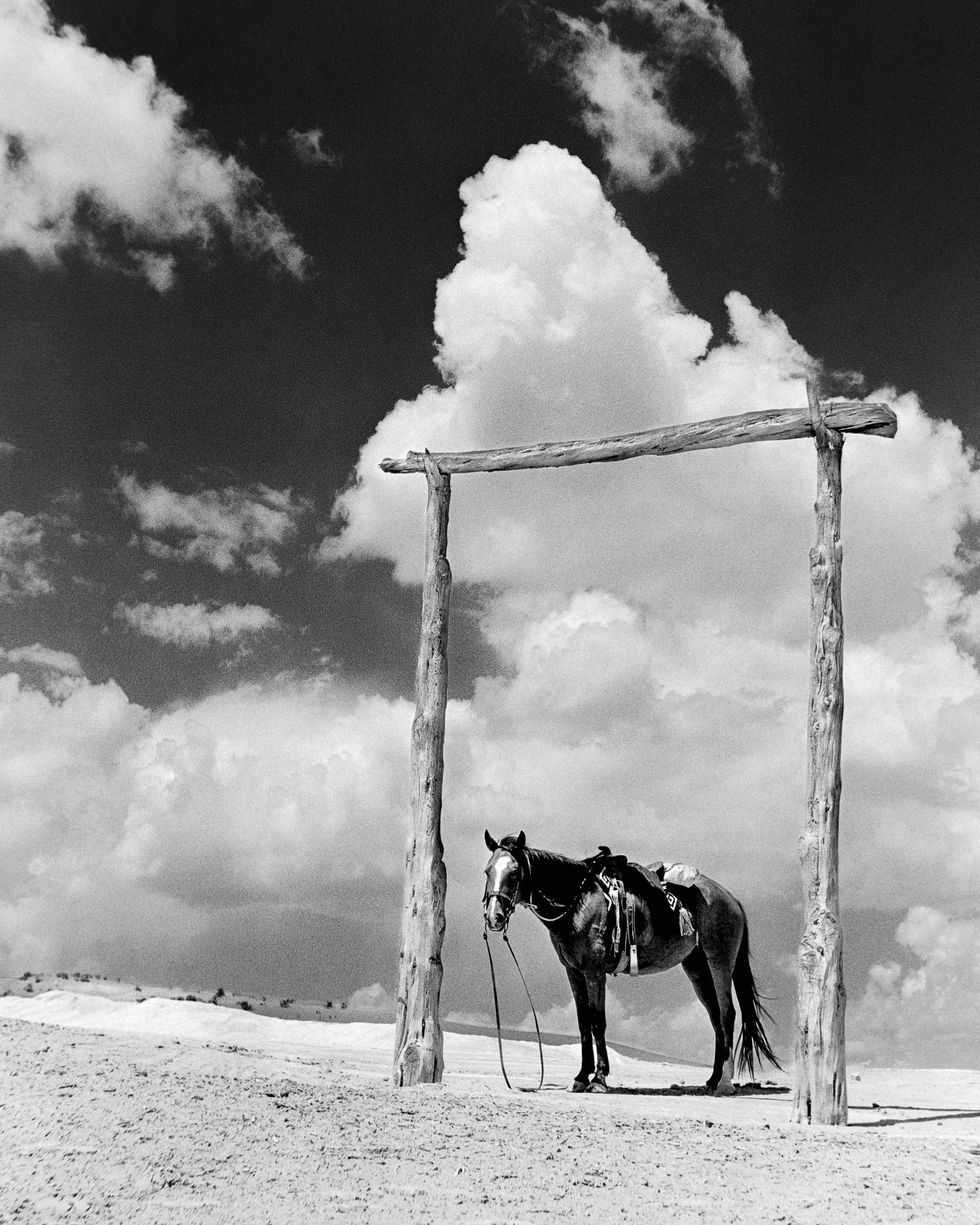 “This Navajo pony was ground tied by the hitching post at Tonalea when I saw him in the late 1930s.”—Barry GoldwaterBarry Goldwater
In 1940, Goldwater traveled down the Colorado River through the Grand Canyon, among the relatively small number of people who had then made the journey. He brought a movie camera and later took his footage around Arizona, screening the film for audiences who had never seen the canyon from such a perspective.
Goldwater would eventually sum up his feelings more succinctly.
“If I ever did have a mistress,” he once said, “it would be the Grand Canyon.”
But the most arresting photographs in Goldwater’s archive are often not landscapes at all.
Over the decades of traveling through Arizona, Goldwater developed close relationships with members of the Navajo and Hopi communities. He visited reservations, owned an interest in the Rainbow Lodge trading post, flew throughout the state, and became a familiar presence among the people there.
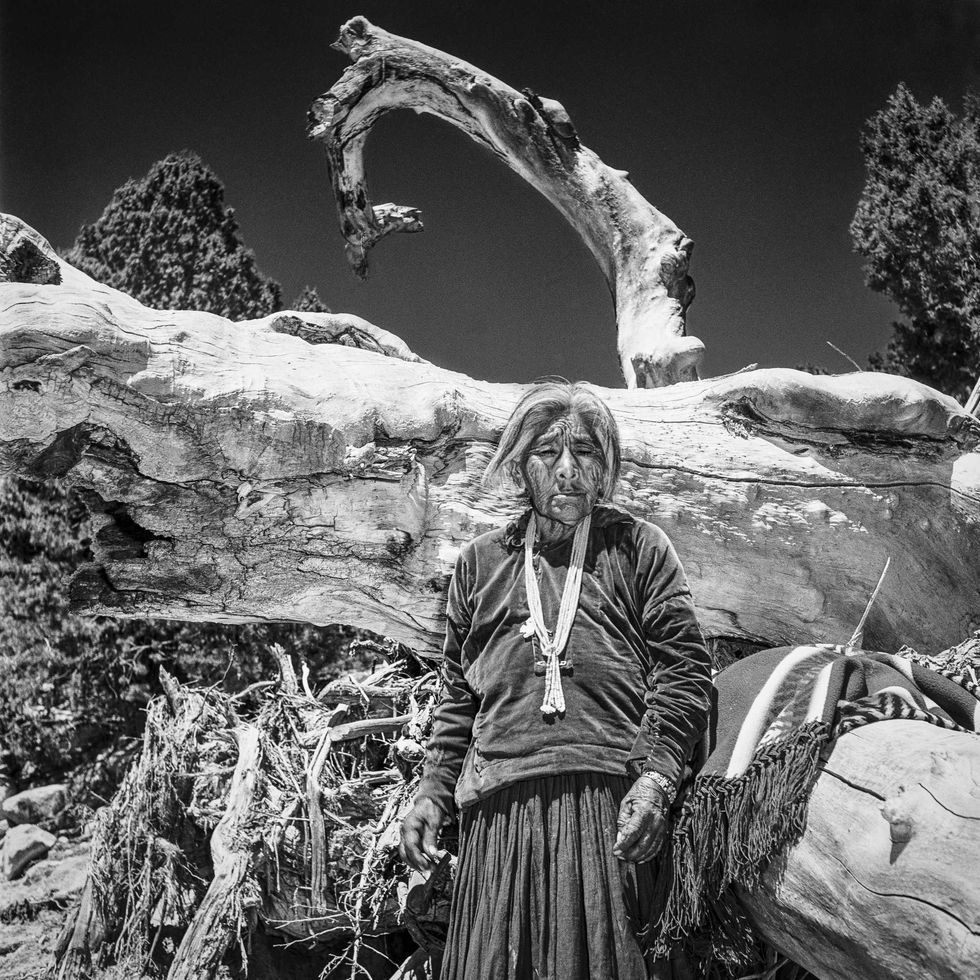 An elderly Navajo woman on the reservation.Barry Goldwater
“They trusted him,” his granddaughter remembers. “He became their friend.”
Goldwater often flew supplies into isolated communities after storms. On one occasion, he flew a pregnant woman who had gone into labor on a reservation to a hospital. The airplane afforded him access to parts of Arizona that remained hauntingly remote, while his relationships gave his camera access to a world unavailable to most outsiders.
Goldwater relied entirely on natural light. Faces emerge from the shadows, while wrinkles, jewelry, and fabric acquire a heavenly definition. His subjects’ gazes into the camera take on an ethereal quality.
Goldwater shot with different equipment throughout the course of his life, including Hasselblad and Nikon cameras. What began as the hobby of a young man with a Brownie developed into work impressive enough to earn the respect of Ansel Adams. The two men shared an inherent fascination with the American West, often shot together, and Adams eventually wrote the foreword to one of Goldwater’s photography books.
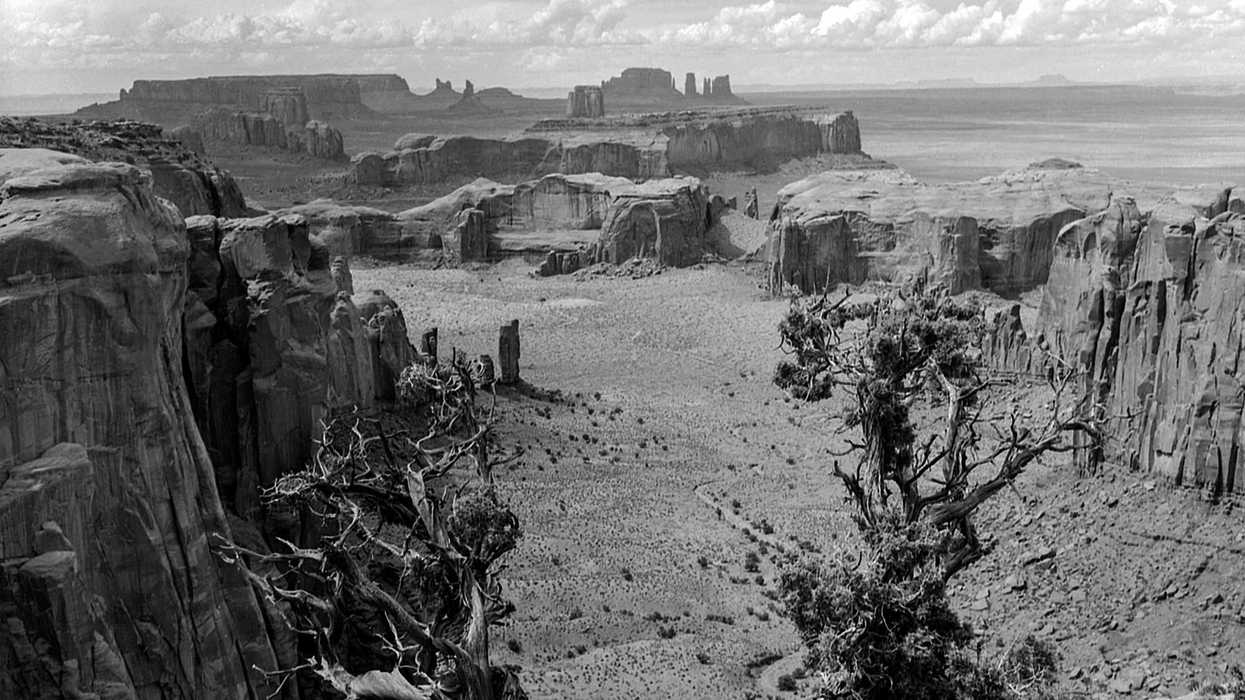
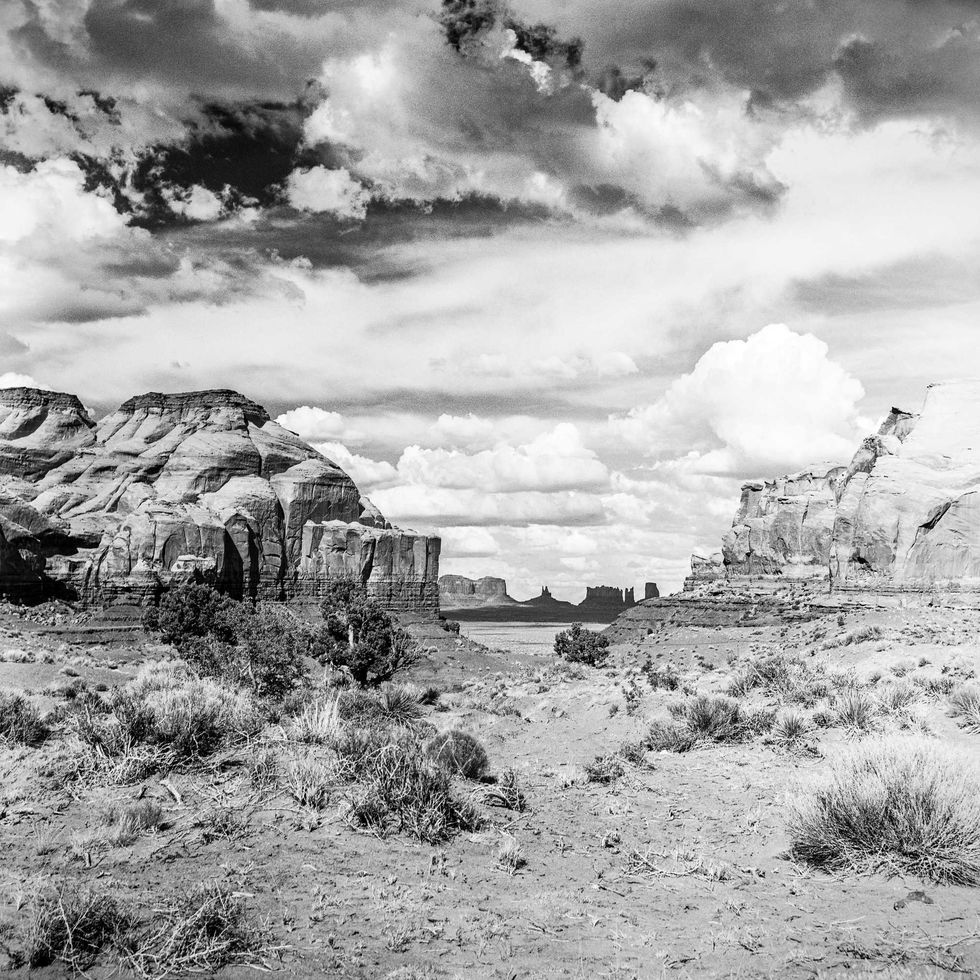 Valley of the MonumentsBarry Goldwater
Goldwater never thought of himself as being in the same league as Adams; he was merely a hobbyist. Politics was his profession, but the beauty and skill he showcases in the photos are from no mere amateur. Instead, you see a master of light and subject.
One photograph, known as The Shepherdess, became historically significant. According to Alison Goldwater, an editor at Arizona Highways wanted an image of Navajo girls tending sheep in the snow. He pointed out one obvious difficulty: snow was rare in Arizona. But while traveling one day, he encountered two girls, a flock of sheep, and a thin covering of snow. He raised his camera.
Goldwater relied entirely on natural light. Faces emerge from the shadows, while wrinkles, jewelry, and fabric acquire a heavenly definition.
The picture became the cover of Arizona Highways and the first color magazine cover in America. As age restricted his movements, the enormous Arizona vistas gave way to subjects closer to home. He photographed roses and the cacti in his garden.
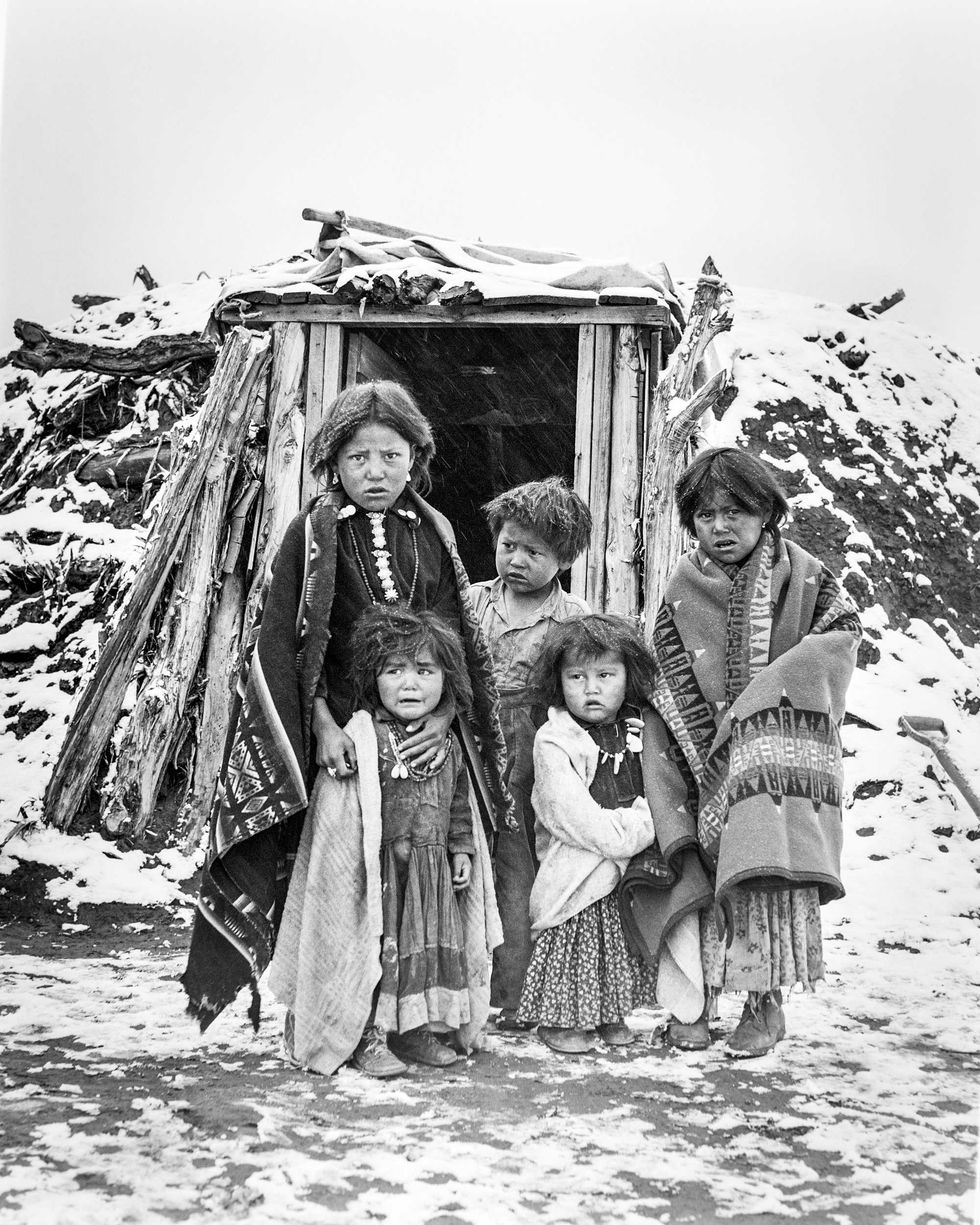 1946—A family of Navajo children standing in the snow in front of their hut.Barry Goldwater
The camera remained.
Today, those photographs are scattered among family holdings and institutional collections, including Arizona State University, the Heard Museum, and the University of Arizona’s Center for Creative Photography. Goldwater’s granddaughter founded the Barry & Peggy Goldwater Foundation to preserve, digitize, and exhibit her grandfather’s work. Museum shows have followed, including a major exhibition at Scottsdale’s Museum of the West, where visitors repeatedly expressed the same surprise.
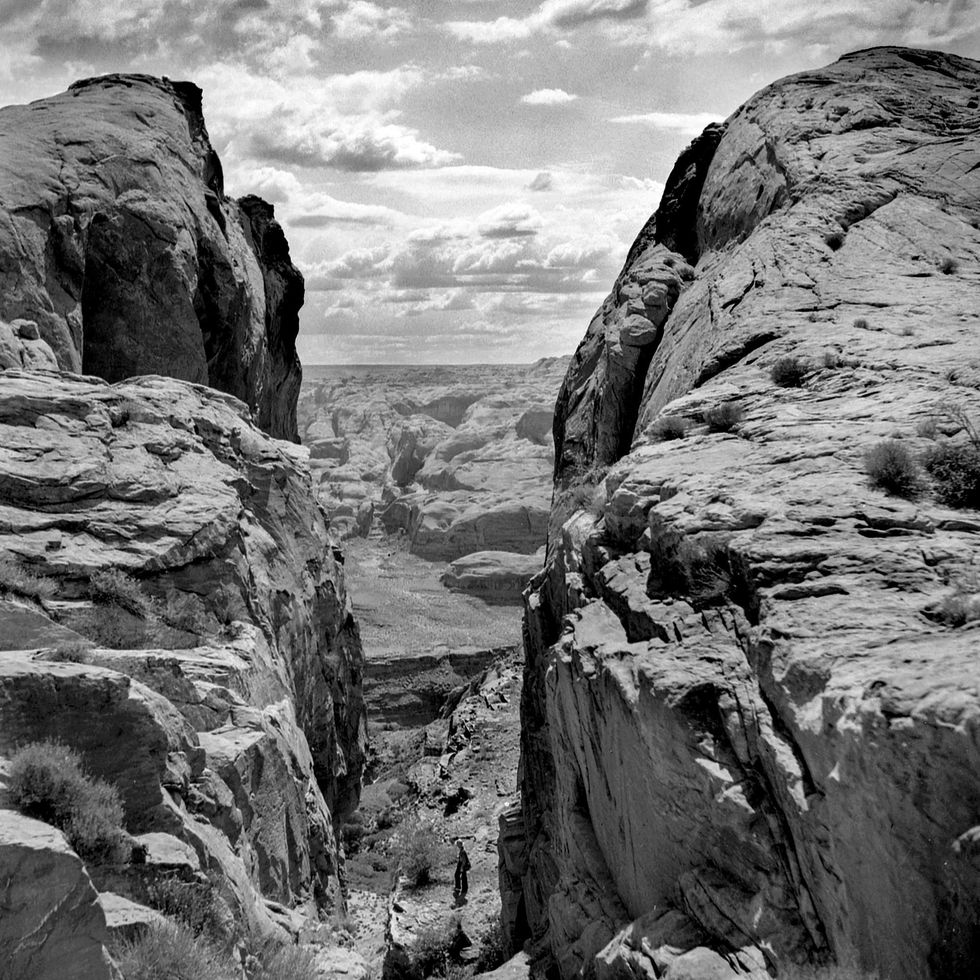 “The canyon is short, not over three quarters of a mile or, at most, a mile to where it tops out. I spent nearly three hours walking up and down because of my knee and my cameras. On the way down, I slipped and fell about ten feet, landing on my belly on the camera case. Cursing appropriately, I went on, none the worse for my clumsiness.”—Barry GoldwaterBarry Goldwater
They knew the senator and the presidential candidate but they had no idea that Barry Goldwater could take a photograph. Seeing the pictures now feels like learning about the man for the first time.
Politics necessarily reduces its participants to partisans. A lifetime becomes nothing but a voting record, an election, a quotation, a movement. His 1964 campaign became a chapter in political history. The human being disappeared somewhere behind “Goldwater conservatism.”
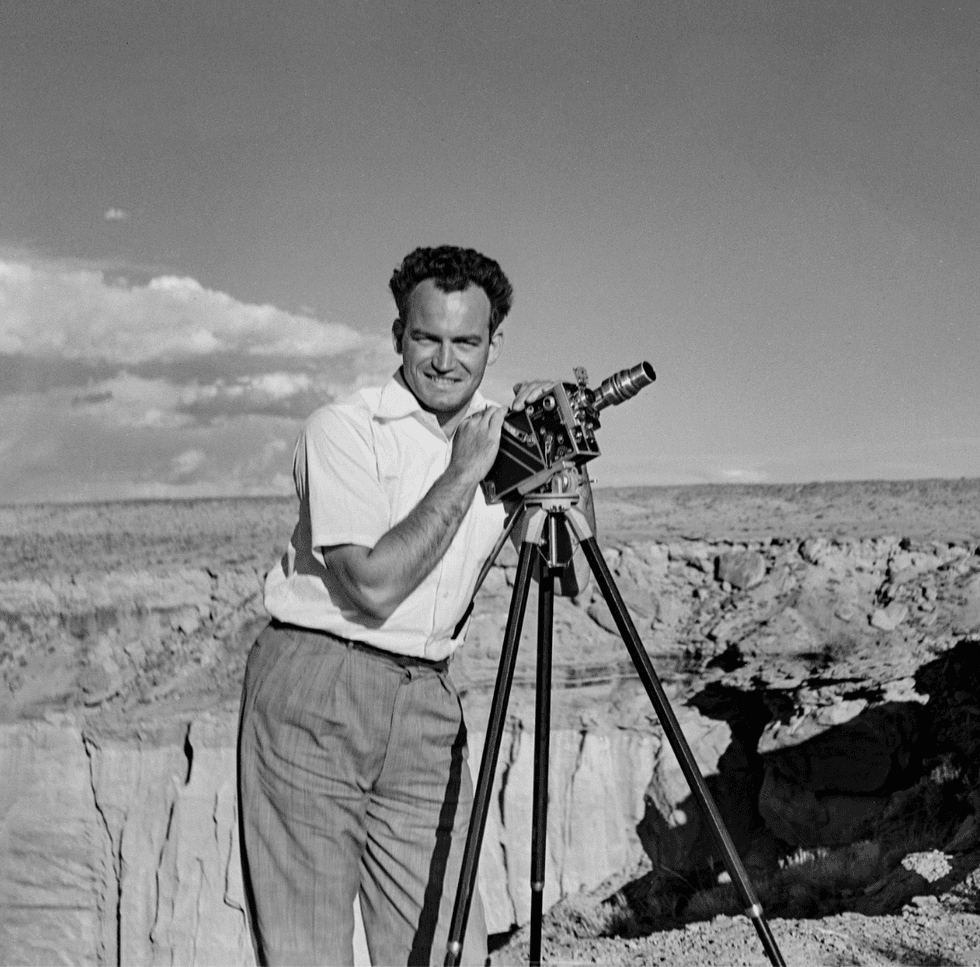 A young Barry Goldwater in his element. Barry Goldwater
His photographs, though, tell a different story.
Here is Goldwater beyond Washington, away from the television cameras. He is flying over Arizona, driving dusty roads, disappearing onto reservations, and standing at the edge of the Grand Canyon with a camera in his hands.
The photographs reveal what the speeches could never fully encapsulate: what Barry Goldwater saw when he described the promise and beauty of the American enterprise.
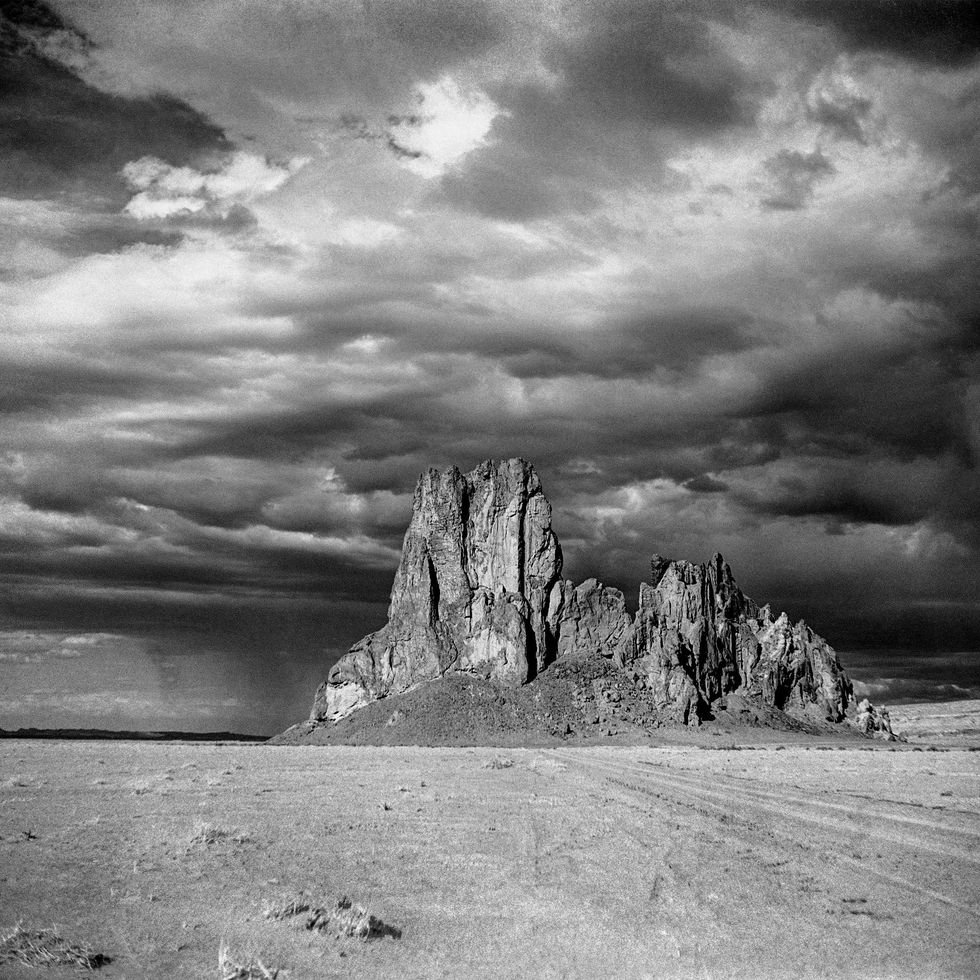 Church rock towers into a turbulent skyBarry Goldwater
And what he saw was the desert at sunset, the sky burned with copper, rose, and violet before surrendering to the indigo night and a billion stars in the endless vistas of his beloved Southwest.
—Words by Frontier Staff
Want to leave a tip?
We answer to you. Help keep our content free of advertisers and big tech censorship by leaving a tip today.