A southern oasis. | Adobe
Growing cities don’t have to lose their small town appeal. Greenville, South Carolina, embraces the best of both worlds.
You may think that a place where you can sit at a working, mid-century pharmacy lunch counter, hop on a trolley, and ride down a bustling tree-lined Main Street to an affordable, professional baseball game doesn’t exist.
It does, and it has a name: Greenville, South Carolina.
Situated where the coastal plain gently rises toward the Blue Ridge Mountains, Greenville anchors the largest metropolitan area in South Carolina and one of the country’s fastest-growing regions. It is almost equidistant between Charlotte and Atlanta.
Yet Greenville retains its small-town charm. From the lunch counter at Pickwick Pharmacy on Augusta Road to fashionable boutiques like Anthropologie to a thriving restaurant scene led by some of the nation’s rising chefs, the city has something for everyone.
Coming off Interstate 85, Greenville’s suburbs resemble countless others: shopping centers anchored by Walmart, Lowe’s, Cabela’s, and Home Depot, with big-name hotels scattered among them. But turn toward downtown and glimpse the towering wall of the Blue Ridge Mountains, and the atmosphere begins to change.
The highway ends abruptly, depositing you on tree-lined surface roads. As you approach the city’s main thoroughfare, the scale shifts, as if the city planners actually took people into account.
The highway ends abruptly, depositing you on tree-lined surface roads. As you approach the city’s main thoroughfare, the scale shifts, as if the city planners actually took people into account.
That human scale becomes most apparent when you turn onto Main Street. Broad sidewalks and open plazas encourage you to leave the car and explore on foot.
Readily available, affordable parking makes that easy. Two free hours on the street or in city garages may seem trivial, but they indicate clearly that Greenville wants people downtown.
There are no parking meters.
You’ll also notice the crowds. When I first visited downtown on a Tuesday night in early March 2015, I was struck by how full the streets were. During my four years in Greenville, I learned this was not an anomaly.
Along Main Street are dozens of top-notch restaurants that would stand out anywhere in the United States. Shortly after moving to Greenville, I tried Sushi Go at the north end of Main Street for lunch. It was not what I expected to find at the foot of a mountain in the South.
You can tell when a sushi joint is authentic, and this one was. The rice, the most important part of sushi, was perfect, the fish outstanding, and the yakitori and salmon collar particularly memorable. Sushi Go is owned by Chef Max Godo, a native of Saitama Prefecture who learned his trade in Japan.
Another giant of Greenville’s culinary scene is restaurateur Carl Sobocinski, whose Table 301 has helped seed a number of other excellent restaurants in the area.
Since opening Soby’s New South Cuisine in 1997, Table 301 has expanded to half a dozen restaurants and has helped promising chefs open others. Among them is Jianna, a superb upscale Italian restaurant with one of the best oyster bars not just in the South, but in the nation.
Sobocinski also helped launch Camp: Modern American Eatery and, in the summer of 2026, Enlō. Camp’s first executive chef was an alumnus of the three-Michelin-starred French Laundry. Enlō, led by French native and former Michelin-starred chef Nico Abello, offers a French tasting menu.
Other standouts include Halls Chophouse, a high-end steakhouse; Saskatoon Lodge, specializing in wild game and exotic meats like kangaroo and ostrich; and German restaurants catering to BMW’s executive crowd.
Perhaps most surprising is the Swamp Rabbit Cafe and Grocery just outside downtown on the Swamp Rabbit Trail. A former roommate of mine who graduated at the top of his pastry and baking class at the Culinary Institute of America turned me into a croissant snob. The Swamp Rabbit makes one of the best croissants in America—trust me.
The grocery is a MAHA adherent’s dream, featuring farm-to-table ingredients from across the Upstate. Its food hub also connects local farmers with Greenville restaurants, providing a steady market for them to sell their produce, dairy, and meat.
The nearly 20-mile Swamp Rabbit Trail runs from Greenville Technical College in the southern part of the city through downtown, Falls Park, and Unity Park before reaching Travelers Rest.
It follows the old Greenville & Northern Railway, nicknamed the Swamp Rabbit line because a good portion of its route ran through the swamps of Greenville County on bumpy tracks.
This heavily used trail connects Greenville County’s major open spaces throughout, including downtown’s Falls Park, which draws visitors nearly every day of the year, and at any time. The park centers on the 28-foot drop of Reedy River Falls and features open fields, picnic areas, and the stunning Liberty Bridge, designed by the same firm responsible for the iconic Zakim Bunker Hill Bridge in Boston.
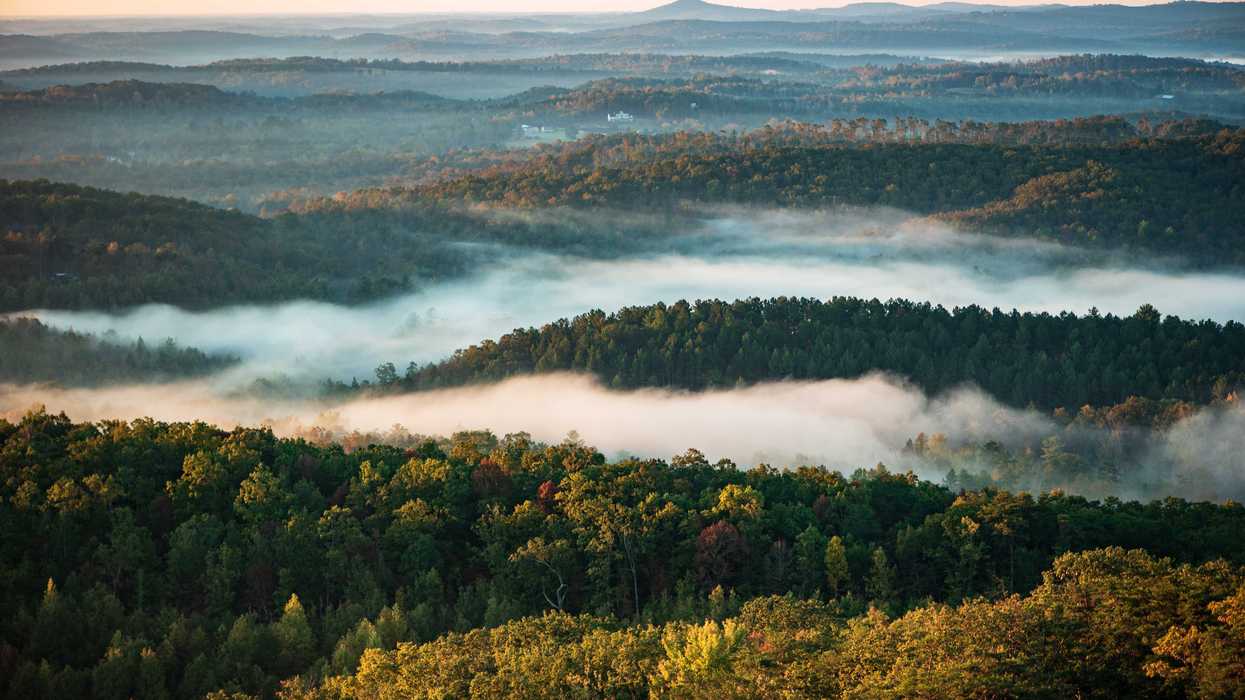
Farther north on Route 276 is Caesar’s Head, a natural rock outcropping at 3,200 feet in the Blue Ridge foothills. The view there is majestic. On a clear day, you can catch glimpses of northern Georgia.
Farther north still lies the quaint, mountain college town of Brevard, the gateway to Pisgah National Forest and the Blue Ridge Parkway. During my time in Greenville, I spent many weekends there with a coffee and a book, exploring the area and enjoying temperatures 20 degrees cooler than a sweltering Greenville 5,000 feet below.
Charleston’s beaches are about three to three and a half hours south, making Greenville a perfect place to settle if you love all four seasons of outdoor activity.
In the 2000s, Greenville built Fluor Field, an exact replica of Boston’s Fenway Park, complete with a perfectly scaled Green Monster. That’s when the Boston Red Sox A-level affiliate, the Greenville Drive, moved into the stadium. The park is regularly full throughout the summer.
Two venues anchor the concert scene. The 15,000- to 19,000-seat Bon Secours Wellness Arena hosts major performers such as Paul McCartney and is home to a minor-league hockey team. The 2,100-seat Peace Center, a more intimate space, presents touring artists, Broadway musicals, and the long-running Greenville Symphony Orchestra.
Each summer, the northern end of Main Street is closed off for Heritage Main Street Fridays, a block party with music, food, and adult beverages. It also hosts the yearly Oktoberfest, while Artisphere and Fall for Greenville close the entire street twice a year.
If you’re looking for a place to visit or relocate, Greenville, South Carolina, should be at the top of your list—even if my friend Bill, who found out I was writing this article, tells you “we’re full.”

Rob Eno