bollfilms.com
There are films you watch, films you forget, and films that perfectly capture the moment. Uwe Boll’s "Citizen Vigilante" belongs firmly in the last category.
It’s provocative, violent, and unafraid to push the audience past their comfort zone. I watched it for free on Rumble and thoroughly enjoyed every chaotic minute — as did Elon Musk, who has been one of the film's most vocal cheerleaders. It’s exactly the kind of cinematic hand grenade a hyper-sanitized culture desperately needs.
Watching a criminal actually face consequences on screen acts as a primal pressure valve, venting a lifetime of stored-up civic frustration.
Boll has spent his career making films that divide audiences. Never one to chase Hollywood approval or fashionable opinion, the German has built his reputation on confronting subjects most directors would rather avoid. His films are designed to provoke rather than comfort, confronting audiences with uncomfortable questions about crime, power, justice, and human nature. With "Citizen Vigilante," he has delivered what may be his most explosive film yet.
Unsurprisingly, the film has already been effectively banned in Boll’s homeland. Regulators refused to give it a rating, terrified by how squarely it hits the nail on the head regarding the taboo subject of immigrant crime.
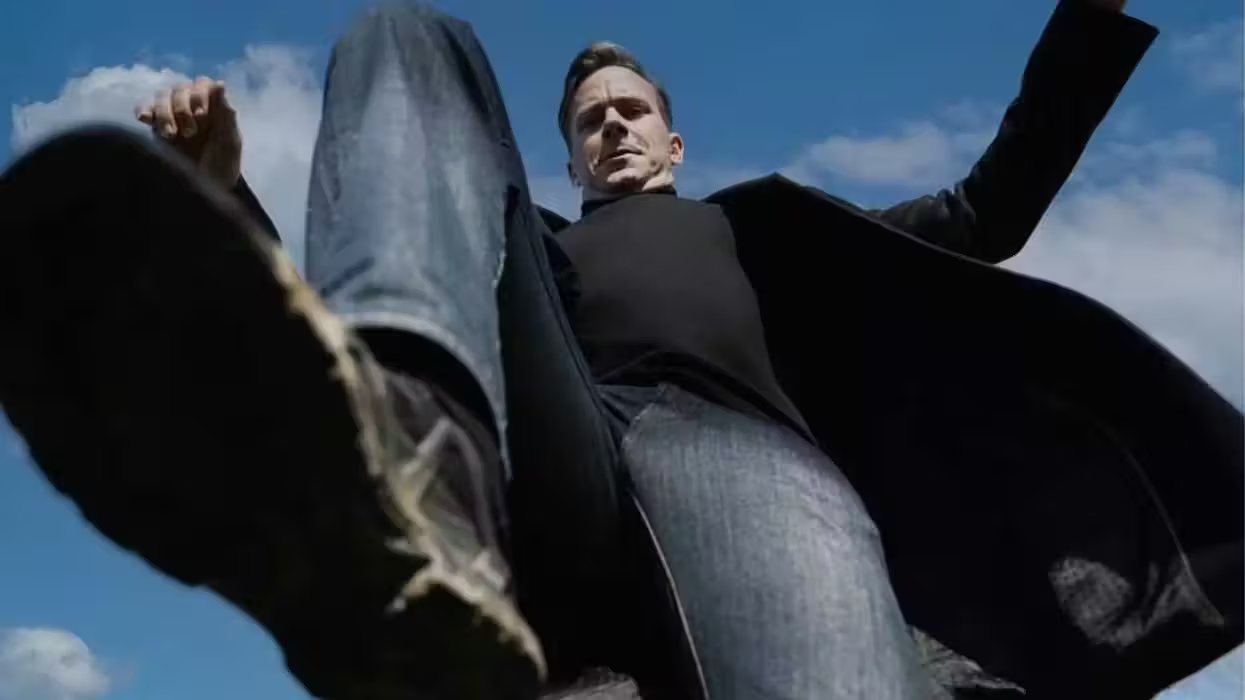
The story plays out like "Taken" on steroids. Armie Hammer stars as a relentless citizen vigilante — a protagonist for the right, an antagonist for the left — who decides that if the system won't protect people from brutal gangs, he will. He hunts down violent criminals, tackles rapists, and cleans house with zero remorse. For the uninitiated, there is a delicious irony in Hammer playing a ruthless meat-grinder of a hero, considering his Hollywood career was spectacularly derailed during #MeToo by the preposterous, headline-grabbing accusation that he was a literal, real-life cannibal.
But the sensational headlines surrounding its star shouldn't distract from what the film actually achieves. "Citizen Vigilante" taps into something many Americans and Europeans have been feeling for years: a growing belief that public safety has been abandoned while the institutions meant to preserve it are busy updating their LinkedIn profiles.
The average viewers aren't foaming-at-the-mouth psychopaths looking for bloodshed. They’re just exhausted taxpayers who enjoy seeing a little efficient, off-the-books urban renewal. They simply want the radical, avant-garde luxury of a competent government, functioning courts, and streets where a casual evening stroll doesn't require Kevlar.
Today, that modest expectation feels like pure wishful thinking.
Across much of Europe and parts of America, headlines dominate with depressing regularity: violent crime, repeat offenders, and overwhelmed police departments. Social media ensures that every shocking incident reaches millions before breakfast. Whether official crime statistics rise or fall matters less than the overwhelming public perception that governments have completely lost the plot. That perception is powerful, and ignoring it won't make it disappear.
When citizens watch career criminals coast through the justice system on a judicial subscription plan — while prosecutors decline charges and politicians offer nothing but thoughts, prayers, and early release — frustration ceases to be passive. Eventually, cynicism becomes the prevailing sentiment, and people begin to ask a rather important question: What happens when the people responsible for enforcing justice appear completely incapable of delivering it?
That question sits right at the heart of "Citizen Vigilante."
RELATED: Banned 'anti-migrant' movie 'Citizen Vigilante' shoots to No. 1 after Elon Musk intervention
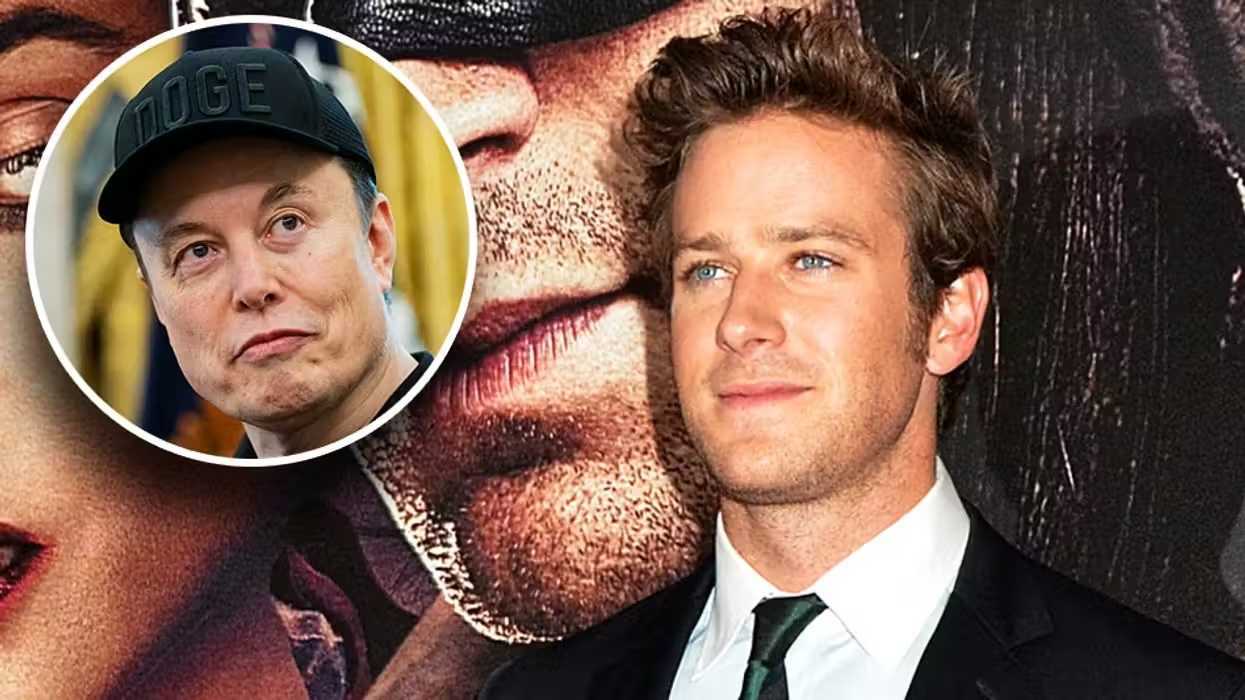 L-R: ALLISON ROBBERT/AFP/Getty Images; Foc Kan/WireImage/Getty Images
Hammer’s character, Sanders, is no comic-book superhero in spandex. He's simply a man looking at a broken social contract, watching violent thugs thrive while victims suffer, and decides to roll up his sleeves and fix the sewage himself. You don't have to endorse his butcher-shop methods to appreciate the exact brand of exhaustion driving them.
The enduring appeal of vigilante cinema, from Clint Eastwood classics to "Death Wish," has never reflected a secret public desire for lawlessness. Rather, it exposes a deep craving for consequences, a desperate desire to see the cosmic ledger balanced when the authorities refuse to do it themselves. When official justice goes missing, fictional justice becomes deeply satisfying. Watching a criminal actually face consequences on screen acts as a primal pressure valve, venting a lifetime of stored-up civic frustration.
The film understands this dynamic remarkably well, but it also highlights a dark humor running beneath the entire premise. Governments spend fortunes producing nauseating public relations campaigns celebrating "community resilience" while struggling to deliver the rather unfashionable service of keeping parasitic scum off the streets.
Citizens are treated to endless speeches about values while wondering if they'll get stabbed on the subway ride home. Somewhere along the way, basic competence checked into a witness protection program.
No wonder the film has captured the cultural imagination. Viewers want to see what a world with accountability, no matter how brutal, actually looks like. Many in their 20s and 30s have never known a society where real consequences actually exist. I am one of those people.
"Citizen Vigilante" operates best not as a love letter to anarchy, but as an autopsy of our institutions. After all, the rogue actor only becomes a romantic figure when legitimate authority is revealed to be purely ornamental.