
PPhilippe Brysse/Getty Images
Night owls who stay up watching TV or on their devices are known to get a little less sleep, but there is another factor that is contributing to a lower quality of life.
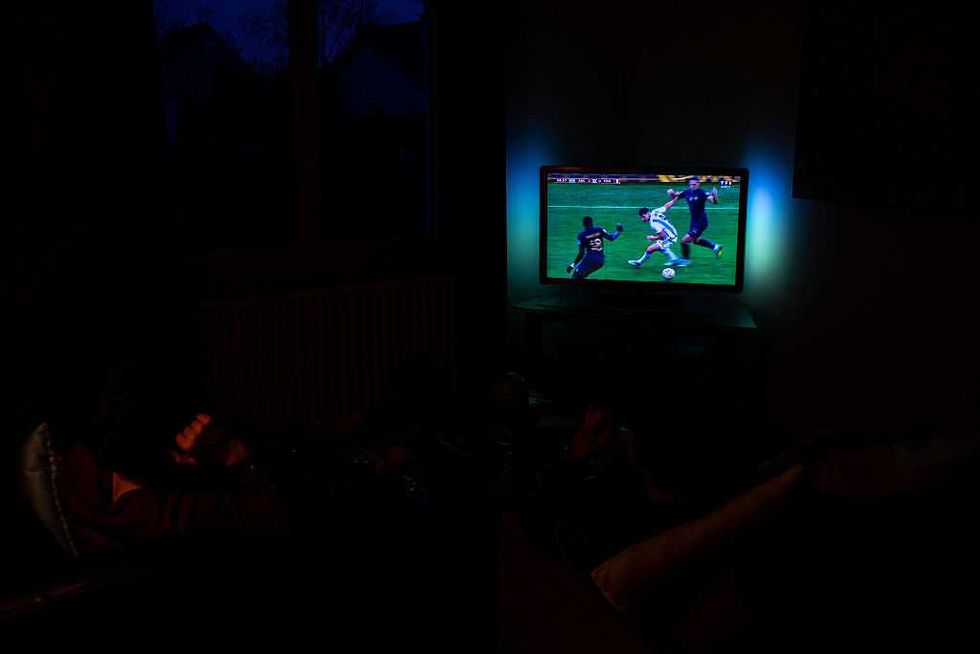
A glance at studies over the last decade have shown that watching devices in the bedroom and at night before bed has increased, with nearly half the population giving in to the blue glow.
'When people eat may be just as important as what they eat.'
A 2025 study of more than 120,000 participants found that over 40% (~50,000) reported daily screen use before bed.
However, another nighttime ritual is contributing to poor health, specifically among women: late-night eating.
A study from New Zealand evaluated hundreds of women and their eating habits, tracking body-fat percentage, body mass index, and fat ratio.
Broken down into "evening types" and "morning types," those who stay up late had a higher body-fat percentage than the morning people.
Staying up seemed directly related to diet, as the study showed the nighthawks consumed more energy, protein, carbohydrates, and fat after 8 p.m.
The ET group also had a reportedly worse lipid profile, which refers to blood sugar levels.
RELATED: Doctors found a mass in her stomach — and the bizarre cure for it in the fridge
 ALAIN JOCARD/AFP/Getty Images
The bodies of women who were evening types burned off less energy and ate food that is less nutrient-dense as well. This was coupled with lower dietary intake in the morning and eating more in the evening. The study said that evening intake was "significantly associated" with a higher body-fat percentage.
For evening type ladies, there was also a "potentially greater susceptibility to obesity."
Compared to the morning types and those in between, evening types had a 20.3% higher body mass index and had approximately 6% more body fat. There was also a +12.6% difference in the android fat to gynoid fat ratio; meaning a greater proportion of body fat is concentrated in the abdomen area rather than the hips and thighs.
This all came despite the ETs and MTs both consuming similar amounts of energy and nutrients.
"The research highlights that when people eat may be just as important as what they eat," said a senior author of the study, Rozanne Kruger, per Newsmax.
 Martin Bertrand/Hans Lucas/AFP/Getty Images
According to Kruger — a professor and nutrition researcher at Griffith University in Brisbane, Australia — limiting food late at night could improve health even in those who feel the need to stay up.
The study further concluded that the timing of meals in relation to when a person goes to sleep is important to ongoing "metabolic health outcomes."
Like Blaze News? Bypass the censors, sign up for our newsletters, and get stories like this direct to your inbox. Sign up here!