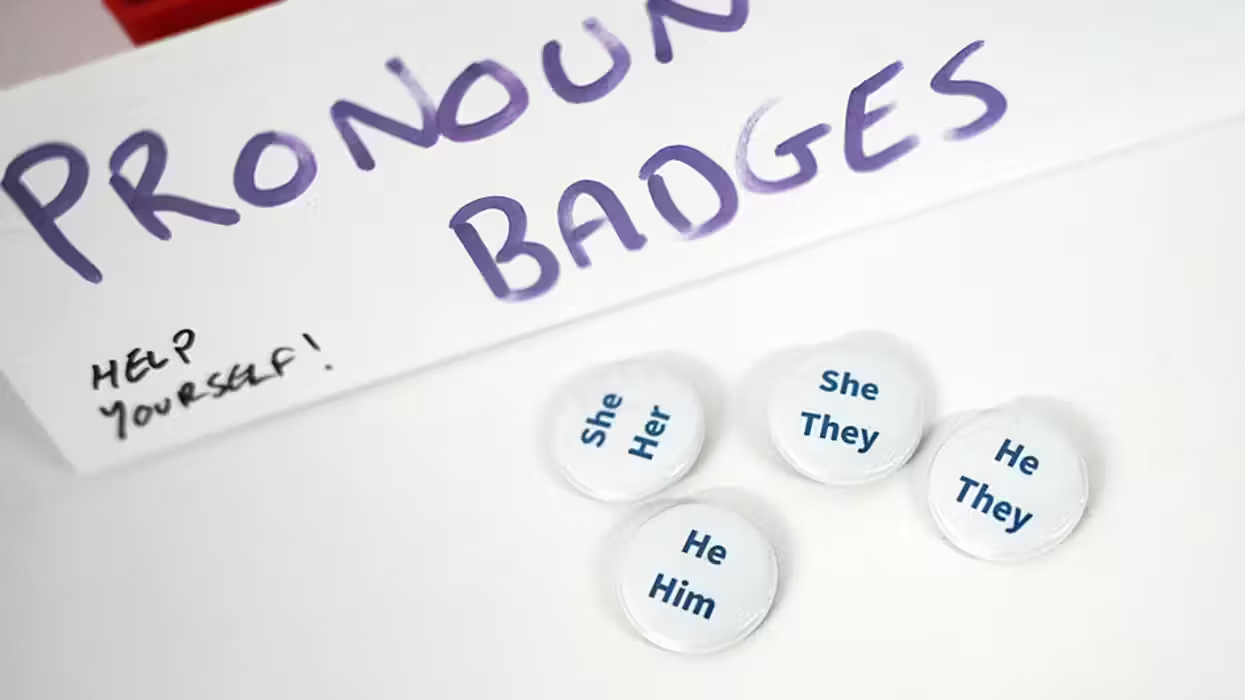
Photo illustration by Christopher Furlong/Getty Images
Freedom of speech is still the law of the land in the United States, but on college campuses, that is apparently up for interpretation.
Look no further than the University of California and its sprawling system of 10 campuses across the state. One set of policies and standards governs all of its campuses, and with it comes a ban on "misgendering" and adhering to biological reality.
'UC's policy goes too far in restricting protected speech.'
Under UC's "Sexual Violence and Sexual Harassment" policy — which is available in four different languages — sexual harassment is described as including conduct like "acts of verbal, nonverbal, or physical aggression, intimidation, or hostility based on gender, gender identity, gender expression, sex- or gender-stereotyping, or sexual orientation."
In its FAQ section of the same document, "intentional and repeated use of a name or pronoun inconsistent with the individual's gender identity (i.e., misgendering)" is also considered harassment. The policy even extends its harassment definition to include the use of a person's "dead name," which in many cases means one's legal name.
So long as the conduct is "unwelcome," students or faculty who violate the policy are subject to discipline, including dismissal, aka expulsion.
Fortunately, a federal judge has stepped in and entered a preliminary injunction that bars UC from enforcing its policy for the time being, following a lawsuit from Defending Education.
In court documents, the Central District of California Southern Division's decision included an example of what UC considers to be harassment.
The school said that harassment based on gender identity includes "when a transgender man is intentionally and repeatedly called by his dead name (i.e., refers to a name that a transgender person was given at birth but that they no longer use), or intentionally and repeatedly referred to by 'Miss' or 'Ms.,' by a professor in an intentionally mocking manner."
RELATED: CALIFORNIA IDLE: Iconic reality show ditches Hollywood after 24 seasons
 Wiktor Szymanowicz/Future Publishing/Getty Images
The court also made its decision based on precedent, citing two recent cases that establish "UC's policy goes too far in restricting protected speech."
In Bates v. Pakseresht, the court noted that adoptive parents being forced into "affirming" a child's sexual orientation and gender identity (including preferred pronouns) "quite clearly restrict[ed] and compel[led] speech based on both content and viewpoint."
Furthermore, in Defending Education v. Olentangy, the court explained, a school district was prevented from enforcing a similar policy against Defending Education's members.
The court documents from the latest Defending Education lawsuit also pointed to training that "UC students must also complete," described as sexual violence and harassment, anti-discrimination, prevention, and education training, or SHAPE.
The lawsuit said the training formerly included the following scenario as an example of a hostile environment:
My name is Mona, and I am transgender. My classmate Jane continues to call me James, which was my name before I transitioned. Jane refers to me as a man and complains when I use the restroom. I asked her to stop, but she does not. I feel very disrespected and want this to stop.
The lawsuit notes, however, that "UC declares that this example is no longer included in the SHAPE training."
RELATED: Campus free speech is alive — barely
 Eric Thayer/Los Angeles Times/Getty Images
To the court, all of this evidence was sufficient enough to grant the injunction.
Nicole Neily, president and founder of Defending Education, told Blaze News in a statement that her organization is grateful for the district court's decision against "the University of California system's coercive speech policy against our members."
Neily also called it "unconstitutional" for public universities to compel student speech.
"We will continue to defend this principle in California and other schools across the country as needed," she added.
UC did not respond to a request for comment from Blaze News.
Like Blaze News? Bypass the censors, sign up for our newsletters, and get stories like this direct to your inbox. Sign up here!