Josh Edelson/AFP/Getty Images
For the first time in more than 40 years, privately developed nuclear reactors are switching on in America.
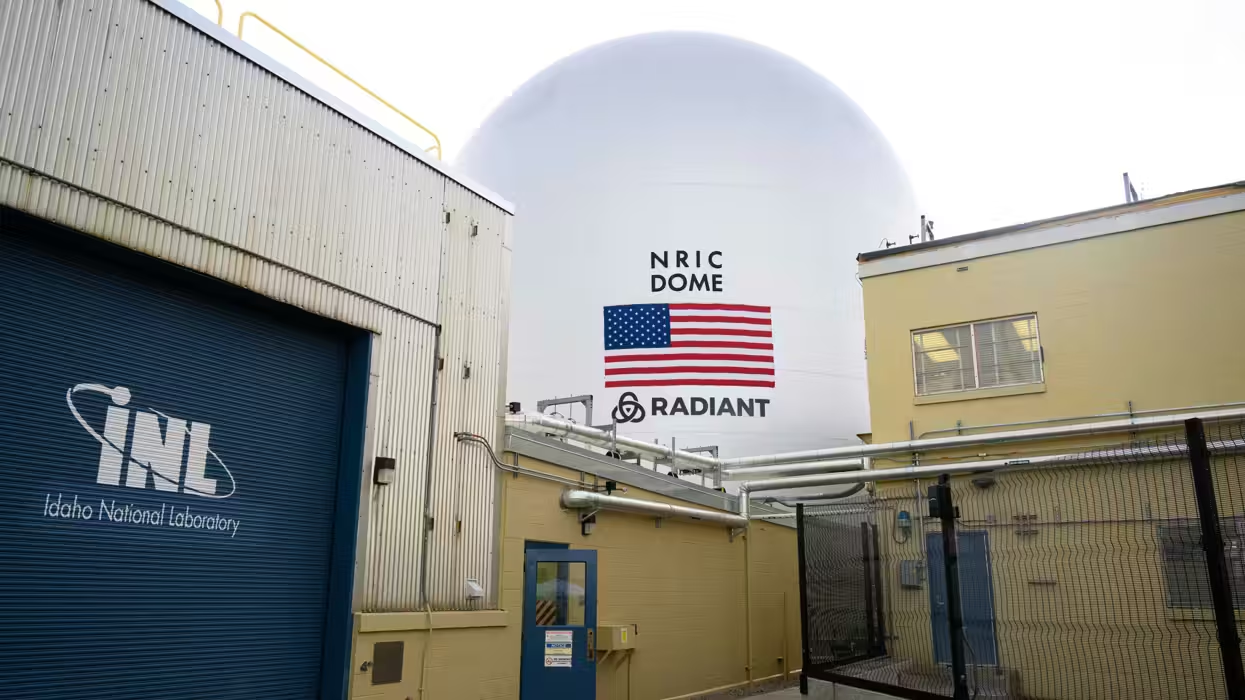
On June 4, Antares Nuclear's Mark-0 reactor went critical at the Department of Energy's Idaho National Laboratory. Valar Atomics followed on June 18, producing heat from a reactor core inside a tentlike structure in the Utah desert. The Department of Energy called it "the rebirth of America's nuclear industry."
'Nuclear in America has been defined for too long by delays, by companies that said they would and then didn't. ... Today is the first of those commitments delivered.'
President Trump has long been skeptical of large traditional reactors, saying they tend to get "too big and too complex and too expensive." But he bet big on small modular reactors, pledging to "approve new reactors" and "slash the red tape."
In May 2025, Trump signed four executive orders and set a deadline: at least three new small reactors online by July 4, 2026 — the nation's 250th birthday.
The Department of Energy's Reactor Pilot Program followed, fast-tracking 11 new designs and sidestepping the Nuclear Regulatory Commission's traditional licensing process, which previously took more than 20,000 hours to complete. Oversight was placed with the Energy Department instead.
Antares CEO Jordan Bramble put the stakes plainly: "Nuclear in America has been defined for too long by delays, by companies that said they would and then didn't. We said criticality in 2026, electricity production in 2027, and power to the warfighter in 2028. Today is the first of those commitments delivered on the schedule we set."
Chief nuclear officer at Ocean Atomics Nick Touran summed up the pace: "We haven't done anything this fast, basically ever."
RELATED: Oil industry warns Trump about gas price SHOCK coming soon: Report
 Josh Edelson/AFP/Getty Images
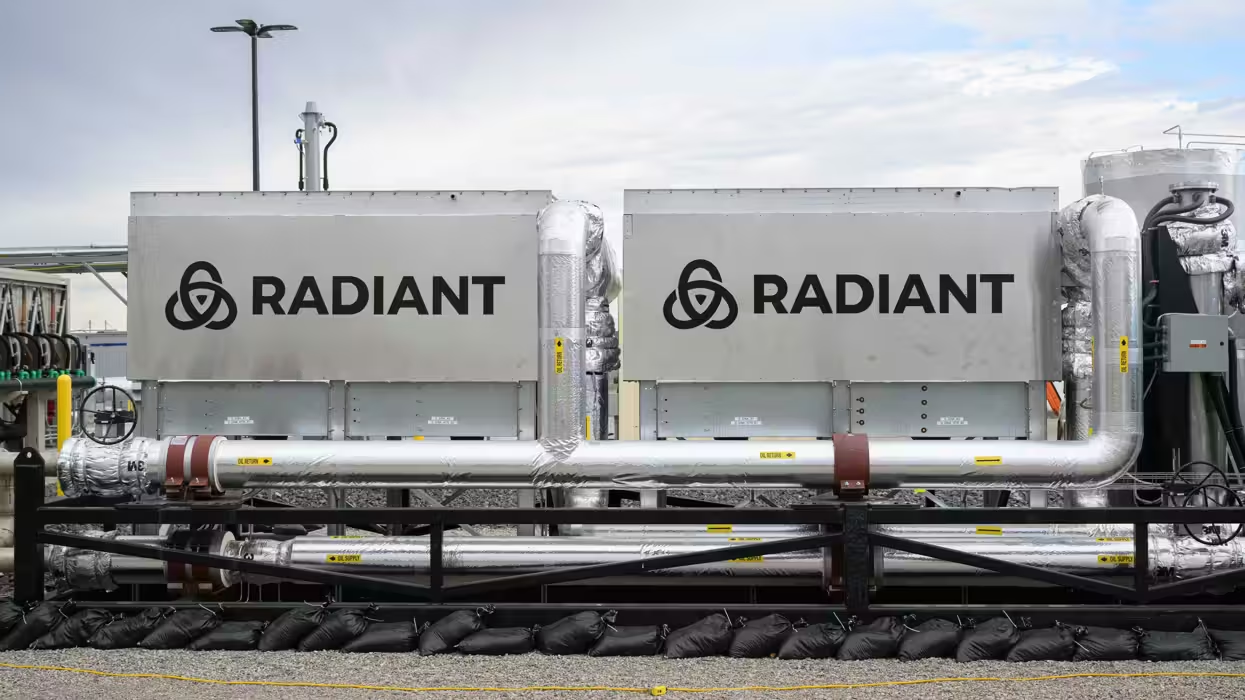
The reactors look nothing like today's massive plants, which average 44 years old. Radiant's design uses small nuclear fuel balls — its chief nuclear officer compared them to gobstoppers — built to be mass-produced and deployed anywhere from military bases to disaster zones. A third reactor still needs to go critical before July 4 to fulfill the president's pledge.
This month, the Trump administration also announced $17.5 billion in loans to build 10 large-scale conventional nuclear plants using Westinghouse technology. Construction is targeted to begin by 2030.
Idaho National Laboratory Director John Wagner made the bigger ambition clear: "The goal was never just criticality. The goal is 400 gigawatts of nuclear capacity by 2050."
Critics aren't sold. Edwin Lyman of the Union of Concerned Scientists called the race "essentially an exercise in public relations," warning that slashing regulations undoes decades of safety lessons. "This is taking us back to the 1950s, and that is not progress."
The program skipped public comment periods and environmental reviews — which the DOE said were unnecessary.
Like Blaze News? Bypass the censors, sign up for our newsletters, and get stories like this direct to your inbox. Sign up here!