REBECCA NOBLE/AFP/Getty Images
Owing to their nation's Temporary Protected Status, hundreds of thousands of Haitian migrants have avoided deportation despite greatly adding to the strain on American resources in places such as the blue-collar city of Springfield, Ohio, where they were accused by then-presidential candidate Donald Trump of "eating the pets of the people that live there."
After a protracted legal battle that went all the way to the U.S. Supreme Court, the activist judge who initially held up the process has finally conceded that the Trump administration can start giving Haitian migrants the boot.
The Trump administration announced last summer that Haiti's TPS was, after 16 years, finally coming to an end, having determined that the Caribbean nation no longer meets the conditions for special status, owing largely to significant improvements in domestic safety and stability.
'You don't have status inside this country any more.'
The revocation was, however, held up in the courts.
In Washington, D.C., U.S. District Judge Ana Reyes — a foreign-born, Biden-appointed, lesbian judge who previously worked as a lawyer to fight the first Trump administration's immigration policy and helped the U.N. secure asylum for so-called refugees — gave her fellow immigration activists cause to hope on Feb. 2, blocking the revocation of Haiti's TPS.
Reyes, originally from Uruguay, claimed that former DHS Secretary Kristi Noem not only violated the Administrative Procedure Act and the Fifth Amendment's Due Process Clause when terminating the TPS designation for Haiti but had likely done so "because of hostility to non-white immigrants."
RELATED: Trump-hating Republican governors conspire with Democrats to smuggle in even more migrants
 Chip Somodevilla/Getty Images
After the U.S. Court of Appeals for the District of Columbia declined in March to block Reyes' ruling and kept Haiti's special status in place, the government kicked the matter up to the nation's highest court.
In late June, the U.S. Supreme Court delivered the Trump administration a huge victory, overturning the lower court's ruling.
In the majority opinion, Justice Samuel Alito rejected the suggestion that race was a motivating factor behind the TPS revocation and emphasized that the "TPS statute plainly bars consideration of respondents' non-constitutional claims."
In the wake of the Supreme Court making mincemeat out of her ruling, Reyes issued an order on Wednesday acknowledging the reversal of her judgment and what it necessarily entails.
The foreign-born judge, who previously had a great deal to say about the matter, kept her admission of defeat brief, noting that her stay of termination "is no longer in effect."
Despite Reyes' insinuation that the government was waiting on her say-so, James Percival, general counsel of the Department of Homeland Security, noted, "Haiti TPS ended when the Supreme Court mandate issued on July 27. I will give Judge Reyes kudos though for taking the L with grace and not doing something bonkers like many of her colleagues."
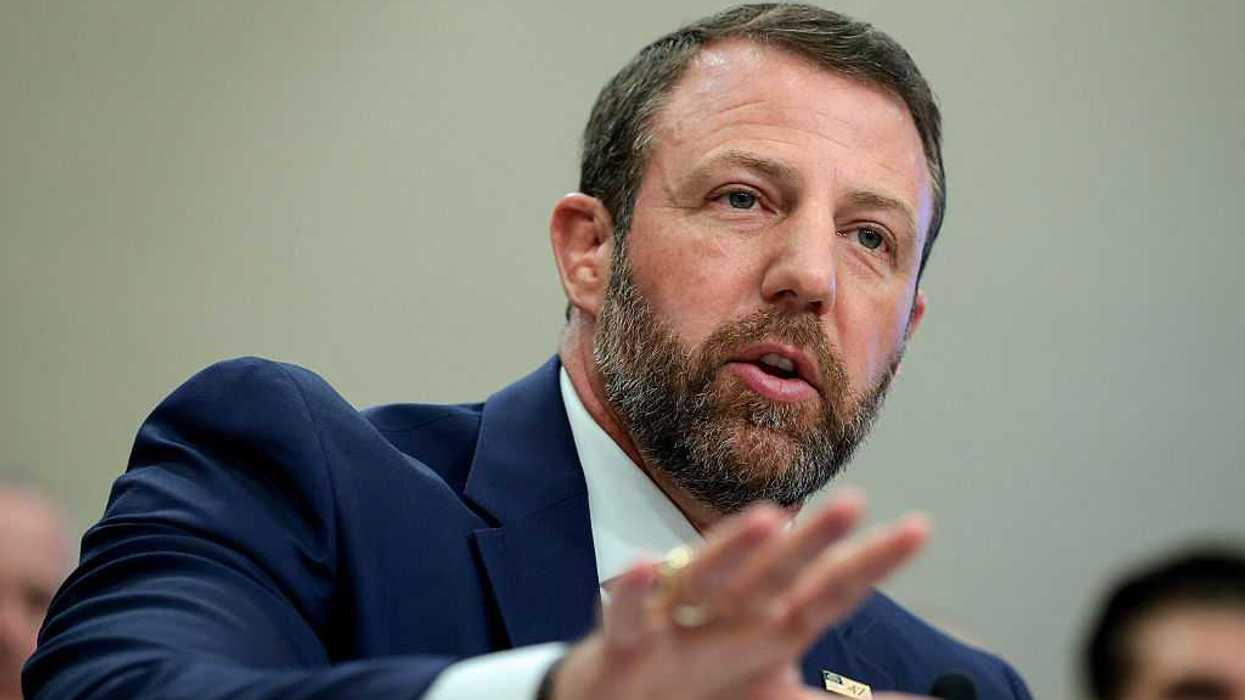
DHS Secretary Markwayne Mullin issued a message to Haitians with suspended special statuses: "We're going after them right now. We are giving them an opportunity to either leave on their own, and we'll help you, or we'll arrest you and send you back."
"Either way, you don't have status inside this country any more," continued Mullin. "That has been litigated. The courts spoke very clearly. We knew that we were going to win this because in its name itself it says, 'Temporary Protected Status.'"
Steve Foster, the immigration policy coordinator for the Institute for Justice and Democracy in Haiti, told ABC News, "Haitians with TPS, regardless of whether they have a pending asylum claim, have gotten a 'DHS Call-In Letter' to appear at ICE offices in person."
Foster said that some Haitians have reportedly been assigned future court dates and given ankle monitors.
These efforts are reportedly under way in Springfield — an Ohio city that has in recent years heard allegations of Haitians eating pets and wildlife and seen a significant spike in Haitian-caused traffic accidents.
In 2024, Springfield Mayor Rob Rue admitted that the tens of thousands of Haitians who had recently poured into his city — a city that had a population of just over 58,000 in 2020 — "taxed" the "infrastructure of the city, our safety forces, our hospitals, our schools." According to the city, there were more than 15,000 migrants presently residing in Clark County alone.
Viles Dorsainvil, the head of a Haitian support group in Springfield, confirmed the government's efforts to get the ball rolling on Haitian migrants' ouster.
"We are just helping these folks to go to this appointment, and when they get there, they interview them and eventually put [an] ankle monitor on them," said Dorsainvil.
Like Blaze News? Bypass the censors, sign up for our newsletters, and get stories like this direct to your inbox. Sign up here!