© 2026 Blaze Media LLC. All rights reserved.
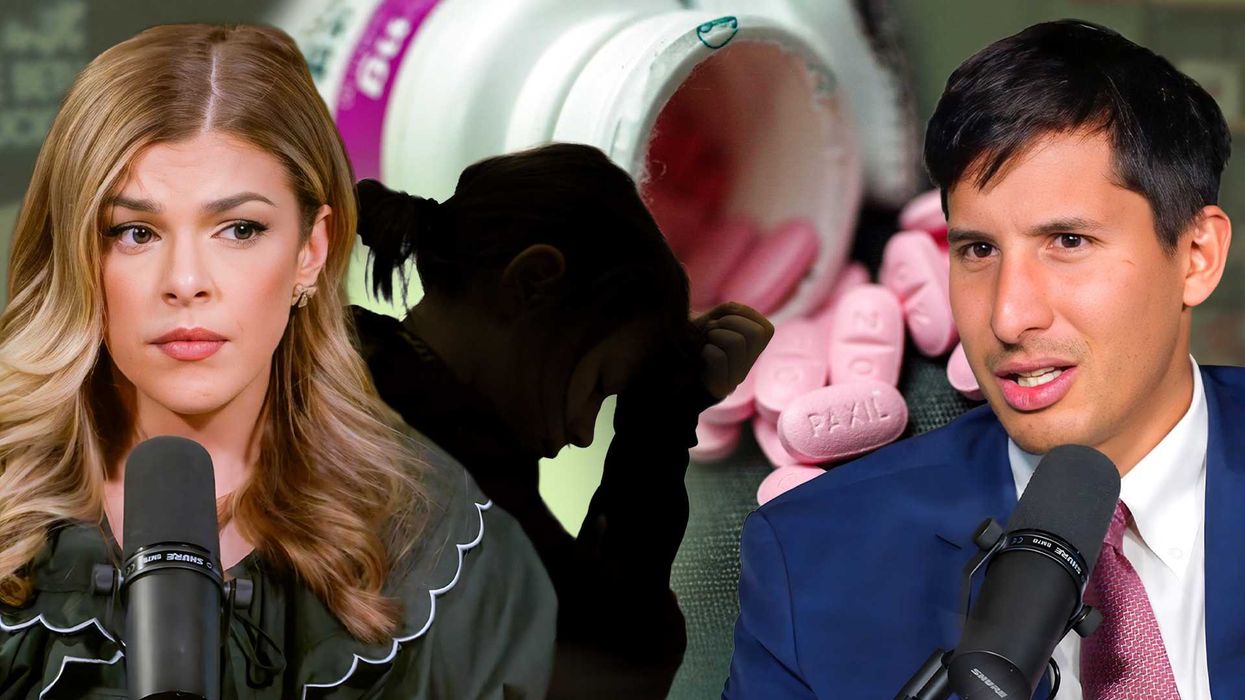
Modern depression diagnoses rely on arbitrary checklists, while the 'chemical imbalance' narrative behind antidepressants survived not because it was proven, but because it was profitable.
Most people assume a diagnosis of clinical depression involves objective testing — a blood draw, a brain scan, or some clear biological marker. According to Dr. Josef Witt-Doerring, that assumption is wrong.
“They make you pick from nine symptoms. And it’s like if you have five out of nine of these symptoms — so it’s, like, low mood, anxiety, sleep problems … lack of interest in things … feelings of guilt. It’s just a very arbitrary list of symptoms that kind of make sense,” Witt-Doerring explains.
“They make sense for people who are depressed. And the way the people who wrote this diagnostic manual wanted to define depression was like, ‘Oh, well, if you just have any combination of five of them out of nine, we’ll say you have depression,’” he continues.
And there’s a reason for this lower standard of care.
“Where the big issue is happening in the U.S. and in much of the sort of the Western medicalized world right now is within family medicine. Because depression is so common, 80% of our prescriptions are being handed out by family med docs,” Witt-Doerring tells Stuckey.
“There are incentives that make it so the doctors want to see you in a very short period of time. So the aim of the game is billing insurance in this country. And so if you saw one person for an hour versus four people in an hour, and shorter visits, it works out that you essentially make double,” he continues.
The story behind SSRIs is no more comforting.
“Back in the 1950s, a drug was discovered called iproniazid, and it was being used as an anti-microbial for patients with tuberculosis,” he tells Stuckey, pointing out that while the drug was meant to cure people of tuberculosis, it also resulted in them perking up emotionally.
“They said, ‘Hmm, you know, they’re more energetic, they’re more lively, maybe this drug has some promise as an antidepressant. Let’s go and give to depressed patients.’ And so they went and they did that, and it worked,” he continues.
However, the official narrative that was born of this discovery could have “gone in two ways at this time.”
One narrative could have been that the drug has energizing properties that perked patients up, and what doctors were witnessing was a “drug effect.” The other narrative was that “maybe these drugs are actually helping these depressed patients because they don’t have enough serotonin, norepinephrine, dopamine.”
“And so one narrative survives and the other dies. And so the narrative that survives is that the patients have these chemical imbalances. And the reason for that is because it’s a better commercial narrative,” he explains, before pointing out that after the brains of depressed people versus non-depressed individuals were studied, not a single biomarker had been found.
And rather than curing depression, they’re “simply masking symptoms.”
“You could have a moral argument and say, ‘Yeah, morally I disagree with that.’ But you could also just say, ‘Well, I don’t really care. I just want to feel well and I’m suffering.’ And I think that’s totally fair because we want people to feel better,” he explains.
“But then the issue is we don’t tell them about, ‘Hey, these are drugs just like any other drug. They’re going to wear off over time, and there’s also risks of prolonged use because our brains aren’t used to being on them,’” he says.
“It’s just a lie,” he continues. “You know, it’s just a misleading message about the safety of the drugs and how they work.”
Want more from Allie Beth Stuckey?
To enjoy more of Allie’s upbeat and in-depth coverage of culture, news, and theology from a Christian, conservative perspective, subscribe to BlazeTV — the largest multi-platform network of voices who love America, defend the Constitution, and live the American dream.
Want to leave a tip?
We answer to you. Help keep our content free of advertisers and big tech censorship by leaving a tip today.
News, opinion, and entertainment for people who love the American way of life.
BlazeTV

BlazeTV Staff
News, opinion, and entertainment for people who love the American way of life.
@BlazeTV →more stories


Sign up for the Blaze newsletter
By signing up, you agree to our Privacy Policy and Terms of Use, and agree to receive content that may sometimes include advertisements. You may opt out at any time.
Related Content
© 2026 Blaze Media LLC. All rights reserved.
Get the stories that matter most delivered directly to your inbox.
By signing up, you agree to our Privacy Policy and Terms of Use, and agree to receive content that may sometimes include advertisements. You may opt out at any time.