Andrew Harnik/Getty Images
As an AP U.S. History student nearly 40 years ago, one of the more vexatious essay questions my classmates and I had to tackle was whether the War of 1812 was a matter of “national honor” or “national interest.”
As I recall, we went round and round for days before settling on national honor.
National honor can serve the national interest. National vanity does not.
Honor is often a dumb reason to go to war.
Often — but not always! In reality, the war was fought for honor and interest. The British were impressing American sailors, interfering with American commerce, and treating the sovereignty of the young republic as something they could disregard when convenient.
National honor and national interest were entangled.
Donald Trump is very big on national honor. He wants America respected. He hates the idea that foreign governments might laugh at us, exploit us, rip us off, or conclude that the United States is too weak or timid to defend its interests.
There is much to be said for that instinct.
The problem is that Trump sometimes confuses national honor with national interest. And sometimes he confuses both with national vanity.
Which brings me to Lake America.
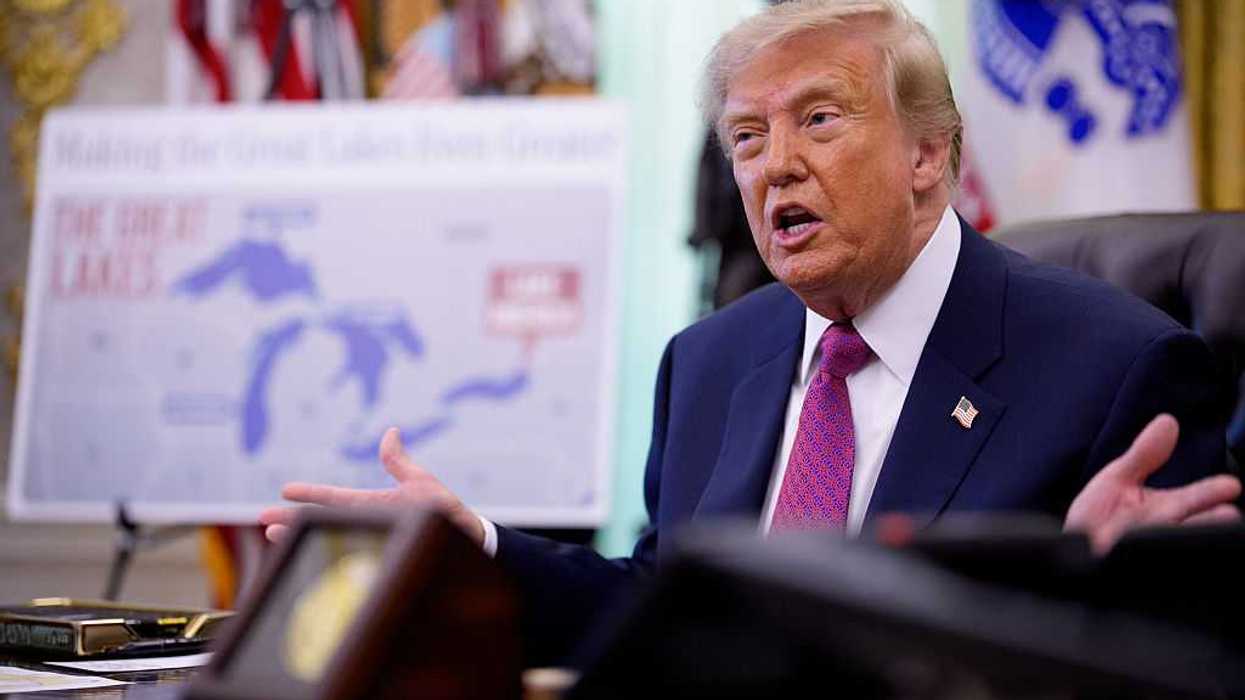
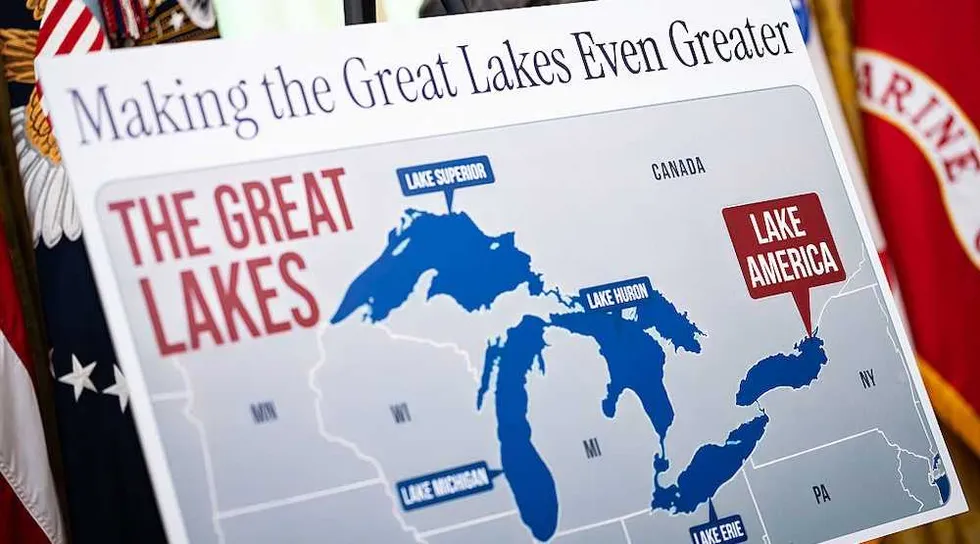
On Thursday, Trump signed an executive order directing the federal government to rename Lake Ontario “Lake America.” The order gives the United States no additional territory or water rights. It opens no market, lowers no tariff, strengthens no alliance, and makes no American safer.
It does, however, annoy Canada.
This is where the War of 1812 becomes more than an old high school essay question.
RELATED: Trump renames Lake Ontario to ‘Lake America’ in jab at Canada over trade war
 Al Drago/The Washington Post/Bloomberg/Getty Images
One assumption behind the American invasion of Canada was that it would be easy. Thomas Jefferson famously predicted that acquiring Canada would be “a mere matter of marching.” Not quite.
We surrendered Detroit, lost at Queenston Heights, and repeatedly failed to conquer Canada. Oh, and of course, there was the not insignificant matter of the Brits burning down Washington, D.C., in 1814 as retaliation for our burning and looting of York (modern-day Toronto) the year prior.
Americans had looked at the disparity in power and concluded that the disparity settled the question.
There is an echo of that mistake today.
My friend Kurt Schlichter captured the attitude neatly last week in a Townhall column headlined “It’s Always Cute When Canada Thinks It Matters.”
Schlichter is right about the imbalance of power. Canada is vastly weaker than the United States. It neglected its military while sheltering beneath the American security umbrella, and its economy depends much more on our market than ours depends on Canada.
But “Canada is weaker than we are” and “Canada doesn’t matter” are very different propositions.
My old teacher Angelo Codevilla had a useful maxim: “What is nearest is dearest.”
Writing about Mexico in 2009, Codevilla argued that geography had joined our countries together “whether anybody likes it or not.” Events close to home bear more directly on American peace and prosperity than events halfway around the world. “Canada’s position is analogous,” he added.
Canada matters not because we owe Canadians special deference. It matters because geography says it does.
We share more than 5,000 miles of border, the Great Lakes, continental defense, energy systems, supply chains, waterways, pipelines, railroads, and deeply integrated economies.
An America First foreign policy should understand this instinctively.
That does not require being nice to Canada. If Ottawa is free-riding on defense, demand more. If Canadian protectionism hurts American farmers or manufacturers, fight it. If pressure produces better terms for Americans, squeeze away.
The question is what American interest the pressure serves.
RELATED: How Mark Carney chose the dairy cartel — and China — over a Trump trade deal
 Evelyn Hockstein/POOL/AFP/Getty Images
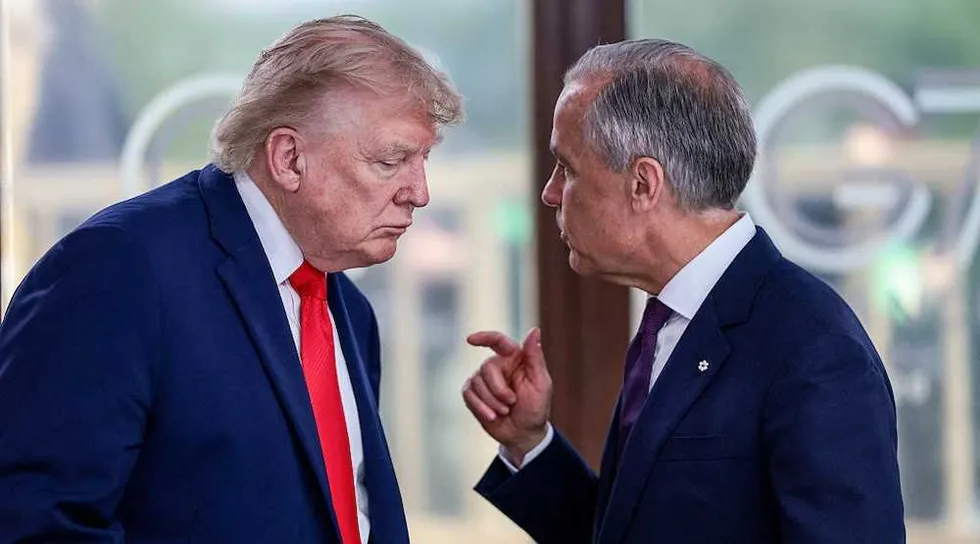
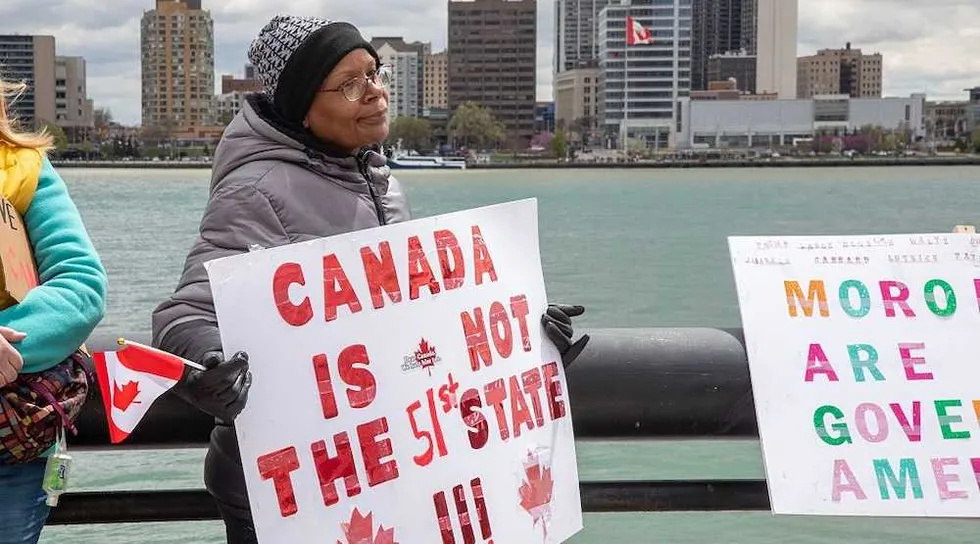
Trump has spent much of his second term calling Canada “the 51st state,” referring to ex-Prime Minister Justin Trudeau as “Governor Trudeau,” dismissing the border as artificial, and threatening or imposing economic pressure on our northern neighbor. Canada’s navy is barely a coast guard!
Canada did not respond by becoming more accommodating. It became more Canadian.
At the beginning of 2025, Pierre Poilievre’s Conservatives appeared headed for a crushing victory. Trudeau was finished, and the Liberals were exhausted and deeply unpopular.
Then Trump changed the question.
Instead of asking whether they had finally had enough of the Liberals, Canadian voters increasingly asked who was best equipped to deal with Donald Trump.
That was a much better question for Mark Carney.
Trump did not single-handedly cost Poilievre the prime ministership. Carney was a strong candidate in his own right, and Poilievre had weaknesses of his own.
But the reversal was extraordinary. The Liberals came back to win bigly. Poilievre lost his own seat even as Conservatives won a record 8.1 million votes.
Trump helped turn a Liberal Party on its heels into a government with a political incentive to resist the United States.
That should interest an America First president, shouldn’t it?
I do not especially care whether Canadians believe their national honor has been wounded. I care whether wounding it makes them more or less likely to do what is advantageous to us.
Foreign policy is not therapy. We do not need to validate Canadian feelings or pretend Canada and the United States are equals in power.
But statesmanship requires understanding how other people are likely to behave.
Tell 40 million Canadians often enough that their country is a joke, their sovereignty is optional, and their border is imaginary, and some sizable fraction will become willing to pay a price to tell you no.
RELATED: Scratch a liberal, find a censor
 Jim West/UCG/Universal Images Group/Getty Images
That may be foolish of them. It’s also predictable.
The United States can hurt Canada much more than Canada can hurt us. Of course we can.
But the measure of foreign policy is not whether you can hurt the other fellow. It is whether hurting him gets you something you want.
Tariffs might. Pressure on Canadian defense spending might. Hard bargaining over trade, energy, manufacturing, critical minerals, or Arctic security might.
What does Lake America get us? No land. No water. No money. No security. No concessions. Just the satisfaction of reminding Canada that we are bigger than Canada. Big whoop.
Nearly 40 years ago, my classmates and I decided the War of 1812 was chiefly about national honor.
I’m less interested today in settling that old argument than in remembering the question.
National honor can serve the national interest. National vanity does not.