The Washington Post/Getty Images
Politicians and bureaucrats routinely claim that America is experiencing a historic drop in crime and that, in many parts of the country, the streets have never been safer. Yet for everyday citizens who see boarded-up storefronts and brazen daylight robberies, there’s an unsettling sense that the reality on the ground tells an entirely different story.
This is not a matter of misperception. As Anna Giaritelli, a seasoned homeland security reporter for the Washington Examiner, details in her book "Under Assault," the numbers being fed to the public are systematically manipulated.
'You don’t know what you don’t know until you find out the hard way sometimes.'
Giaritelli experienced this firsthand when moving to Washington, D.C. Carefully examining official data was a priority during the neighborhood search. “I looked at the crime stats before I moved to Capitol Hill," she told me, "and selected my home there based on blocks on Capitol Hill that were the safest and showed the least amount of crime incidents."
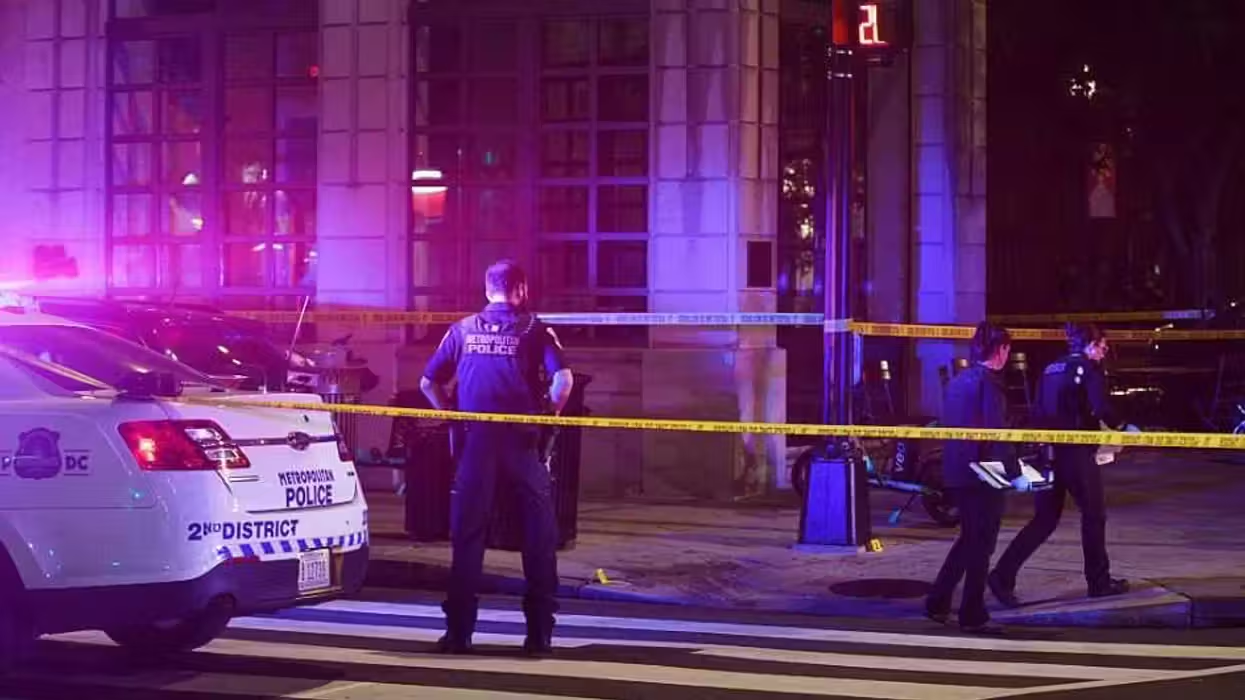
What she didn’t know was that the Metropolitan Police Department’s public crime map didn’t show the whole picture. It only displayed first-degree and select second-degree felonies. Most felonies and misdemeanors were entirely absent. In other words, the map only flagged major, headline-grabbing crimes like homicides or armed robberies. It completely skipped over everyday break-ins, property theft, and assaults.
"Whether it’s a resident or a business owner, people base their decisions on where to move on that crime map," Giaritelli argues.
"And not to include all crimes shows an inaccurate picture of the state of public safety in D.C. I would not have moved to this block had I known the real extent of crime in the area. I’d argue Washington, D.C., officials are liable for misleading the public, particularly victims like myself who they knowingly deceive."
When local governments sanitize data, families buy homes in dangerous areas and entrepreneurs invest life savings in storefronts that are highly vulnerable. By blinding the public, officials make it impossible to accurately assess risk, leaving citizens exposed.
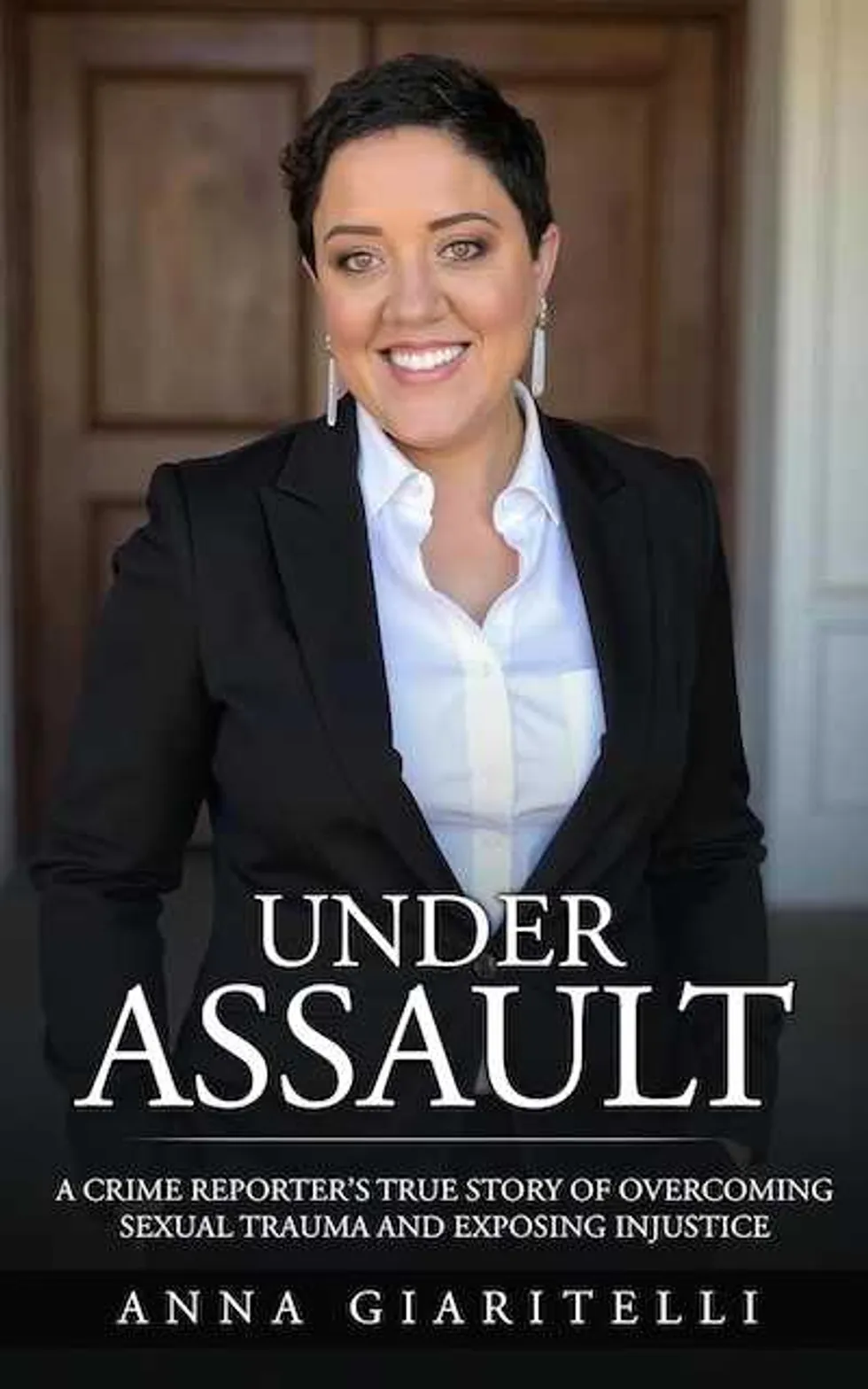 Anna Giaritelli
For individuals living in quiet suburbs or rural towns, spiking urban crime rates can seem like someone else's problem. It is tempting to look at the mayhem in major metropolitan areas and assume it stays within city limits.
However, the manipulation of this data is a widespread issue that ignores municipal borders.
"I think city crime stats matter for everyone, regardless of whether they live in a suburb or rural America," Giaritelli warns. "You don’t know what you don’t know until you find out the hard way sometimes."
The methods used by big-city bureaucrats to improve their public image are easily exported. Whether in a small town or a massive coastal metropolis, police departments and municipal leaders answer to the same political pressures to show downward trends. If they learn they can rewrite reality with the stroke of a pen, they will.
As Giaritelli observes, a resident may not find out a town is doing this "until you become a victim and go looking for your stat, only to find you didn’t meet the threshold to be counted." It remains unknown how deep or widespread this miscounting truly is across America.
RELATED: 'Citizen Vigilante': A cinematic hand grenade lobbed at the cathedral of liberal pieties
 bollfilms.com
This growing awareness has fueled a massive pushback. Giaritelli’s petition demanding absolute crime data transparency has received nearly 20,000 signatures. This groundswell signals a deeper crisis marked by the collapse of public trust in institutional data.
Public safety is one of the rare issues that unites most people across the political aisle. Sure, there is a loud faction of progressives who would gladly replace the local police force with hug-dispensing, gender-fluid therapists, but the vast majority, just like conservatives, want law and order. At the end of the day, everyday citizens simply want safe neighborhoods. But when government statistics become fiction, the entire justice system breaks down.
Giaritelli lays out the structural domino effect:
We can’t properly fund the public safety, the judicial system, and the prisons and jails in our communities if we don’t know how much crime is actually occurring. Covering up crime stats causes problems throughout the system. If we don’t know how much crime there is, we cannot plan and adequately respond to it.
When cities hide numbers, they intentionally starve the system of resources. Giaritelli points out the real-world cost:. In D.C., underfunding led to a severe lack of jail space. A violent offender arrested in her area was released the very next day. He lived blocks from her apartment. He went on to be arrested five more times before going to trial, and each time, the judge released him right back onto the streets due to a lack of space.
If those crimes aren’t counted, she notes, "then we’re not setting an annual budgets for the next year to take into account the need for jail space, the need for victims funding, and the need for more police."
When citizens can no longer trust official government statistics, decision-making becomes distorted. Budgets become less reliable, serious crimes may be undercounted, and law-abiding families ultimately bear the consequences.
Perhaps the most disturbing revelation in "Under Assault" is how Giaritelli discovered this institutional gaslighting.
In April 2020, Giaritelli was walking to the post office just blocks from the U.S. Capitol when she was physically and sexually assaulted on a public sidewalk in broad daylight. Her attacker was eventually caught and sent to federal prison. Later, while working on a routine newsroom assignment evaluating D.C. crime trends, she decided to look up her own incident on the city's official crime map.
There was no mark. No pin. Nothing.
"When I contacted D.C. police to inquire about my specific assault, I was told that it did not meet the threshold to be counted by D.C. police on the crime map."
A citizen was sexually assaulted, the perpetrator was convicted in a federal court and sent to prison, yet according to the city's public-facing ledger, the crime never happened.
To make matters worse, the police department removed individual incident pins entirely. In their place, they covered the city map in vague, shifting shades of color to denote general crime levels. It is a clear case of bureaucratic deception. By erasing distinct markers, they make it completely impossible for a victim to verify whether an assault was ever officially counted. Giaritelli knows this only too well, even as many Americans remain unaware of the highly unethical practice.
When institutions trusted with safety care more about protecting their public image than protecting human lives, the system is actively hostile to the truth. The next time an official stands behind a podium and claims crime is down, it’s worth listening. But it’s also worth verifying it for yourself.