Bloomberg/Jeff Kowalski/Getty Images
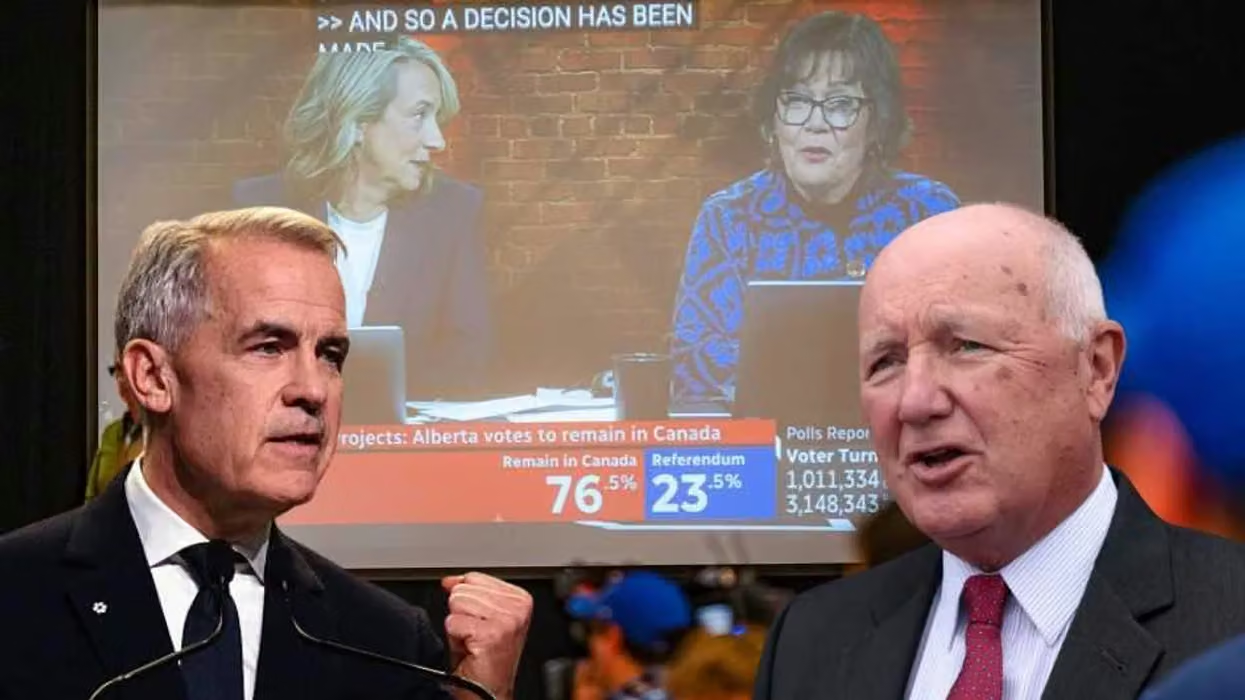
Albertans overwhelmingly rejected a move toward independence Monday, but supporters of separation insist the issue is far from settled.
In a provincial referendum, roughly 76% of voters chose Option 1 — for Alberta to “remain a province of Canada” — while about 24% backed Option 2, which would have begun the legal process required to hold a binding referendum on separation.
'Keep your nose out of American politics,' said Hoekstra.
The results remain unofficial until October 29.
The vote was quickly dubbed a “referendum on a referendum.” Even an Option 2 victory would not have meant Alberta was leaving Canada. It would have started the process toward another, binding vote on whether the province should separate.
Premier Danielle Smith campaigned for Option 1 alongside Prime Minister Mark Carney and Conservative leader Pierre Poilievre.
The federalist cause also received some enthusiastic help from the Canadian press. Days before the vote, the Globe and Mail published a lengthy investigation connecting Alberta separatists to American Republican political operatives and alleging that independence leaders had offered Washington access to the province's natural resources, including fresh water and oil royalties, in exchange for assistance.
But the investigation's most explosive allegations were disputed by some of its own sources.
Dennis Modry, a co-founder of the Alberta Prosperity Project, acknowledged discussing possible resource arrangements with the United States. But fellow APP co-founder Jeff Rath, an Alberta lawyer who arranged the meetings with State Department officials, insisted none of those proposals had been discussed in Washington. The Globe also acknowledged that no agreements had been reached and quoted a White House official saying that no American support or commitments had been offered.
Writing in a sharply critical response, Alberta commentator Colin MacLeod accused the newspaper of combining separate incidents and individuals into a misleading narrative of coordinated American interference.
The investigation also documented American Republican consultants promoting political software to Alberta separatists. But APP leader Mitch Sylvestre told the Globe he refused to give the consultants access to his organization's membership list, citing serious concerns about privacy.
In an exclusive interview with Blaze Lifestyle before the vote, Rath accused the Globe — which he characterized as one of the government's “propaganda arms” — of deliberately misleading readers.
“But what surprised me was, like, how blatantly they lied and how foolish the lies were,” he said, singling out the allegation about trading Alberta's water for American assistance.
“I mean, completely ludicrous. We have the St. Mary's River watershed, and we have the Milk River watersheds. They're the only rivers that flow from Alberta into the U.S. They're governed under an international agreement by an international commission. You know, there's not enough water in either one of those rivers to supply Las Vegas, let alone all of California.”
On Tuesday, Rath told Blaze Lifestyle that the defeat would not end the independence movement.
He predicted support would grow as Carney's Liberal government made life more difficult for Albertans and said he was proud of the result his side achieved against a powerful political establishment.
“We fought a battle against a massive machine,” Rath said.
Smith, meanwhile, was ready to put the question behind her.
“So tonight I want to invite every Albertan who may still feel hopeless or frustrated with the past direction of our country, to believe and hope in Canada again,” she said.
“Because although our country isn’t perfect and there is still much work to be done, I believe that Canada is on the rise again.”
RELATED: Exclusive: US ambassador says Canada walked away from 'the best trade deal' — twice
 Bloomberg/Getty Images
But the referendum produced an awkward bit of cross-border symmetry.
In the closing days of the campaign, Carney warned foreign governments — specifically including the United States — to stay out of Alberta's vote.
“Our expectation is, to be absolutely clear, on foreign governments, United States included, is we don't get ourselves involved in their elections, they don't get themselves in our elections,” Carney said.
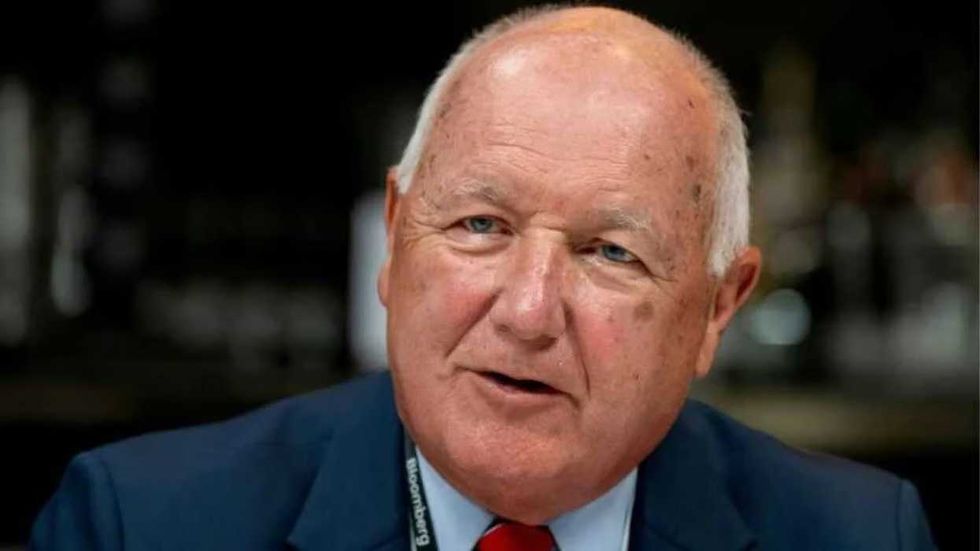
At almost exactly the same time, U.S. Ambassador to Canada Pete Hoekstra was accusing Canadian politicians of edging toward interference in America's November 3 midterm elections.
“We are closely watching Canadian activities because it appears that some of this, from our perspective, in the way that we view our elections, could be inferred to be election interference,” Hoekstra said in an interview with "The Really Big Show."
Among his examples were comments from Industry Minister Mélanie Joly about designing retaliatory tariffs to hit politically sensitive U.S. states.
Hoekstra's advice to Canadian politicians was considerably less diplomatic.
“Keep your nose out of American politics,” he said.
In July, Carney appointed Maia Johnson, an American citizen and former Hillary Clinton campaign aide, as chief operating officer of the Prime Minister's Office.
One wonders what the reaction would have been if Carney had appointed a former Trump campaign operative instead. Would the Globe and Mail have been so relaxed about American political influence in Ottawa?