Smith Collection/Gado/Getty Images
Washington eliminated the federal EV tax credit. California didn't waste much time replacing it.
Earlier this month, Gov. Gavin Newsom launched MyFirstEV, a new state program offering first-time zero-emission vehicle buyers $3,500 off a new vehicle or $1,750 off a used one, right at the point of sale.
Instead, somebody with no intention of buying an EV is helping pay for someone who does. And MyFirstEV doesn't even reserve that help for people who couldn't otherwise afford the car.
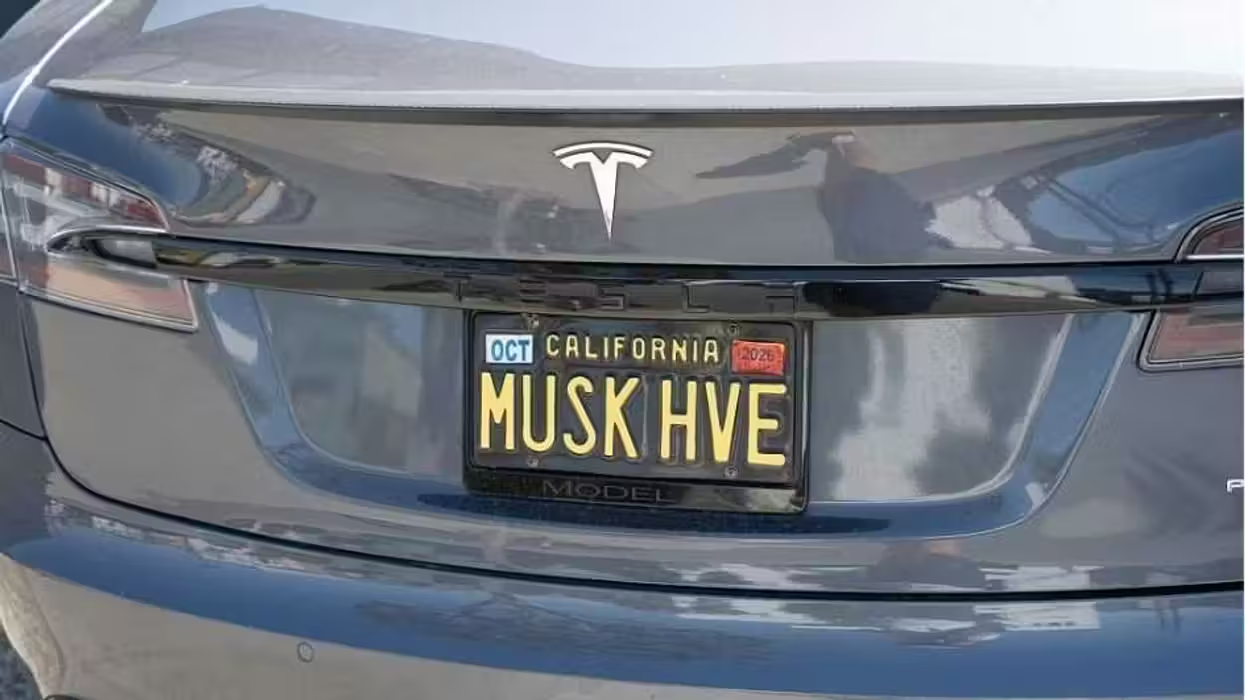
And Californians apparently noticed. Tesla's allocation of MyFirstEV money was exhausted almost immediately. According to Tesla, buyers had to place their orders between August 3 and August 7 to qualify, and the company now says its allocated funds have been depleted.
The federal government spent years offering buyers a tax credit of up to $7,500 to encourage electric vehicle adoption. Congress eliminated the credit, ending it for vehicles acquired after September 30, 2025. California's response was essentially to build its own version.
The state has committed $135.5 million to MyFirstEV, with participating automakers matching California's contribution dollar for dollar. That creates a combined $271 million for first-time zero-emission vehicle buyers. On a new vehicle, California puts up $1,750 and the manufacturer contributes another $1,750. Used vehicles can receive $1,750, also split between the state and participating manufacturer.
Automaker participation is voluntary, but it's telling that manufacturers are willing to put up their own money to keep these incentives alive.
They have plenty invested in the EV transition. Automakers spent billions on battery plants, retooled production lines and new electric models in anticipation of a rapid shift toward EVs. Consumers haven't always moved as quickly as government planners and automakers expected. Now Washington has removed one of the financial incentives supporting that transition, while California is putting another one in its place.
RELATED: Think the EV mandate is over? One state has other plans.
 Steven Gottlieb/Bloomberg/Getty Images
The rules get more interesting the closer you look.
MyFirstEV is limited to Californians buying or leasing their first zero-emission vehicle. If you already bought an EV, installed a Level 2 charger in your garage, loved the experience, and now want another one, you don't qualify.
But someone buying his first EV can qualify regardless of income.
New vehicles generally must have an MSRP of $50,000 or less, while used vehicles must sell for $25,000 or less through participating manufacturers' pre-owned programs. But CalMatters reports that automakers headquartered in California aren't subject to the same vehicle price cap.
So California has created an EV subsidy with rules that can favor California-based manufacturers.
And Sacramento isn't stopping with vehicle rebates. On August 18, Newsom announced another $95.2 million for electric charging and hydrogen-fueling infrastructure as California continues its push toward zero-emission transportation.
Which leaves me with a pretty basic question: If EVs are ready to compete on their own merits, why do taxpayers still need to subsidize their purchase?
I'm not anti-EV. If an electric vehicle fits your life, buy one. They're quiet, quick, increasingly capable, and inexpensive to operate in the right circumstances. If you want a hybrid, buy that. If a gasoline pickup works best for your family or business, buy that instead.
Give consumers choices and let them decide.
Instead, somebody with no intention of buying an EV is helping pay for someone who does. And MyFirstEV doesn't even reserve that help for people who couldn't otherwise afford the car.
Supporters can point to Tesla's experience and say the program is working. Buyers moved quickly enough to exhaust the company's allocation within days.
But I'd ask the obvious question: If buyers were lining up quickly enough to burn through the money in five days, why did they need the subsidy?
California has answered Washington's retreat from EV subsidies by spending state money to keep them going. Californians can decide whether that's what they want their government doing.
The federal EV subsidy may be gone, but in California, taxpayers are still picking up the tab.