Jim WATSON/AFP/Getty Images
Russian intelligence operatives have been quietly working out of Tokyo for years, using Japan as a channel to buy weapons components, dodge Western sanctions, and ship the material home to supply Russia's war in Ukraine, according to a New York Times investigation.
The stakes are staggering: Roughly 90% of Russian missiles and drones contain Japanese components, according to Ukrainian government estimates.
'We have a sense of crisis about this situation.'
The investigation identifies a Russian military intelligence unit called the "20th Directorate" as the network behind the effort. Its Tokyo station is reportedly run out of an office for Russian state airline Aeroflot near the headquarters of Japan's National Police Agency.
The alleged operative in charge, Maksim Filchenkov, is a veteran Russian intelligence officer using a cover job at Aeroflot — a tactic Russian spies have used since the Soviet era.
Tokyo's response has been limited, despite its public support for Ukraine. "We have a sense of crisis about this situation," said Akihisa Shiozaki, a lawmaker in Japan's governing party.
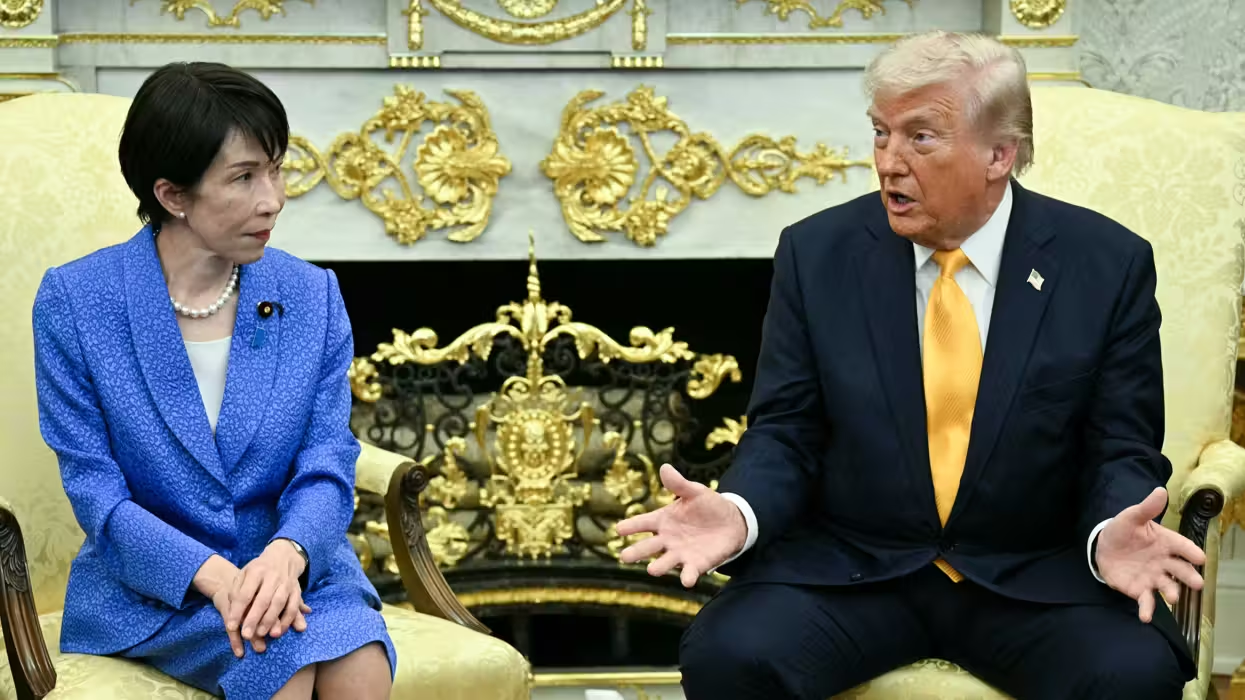
Japan has not had a dedicated foreign intelligence agency in more than 80 years, as post-WWII restrictions left the work scattered across the police, military, and foreign ministry. Prime Minister Sanae Takaichi, a noted Trump ally, is now racing to centralize it under one command to also counter China, which researchers say has built fake news sites disguised as Japanese-language outlets to spread pro-Beijing disinformation.
The U.S. and Australia have quietly advised Tokyo on the build-out, the Times reported, citing Japanese and other officials. So has Germany, itself in the middle of its own historic military rebuild and drawing on its foreign intelligence service's decades of experience countering Russian intelligence in Europe.
RELATED: Bombshell report claims China is transforming old jets for new war
 Samuel Boivin/NurPhoto/Getty Images
President Trump has repeatedly accused U.S. allies of not spending enough on their own defense and questioned whether America should defend smaller nations — pushing Japan to build its own intelligence capability rather than lean on Washington. Even so, U.S. officials have quietly offered input on Japan's cyberdefense, industrial espionage, and screening of foreign investments and agents, according to the Times.
The State Department and Office of the Director of National Intelligence did not respond to a request for comment from Blaze News.
According to the Times, Japan's government wouldn't confirm the talks directly, saying only that it "maintains close cooperation with counterparts in relevant countries on a regular basis."
Opposition lawmakers warn the new agency risks reviving Imperial Japan's wartime secret police, the Tokko, and eroding privacy rights.
Like Blaze News? Bypass the censors, sign up for our newsletters, and get stories like this direct to your inbox. Sign up here!