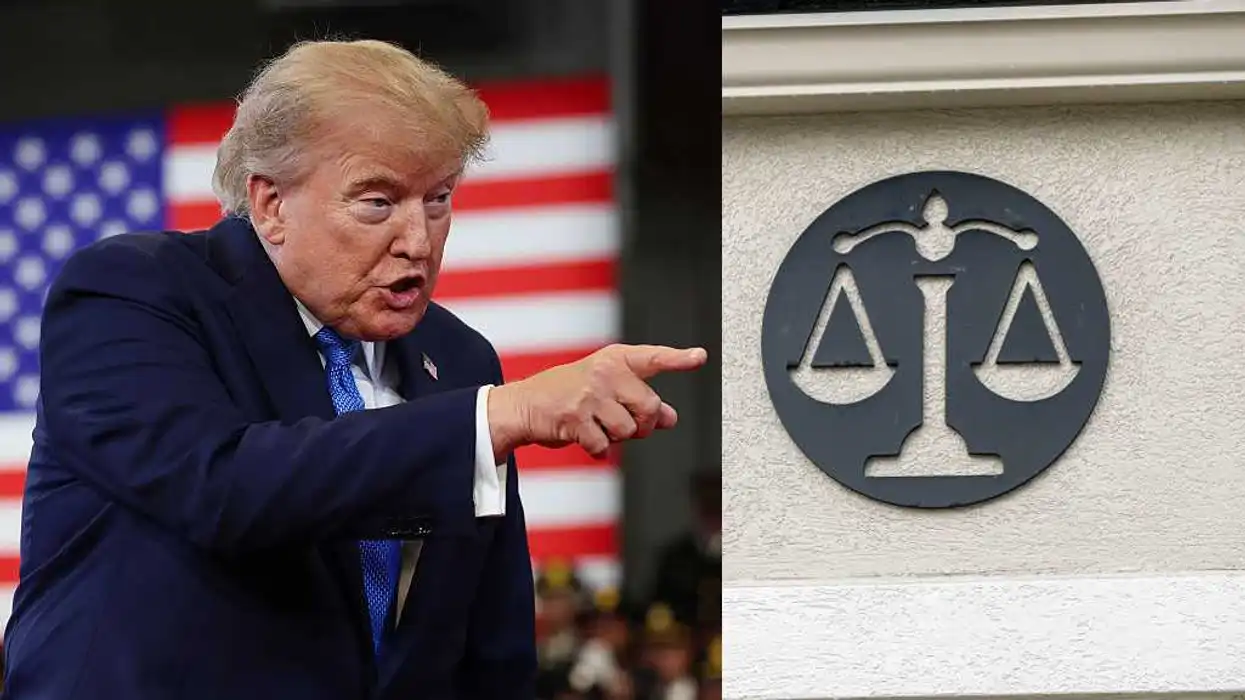
L-R: Samuel Corum/Getty Images; Jeffrey Greenberg/Universal Images Group/Getty Images
The days of the American Bar Association overseeing the accreditation of law schools may be numbered.
The ABA has enjoyed the authority to accredit law schools since 1952. This authority is vested in the ABA Council of the Section of Legal Education and Admissions to the Bar, which is supposedly independent.
'It should not have any role, much less a monopoly role, in law school accreditation.'
However, critics have suggested that the ABA is insufficiently independent of the institutions and profession it is overseeing.
Currently, the ABA's legal ed council fully or provisionally accredits nearly 200 law schools.
Thirteen of the programs approved and accredited by the ABA are freestanding law schools with no affiliation to a college or university. Their ABA accreditation renders them eligible to participate in federal financial student aid programs.
More consequentially, the Wall Street Journal — which first reported on the proposed termination of the council's accreditation authority — noted that in most U.S. states, law school graduates' ability to take the bar exam is conditional on their school's approval by the ABA.
RELATED: The right needs a public defender network for lawfare
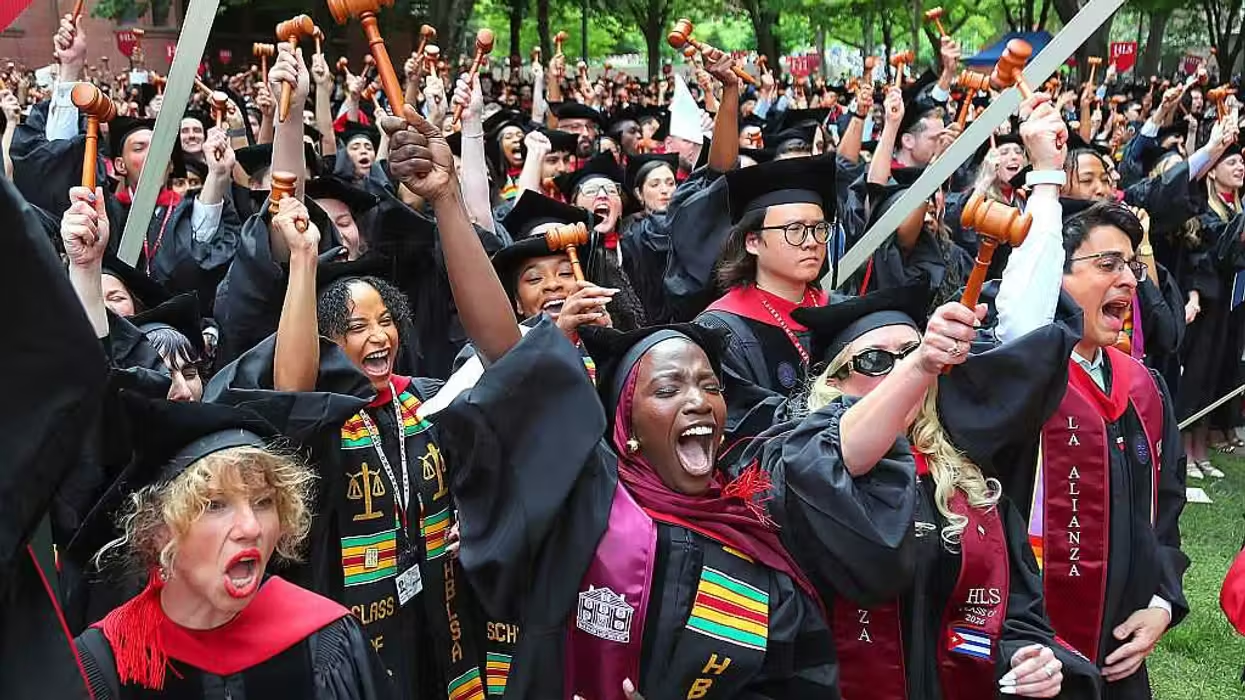
The ABA's accreditation authority, last renewed in 2021, comes up for renewal next month.
According to a notice by the Education Department posted in the Federal Register on Friday, the National Advisory Committee on Institutional Quality and Integrity is scheduled to meet on Sept. 23 and 24 and will discuss the petition for renewal of recognition filed by the ABA's legal ed council.
Daniel Thies, the previous chair of the ABA's legal ed council, will appear as a witness. He declined Blaze News' request for comment.
According to a report made public on Friday, Education Department staff have recommended that the ABA legal ed council be stripped of its oversight and accreditation authority, citing in part the council's insufficient independence from the profession.
An Education Department spokesperson confirmed in a statement to Blaze News, "After reviewing ABA’s accreditation standards, Department staff found the accreditor out of compliance with the agency’s accreditation regulations and recognition standards."
"We will not comment on details, as the process is ongoing and involves multiple stages of review, including by an independent, bipartisan advisory committee in September," added the spokesperson.
Melissa Hart, a Democrat who previously served on the Colorado Supreme Court and now serves as chairwoman of the ABA's legal ed council, figures that the ABA will make a convincing case and ultimately retain its accreditation authority.
Hart said in a statement to the Blaze News, "The Council is confident it complies with the Higher Education Act and with the Department’s requirements for accreditors. We look forward to the opportunity to address any misconceptions and clarify the record at our upcoming hearing before the NACIQI committee next month."
"An initial recommendation from Department staff represents one step in the regular recognition process that the Council and other accreditors periodically complete," continued Hart. "A hearing with NACIQI is the next step in that process, and we’re confident the Council will address any concerns the Department may have at that hearing."
After the meeting next month, the National Advisory Committee on Institutional Quality and Integrity will issue its own recommendation to Undersecretary of Education Nicholas Kent.
Kent appears keen on accreditation reform. He said in a statement on Wednesday, "The Trump Administration’s proposed changes to the accreditation system are intended to reorient our quality assurance framework so that accreditors prioritize student outcomes rather than bureaucratic processes or the promotion of divisive and unlawful ideological agendas."
"Instead of ensuring institutions offer high-quality educational programs that justify the time and cost of a college education, the antiquated accreditation system has contributed to inflated tuition, administrative bloat, and ideology-driven mandates on college campuses," added Kent.
While the White House did not immediately respond to Blaze News' request for comment, it's clear that the ABA is on the president's radar.
President Donald Trump issued an executive order in April 2025 tasking Education Secretary Linda McMahon with holding accountable, "through denial, monitoring, suspension, or termination of accreditation recognition, accreditors who fail to meet the applicable recognition criteria or otherwise violate Federal law, including by requiring institutions seeking accreditation to engage in unlawful discrimination in accreditation-related activity under the guise of 'diversity, equity, and inclusion' initiatives."
In the order, Trump called out the ABA's legal ed council for requiring law schools "to 'demonstrate by concrete action a commitment to diversity and inclusion' including by 'commit[ting] to having a student body [and faculty] that is diverse with respect to gender, race, and ethnicity.'"
With its accreditation authority now in the balance, the organization — in an apparent effort to counter claims that the ABA is "ideologically captured" — may be kicking DEI to the curb. The ABA's legal ed council voted in May to eliminate its rule requiring law schools to demonstrate commitment to DEI.
The change was not, however, final. According to the ABA Journal, the final determination on whether to jettison the DEI policy is scheduled for Sept. 8.
Conservative legal scholar John Eastman, founding director of the Center for Constitutional Jurisprudence, is among those who welcome the administration's move to remove the ABA from the law school accreditation process.
"It has long ceased to be a politically neutral professional organization and has instead become a front for the radical wing of the Democrat Party, using its accreditation authority to push radical DEI policies, for example," Dr. Eastman told Blaze News. "I witnessed this firsthand when I was dean at Chapman Law School from 2007 to 2010, as we confronted demands for minority hiring and admissions in order to have our accreditation renewed. And one need not look further than the list of Supreme Court cases in which it has filed amicus briefs to confirm the hard-left bent of this organization."
Eastman added, "It should not have any role, much less a monopoly role, in law school accreditation — just like it was removed from its preferred role in the judicial nomination process by President Bush in 2001 (restored by Obama in 2009, but then removed again by Trump in 2017 and not revived since)."
The ABA did not immediately respond to Blaze News' request for comment.
Like Blaze News? Bypass the censors, sign up for our newsletters, and get stories like this direct to your inbox. Sign up here!