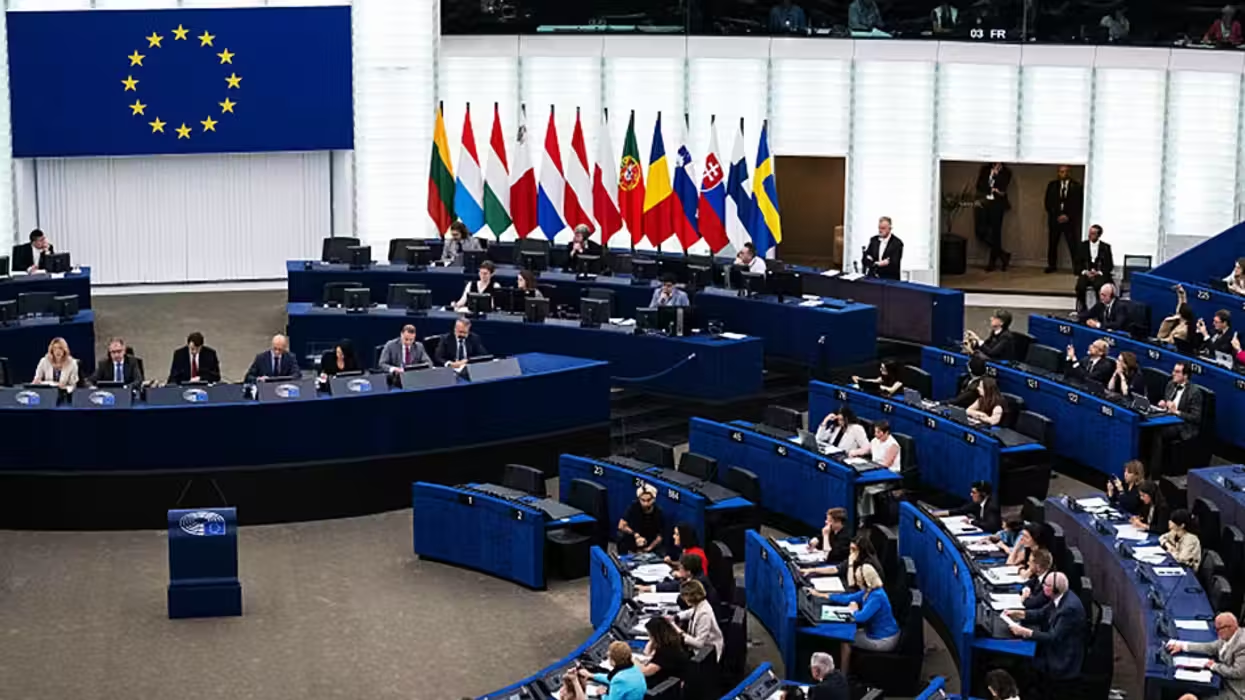
SEBASTIEN BOZON/AFP/Getty Images
The European Union had a chance to curtail one of the most intrusive bills it has ever seen on Thursday, but citizens will have to wait even longer to find out their fate.
The potential law in question is a debate on "rules to prevent and combat child sexual abuse" in online communications. If passed, the legislation would have cascading effects on the privacy of the average citizen.
'CHAT CONTROL IS COMING.'
Originally proposed in May 2022, the proposal has bounced around for more than four years. On Thursday, lawmakers once again voted to send the bill back to the Council of the EU, which represents the governments of the member states.
Members needed at least 361 votes to reject the bill, and even though they voted in a majority, it was not enough to kill the legislation.
"CHAT CONTROL IS COMING," wrote Cypriot member of parliament Fidias Panayiotou.
"Even though most Members of the European Parliament have voted to REJECT Chat Control, we have not been able to reach the absolute majority that was needed (361 Members). This is a sad day for Europeans," he added.
The EU proposal is meant to disrupt and stop Child Sexual Abuse Material, referred to as CSAM, by having social media and tech companies scan messages for potentially harmful content.
In a report from November 2025, the EU revealed the types of data tech companies had collected since engaging in its voluntary detection trial. The companies reported that they had collected the following traffic data:
"a) data related to the user account (Google, LinkedIn, Microsoft, Yubo), e.g. user ID, username, and IP address;
b) metadata related to content (Google, LinkedIn, Microsoft, Yubo);
c) data related to a potential victim (Google);
d) abuse operations data (Google)."
All providers mentioned videos and images, according to the EU.
RELATED: Xbox to retreat from wokeness, fire thousands — and still might not survive
 Nicolas TUCAT/AFP/Getty Images
Now at stake is whether scanning must include monitoring even end-to-end encrypted services, a scheme advanced under the moniker Chat Control 2.0.
Politico described the vote on Thursday as "chaotic," with one MEP reportedly telling the EU parliament vice president, "We don't know what we are voting on."
Member countries now must either accept the changes or propose a different version, which would send the EU into conciliation procedure.
Like Blaze News? Bypass the censors, sign up for our newsletters, and get stories like this direct to your inbox. Sign up here!