MattGush/Getty Images
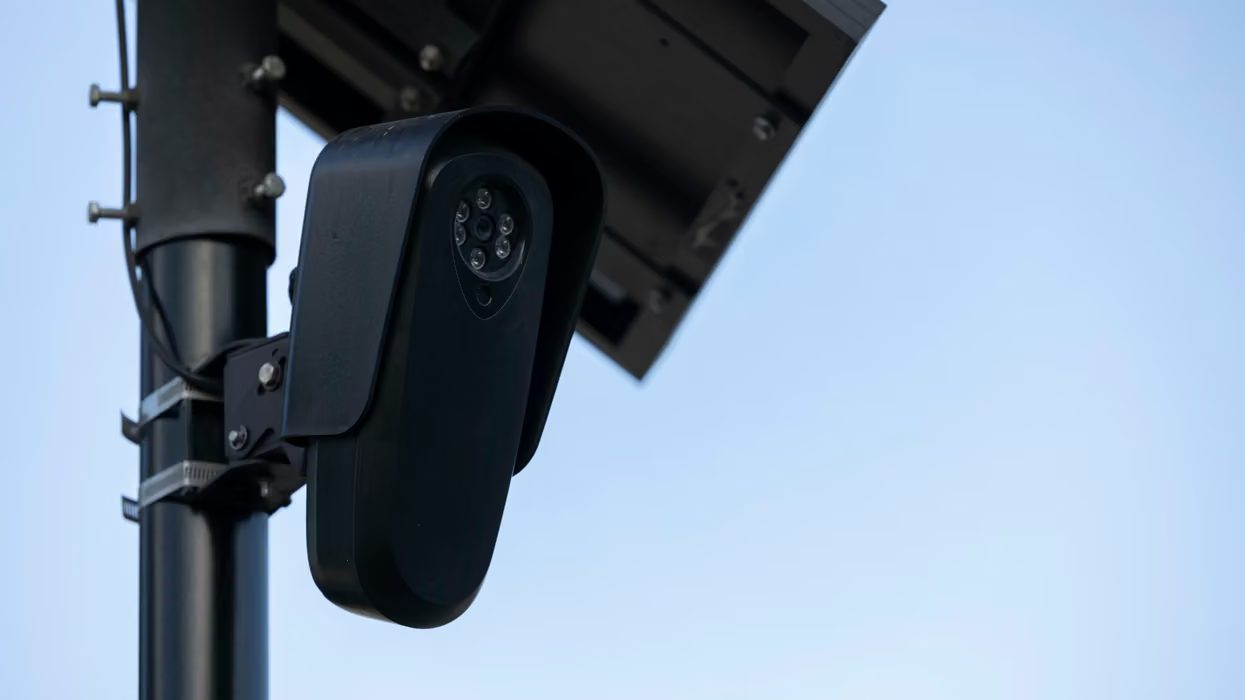
Flock Safety has spent the better part of 2026 trying to convince people that its cameras aren’t mass surveillance tools used to track the whereabouts of anyone who drives by. Lawmakers aren’t buying it, though, as legislators push back to the point that the company is starting to collapse. Here are the latest updates on the Flock camera controversy.
The public first took notice of Flock Safety’s dubious activity as early as 2024, when the Electronic Frontier Foundation found that Flock cameras were being used for more than reading license plates. According to datasets that the group received, Flock cameras tracked various protests and activist groups and even monitored civilians suspected of breaking local laws.
‘Those who would give up essential Liberty, to purchase a little temporary Safety, deserve neither Liberty nor Safety.’
Flock cameras may read license plates, but to say that this is all they do is a severe mischaracterization. Countless stories have emerged of police officers abusing the network. In the case of five officers in Georgia, they were caught inputting specific license plate numbers into the search system to track the location of specific individuals over time.
When pressed about the growing concern over Flock camera abuse, company CEO Garrett Langley gave a stunning response: “When people talk about just one of these, privacy or safety, they’re prioritizing the wrong thing, and what we have to prioritize as a country is compromise.” He continued, “How do we have our safety, and how do we balance privacy?”
For most liberty-loving Americans, there is no room for balance. There is only freedom or mass surveillance. Or, as my favorite Benjamin Franklin quote goes, “Those who would give up essential Liberty, to purchase a little temporary Safety, deserve neither Liberty nor Safety.”
First, cities noticed the public outcry. Local bans went into effect as Flock cameras were either covered, disabled, or removed from municipalities like Tempe, Arizona; Oviedo City, Florida; and St. Charles County, Missouri. Others simply let their contracts with the company lapse, as was the case with Knox County, Tennessee, and Stow, Massachusetts. So far, 214 cities and counties have de-Flocked their communities, though the number may be more since this report from August.
As local backlash continued, politicians stepped in to examine the situation. Missouri Republican Senator Josh Hawley issued a letter on his X.com account, declaring an investigation into Flock Safety over the “recent examples of abuse and misuse of personal data reveal the woeful lack of safeguards in these systems,” as a result of the St. Charles County situation. In his post, he wrote:
Americans do not surrender their privacy rights when they drive to work, drop their kids off at school, or go to church.
Weeks later, Hawley broadened his national surveillance investigation to include several other camera companies, such as Motorola Solutions Inc., Verkada Inc., and Axon Enterprise Inc.
RELATED: We're winning the fight against Flock — but the surveillance isn't going away that easily
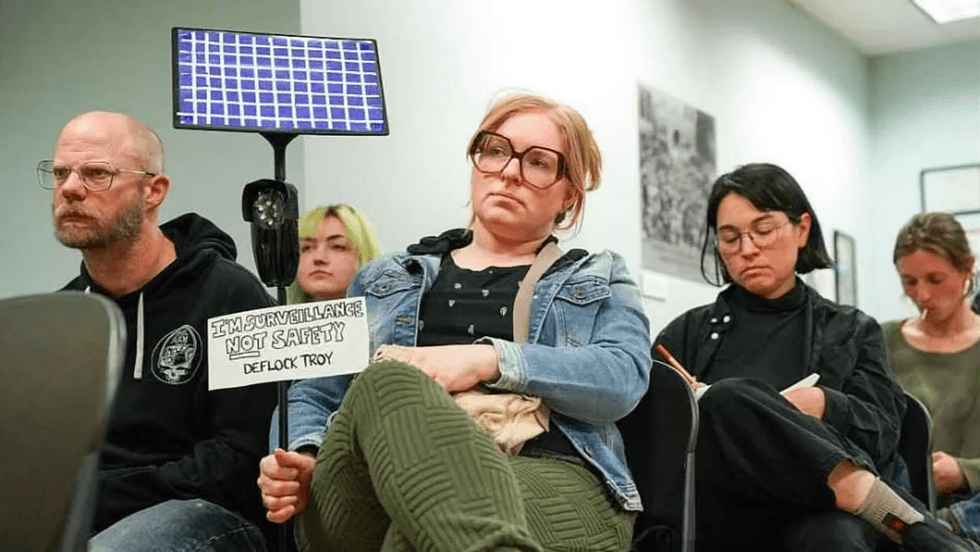 The Washington Post/Getty Images
Around the same time, Senator Bernie Sanders (I-Vt.) issued a similar cry on X. “Newer Flock cameras do not just record vehicles," he insisted. "They record people. Flock’s AI system can combine images of you and your vehicle with databases of phone numbers, relatives and court records to find out who you are, where you're going and why.”
The issue has quickly become a bipartisan concern, with both sides of the aisle scrutinizing Flock Safety more than ever, and the company is starting to flounder under the pressure.
Despite its rapid rise to infamy, Flock Safety is still a newer startup company, which makes it susceptible to rapid changes in its industry. Following the backlash and canceled accounts, it has already begun to downsize.
According to Reuters, Flock is offloading up to 270 employees via a voluntary buyback program, and all terminations will be finalized by the end of October. With 1,500 employees currently on the payroll, this shift will impact 18% of Flock’s workforce.
In late September, Hawley introduced a new bill called the Stop Flock Abuse Act. As the name suggests, the bill includes several key points meant to protect citizens and also quell concerns:
If successful, the bill could be a huge boon to both citizens and Flock Safety. The former would get back their peace of mind knowing that they aren’t being tracked, and the latter would get to continue to operate as a business without the specter of mass surveillance haunting future partnerships.
Everybody benefits. But first, the bill has to pass.
Like Blaze News? Bypass the censors, sign up for our newsletters, and get stories like this direct to your inbox. Sign up here!