© 2026 Blaze Media LLC. All rights reserved.
AI is coming for our jobs. It may even come for our lives. At least, that’s the assumption increasingly baked into modern life. We’re told machines will soon diagnose our illnesses, program our software, drive our cars, and leave millions of humans wondering what, exactly, they’re still good for.
What if that assumption is badly wrong?
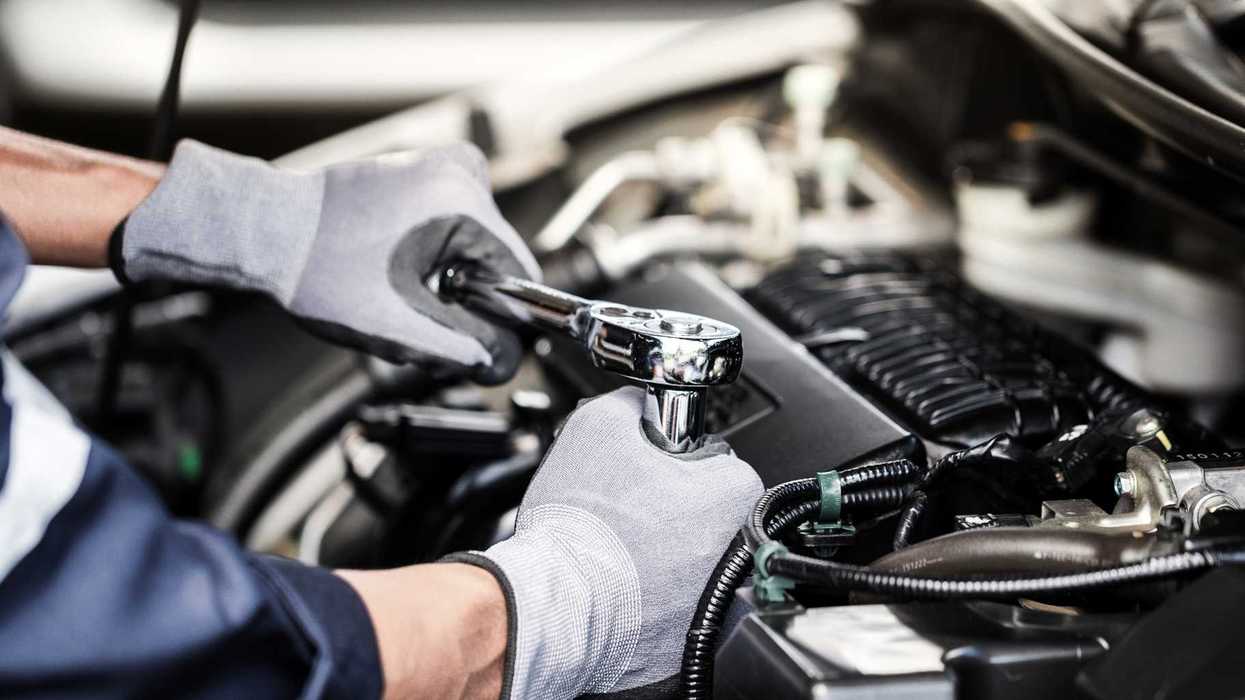
Alejandro Rodriguez, a 20-year-old with a 4.5 GPA who spent his formative years in gifted and talented programs, certainly believes it is. By the conventional American definition of success, he was exactly the sort of kid who should have been pushed toward a four-year college. Instead, he chose technical school and trained to become a Porsche technician. His decision points to something the AI panic often overlooks. There is still an enormous number of things humans need to know how to do in the real world, and they can’t be done with a prompt. They require skill, judgment, patience, and the ability to do something useful with your hands.
The deeper problem is not AI itself. Instead, it is the growing belief that everything humans learn will eventually become worthless. That mindset is pure poison. If young people assume AI will eventually do every meaningful task, why bother learning carpentry, mechanics, welding, electrical work, cooking, nursing, or other practical skills? Why even bother getting out of bed in the morning? The irony is impossible to ignore. The more people believe humans are obsolete, the less capable humans become.
A cultural correction
America spent decades telling smart kids that success meant sitting at a desk in a fancy office, filling out spreadsheets until their mid-60s. Now tech executives are shipping code designed to render those exact spreadsheet-fillers redundant. A cultural correction is under way. Being able to rebuild a blown engine, wire a high-voltage circuit, repair a factory line, or build a house has real value because some things still have to be done by human beings.
AI will eliminate or transform some jobs. That is true. Yet a huge canyon separates a software model generating text from a physical entity that replaces millions of workers navigating unpredictable, real-world environments. A chatbot can generate a textbook explanation of a Porsche’s dual-clutch transmission. The chatbot cannot crawl onto a cold concrete floor on a Tuesday morning to replace the clutch pack.
Certain tech prophets display a peculiar brand of fatalism. They demand that humans accept the swift death of their own relevance as an act of faith. This doctrine breeds its own fulfillment. Tell an entire generation that their talents are dead on arrival, and they stop pursuing difficult trades. When the nation runs out of people who can fix a broken water main, the technocrats blame automated progress rather than the cultural disdain that killed off the workforce.
RELATED: Our military turns off this invasive smartphone feature. So should you.
 Thx4Stock/Getty images
America suffers from a competence famine. The economy needs citizens who can execute physical tasks correctly. Someone has to run the copper pipe, construct the frame, mend the bone, operate the lathe, and keep the power grid online. Software models function exceptionally well in environments made purely of data. The physical world remains stubbornly physical.
Rodriguez isn't alone in obliterating America's long-standing myth. A growing wave of high schoolers like him are drawing headlines of their own. "Elijah Rios won’t graduate from high school until next year, but he already has a job offer," the Wall Street Journal recently reported, "one that pays $68,000 a year." His Catholic high school in Philadelphia partners with companies looking for recruits before they even graduate. The Journal has been tracking such companies' struggles to find hires from the typical job pools for years. Last year, Missouri senior Jenna Smith, with a 3.98 GPA and National Honor Society participation at Francis Howell High, chose to become a welder like her grandfather.
Guidance counselors and, often, parents can be slow to go along with the shifting tides. They have long treated technical trades as a consolation prize for academic failures. High marks meant a liberal arts degree, followed by 40 years of answering emails.
But high intelligence has zero natural connection to desktop work. A student can master advanced calculus and still prefer the immediate reality of a machine shop.
Competence or bust
The classic path — straight A’s leading to a university degree leading to an entry-level cubicle — is breaking at the midpoint. Automated systems are devouring the very administrative roles that university graduates relied on to pay off their student debt. Higher education still serves a clear purpose for specialized fields. But the blanket belief that a four-year degree represents the sole respectable entrance into adulthood no longer holds.
In a world made of bits, AI rules supreme. Silicon Valley coders write scripts that spit out screenplays and analyze legal contracts in seconds. Outside the server farm, rain leaks through roof shingles. Electrical transformers blow out during winter storms. Hydraulic lines rupture on garbage trucks. Millions of daily crises require spatial reasoning and fingers and thumbs.
Predicting the labor market in 2045 remains a fool's game. AI could reshape whole industries before Christmas, or it could hit insurmountable barriers regarding energy consumption, hardware limits, and regulatory lawsuits. Betting a career on doom-mongering from software salesmen is a terrible strategy. Personal responsibility demands building actual competence that holds value on any given afternoon.
America spent half a century celebrating corporate credentials and bureaucratic titles, while ignoring the dignity of skilled craftsmanship. Rodriguez picked a difficult trade. He mastered the mechanics and built a career. His smartest observation was entirely practical: These skills guarantee employment for the foreseeable future and perhaps the entirety of his working life.
Fear can be healthy, but building your working life around it isn’t. Competence remains the only reliable shelter. Silicon Valley can create a machine that writes a short story about a broken car, but when the head gasket blows on the highway, AI won't get you off the shoulder. The future belongs to the person holding both the wrench and the ability to use it properly.
Want to leave a tip?
We answer to you. Help keep our content free of advertisers and big tech censorship by leaving a tip today.