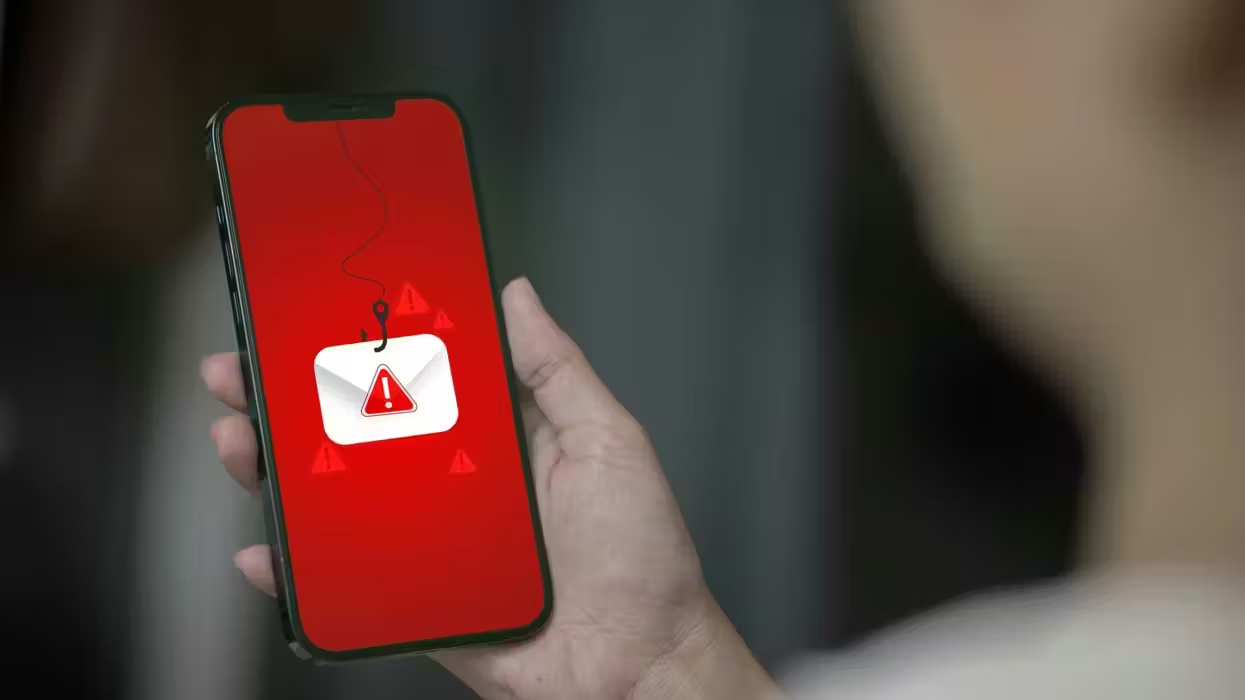
Jutharat Pinpan/Getty Images
Android users beware! A new version of a tried-and-true malware is out in the wild, and its latest capabilities make it dangerous not just to rooted devices, but it can attack run-of-the-mill Android handsets too, including yours. Nobody is safe, but there are things you can do to avoid this problem entirely.
The malware in question goes by the name RedHook. In the grand timeline of viruses, RedHook isn’t a terribly old problem. The malware was first discovered in July 2025, barely a year ago.
It can be extremely difficult or even impossible to remove.
Even back then, RedHook was a tricky little beast. As an Android Remote Access Trojan, it had the power to imitate government and financial websites and apps, which it used to trick users into enabling accessibility settings that gave the malware the permission to access sensitive data on the host phone. From there, RedHook could steal anything, including the user’s identification, banking credentials, and more.
On the upside, RedHook wasn’t really a problem for American users, as it was mostly aimed at phones in Vietnam. Still, the specter of this RAT loomed in the dark corners of the internet, waiting for its chance to emerge once more and wreak havoc on unsuspecting users.
Although the origin of RedHook is unknown, the initial code included elements of the Chinese language, suggesting a connection with mainland China.
One year later, RedHook is now even more dangerous than before, thanks to a new upgrade. The malware comes with all the same tricks, but now it can access a phone by highjacking Wireless Android Debug Bridge, the debugging software built directly into Android that allows developers to transfer files and issue commands from their device to the targeted phone. Even worse, this trick doesn’t require administrative control over the targeted phone via root access, meaning that every Android phone is vulnerable.
If that weren't bad enough, Vietnam users are no longer the central target. The malware has also popped up in Indonesia, and it could spread if the latest upgrade proves effective.
Like a proper parasite, RedHook must make its way into its host before it can become a problem.
RELATED: A crushing hack shows whether you keep your money depends on how you store it
 narvo vexar/Getty Images
The best way to keep RedHook from getting its paws on your phone is to ensure you don’t download any suspicious apps. For most people, this won’t be an issue. As long as you download apps directly from the Google Play Store — which are regularly scanned and vetted for their authenticity and security — you will likely be safe.
As for the more daring Android users, side-loading apps from third-party app stores or unknown origins is the fastest way to unwittingly load a virus onto your precious phone, and once it’s there, it can be extremely difficult or even impossible to remove. Proceed with caution.
The RedHook upgrade comes at a tricky time, as Google was recently compelled by Obama-appointed U.S. District Judge James Donato to allow third-party app stores onto the Google Play Store, thanks to an antitrust case that Google lost against Epic Games. In other words, Google is essentially being forced to allow potentially dangerous storefronts to proliferate its own app store in order to maintain Android’s open platform among competitors.
Now, that doesn’t mean all third-party stores are bad. However, if you plan to download an app from one of them, make sure you know and trust the app store and the developer behind the app you wish to install first.
Also, just because Google Play will include third-party stores doesn’t mean you have to download or use them. You can simply ignore them and continue to use your Android device as you always have.