Daniel Cardenas/Anadolu/Getty Images
For years, Washington has asked the same question about Mexico: Can we count on our southern neighbor as a serious security partner? Increasingly, the answer appears to be yes.
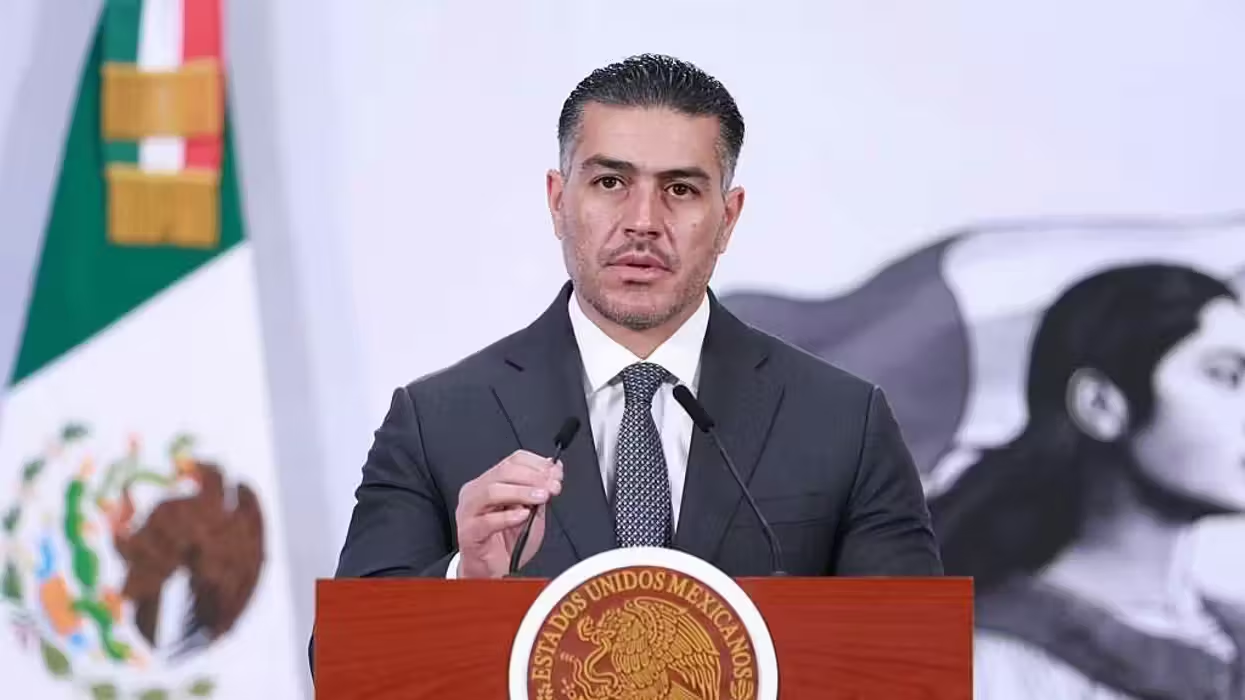
Much of the change runs through Omar García Harfuch, Mexico’s secretary of security and citizen protection. Under President Claudia Sheinbaum, Harfuch has emerged as one of the most important officials in Mexico — and perhaps the Mexican official who matters most to American security.
The United States does not need a subordinate in Mexico. It needs a capable neighbor that shares our interest in destroying the criminal organizations threatening both our countries.
Americans have good reason to pay attention.
The United States and Mexico share a 2,000-mile border and one of the world's largest trading relationships. Yet security cooperation has too often failed to reflect how intertwined the two countries have become. Cartels built multinational criminal enterprises. Fentanyl poured north. American weapons and illicit money moved south. Mutual suspicion kept Washington and Mexico City from confronting those problems as effectively as they should have.
That appears to be changing.
Harfuch has built something Washington desperately needs: trust.
American law enforcement officials increasingly speak of Mexico as a partner. DEA Director Terry Cole has publicly discussed his communication with Harfuch. FBI Director Kash Patel has met with him as cooperation between the two countries has expanded. Secretary of State Marco Rubio has praised Mexico's efforts against organized crime.
More important than the rhetoric are the results.
Mexico has transferred major cartel figures to American custody. Mexican security forces have expanded operations against organized crime. The Sheinbaum government has deployed forces to the border and worked more closely with American agencies on narcotics trafficking, intelligence, and cartel networks.
For Washington, Harfuch's appeal is straightforward: He understands American concerns, and he acts on them.
That does not make him an American proxy. It makes him an effective Mexican official who recognizes a basic geopolitical reality: The United States and Mexico face many of the same enemies.
The cartel selling fentanyl in Dallas or Phoenix may also be extorting businesses and murdering civilians in Mexico. Neither country can defeat these organizations while treating the border as the end of its responsibility. Washington should keep pressing for measurable results against fentanyl production, cartel finances, and cross-border criminal networks.
Harfuch seems to understand that better than many of his predecessors.
Consider the recent dispute over American avocado inspections in Michoacán. Security concerns disrupted U.S. inspection operations in one of Mexico's most important agricultural regions. Mexico responded by deploying more than 1,500 federal personnel while officials worked with Washington to restore operations.
Avocados may seem far removed from national security. They aren’t.
RELATED: Mamdani’s one-word border answer said it all
 Michael Nagle/Bloomberg/Getty Images
Organized crime has penetrated legitimate industries across parts of Mexico, using extortion and violence to profit from ordinary commerce. When American inspectors cannot safely do their jobs, cartel violence becomes an American economic problem too.
The response illustrated the Harfuch approach: Identify the problem, work with the Americans, and deploy the resources necessary to address it.
Washington should encourage more of this, particularly on fentanyl.
The drug has devastated American communities and made Mexican cartel activity a domestic American security issue. Washington is right to demand aggressive Mexican action against the organizations producing and transporting it.
Mexico has legitimate concerns of its own. American firearms move south. Drug money crosses the border and flows through financial institutions. Cartels exploit weaknesses in both countries.
The answer is not another round of diplomatic finger-pointing. It is sustained cooperation among American and Mexican law enforcement, intelligence, and financial authorities.
That requires trusted people on both sides. Harfuch has increasingly become that person for Washington.
His rise is particularly significant because close security cooperation with the United States remains politically sensitive in Mexico. Elements of the Mexican left have long viewed such ties with suspicion. Harfuch has nevertheless shown that working with Washington does not require surrendering Mexican sovereignty.
In fact, the opposite is true.
RELATED: Rapists and child molesters arrested by ICE as deportations continue
 Blake Fagan/AFP/Getty Images
A Mexican government capable of dismantling criminal organizations, protecting businesses, and imposing the rule of law across its territory is more sovereign, not less. Cartels that control territory and intimidate public officials pose a far greater threat to Mexican independence than intelligence cooperation with Washington ever could.
Sheinbaum deserves credit for recognizing that and empowering Harfuch. The Trump administration should recognize the opportunity as well.
Washington should remain demanding. Mexico still faces enormous problems with organized crime, corruption, and violence. Cooperation should not be confused with complacency. The United States should continue pressing for measurable results against fentanyl production, cartel finances, and cross-border criminal networks.
But American foreign policy also needs to recognize progress when it occurs.
For years, the U.S.-Mexico security relationship was defined by mistrust. Today there are signs of something different: two governments recognizing that they have more to gain by confronting shared threats together than by blaming each other for them.
The United States does not need a subordinate in Mexico. It needs a capable neighbor that shares our interest in destroying the criminal organizations threatening both countries.
In Omar García Harfuch, America may finally have found that partner.