Elen11/Getty Images
Recent primary elections across the country have confirmed the end of bipartisanship in the United States — and the destruction of the uniparty that has ruled Washington since the early 1980s.
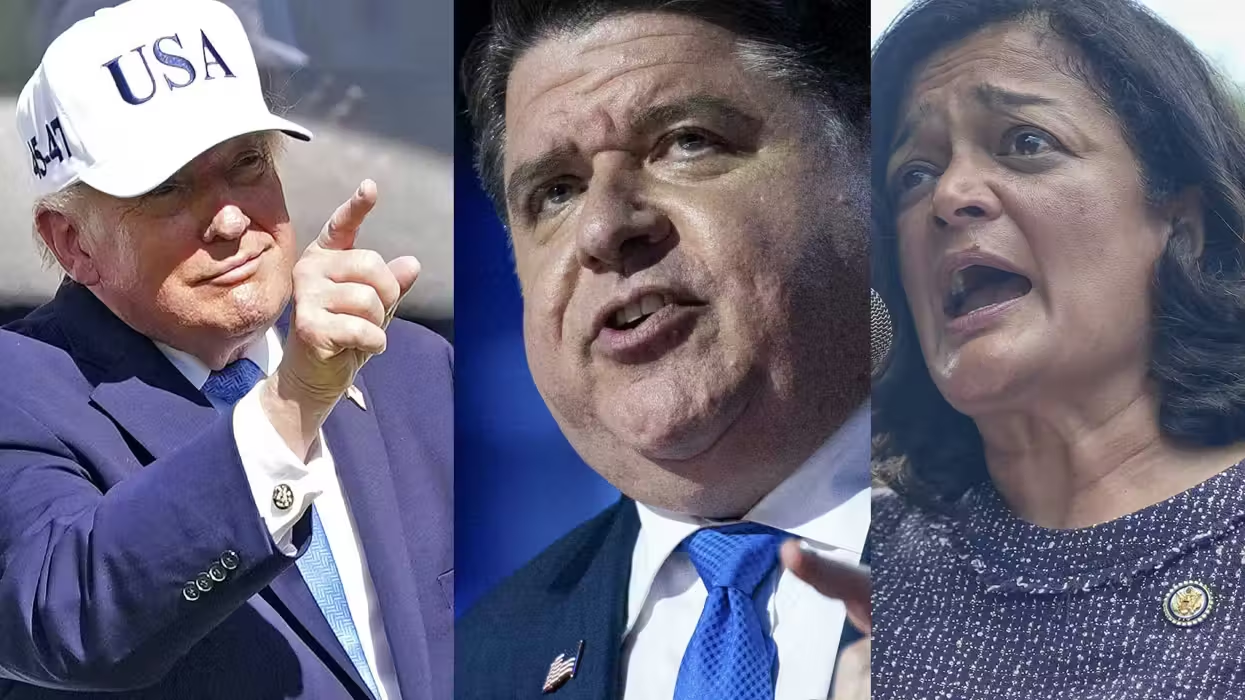
Both major parties’ congressional establishments are crumbling. Prominent, once-popular legislators and governors are falling to upstart socialists in Democratic primaries and to Trump-endorsed MAGA candidates in Republican contests.
The old bipartisan order blurred responsibility. Polarization reveals who stands for what.
This is the most important and positive change in American politics in decades. Bipartisanship is no longer possible. Polarization now defines American politics.
Contrary to what the media and establishment figures keep insisting, that is not necessarily a bad thing.
Two genuinely divergent political parties in Washington can serve the American people better than a cartel of polite agreement. Strong, fundamental disagreement keeps politicians from doing too much, too quickly, with too little scrutiny.
That is how the founders designed the system to work. They did not want easy majorities imposing their will on everyone else. They built a constitutional order full of friction, checks, divided powers, and obstacles to sudden national action.
Bipartisanship, by contrast, gets things done. That is often the problem.
When Washington becomes “effective,” it usually means politicians, powerful interests, and armies of professional grifters have found a way to expand spending for their mutual benefit. The public pays. The insiders profit. The press calls it “responsible governing.”
We see this across federal programs, from Medicaid to food stamps to defense spending. Fraud, chicanery, and outright theft flourish when both parties decide the money must keep flowing. The late Department of Government Efficiency began to expose some of the grift. It did not last long.
That is what bipartisanship often produces: waste, theft, and punishment for the people who expose it.
Polarization interferes with the trade of public money for political power. For everyone except thieves and grifters, that is a benefit.
Fortunately, American politics is now undergoing a thorough bifurcation.
The Democratic Party is nominating more open socialists at every level of government. They are winning in places such as New York City and Seattle and taking office. Republicans, for their part, are giving landslide primary victories to candidates endorsed by President Trump.
These events mark the end of the old bipartisan arrangement. The two parties are moving to opposite corners of the ring. The middle has grown thin.
RELATED: Barney Frank’s dying warning should worry conservatives
 Paul Morigi/Getty Images
Democrats have made their stand as the party of open socialism. Sen. Bernie Sanders (I-Vt.), Sen. Elizabeth Warren (D-Mass.), California Gov. Gavin Newsom, Rep. Alexandria Ocasio-Cortez (D-N.Y.), and her fellow Squad members call for vastly expanded government power and direct attacks on speech, enterprise, and excellence. Their politics increasingly divide Americans by race, sex, and class in pursuit of a utopian vision.
Their party tested many of these ideas during the pandemic and the racial upheavals of the past decade. We know they mean it. Republicans who assisted in those efforts are now being cast out of office as their terms expire — or are leaving before primary voters come for them.
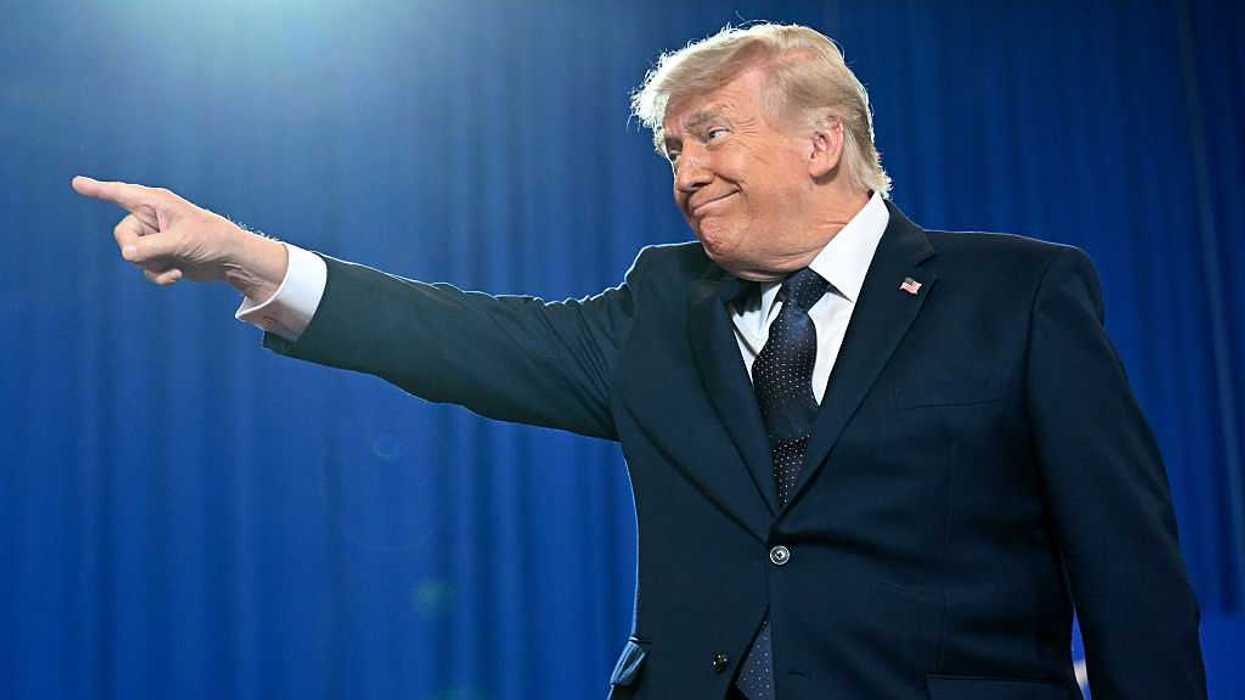
Republicans, meanwhile, have coalesced around Trump’s MAGA movement, a call to restore American greatness through freedom and the rule of law. Trump, Vice President JD Vance, House Speaker Mike Johnson (R-La.), and Secretary of State Marco Rubio represent this vision. It seeks to unleash human excellence while dismantling the destructive concentrations of power built over the past century.
The two elements of the MAGA strategy — freedom and government retrenchment — reflect the two poles of the founders’ vision of ordered liberty. That creates some tension inside the movement. MAGA partisans must sometimes use government power to break up the crony system government helped build. More liberty-minded Republicans understandably find that uncomfortable, necessary though it may be.
Democrats struggled with their own internal split. For now, the hard-left democratic socialists have won. That is the real reason for today’s polarization: The party of the left has moved farther to the fringe.
The only thing both parties still agree on is that they cannot stop overspending. Even there, they overspend for different reasons. Democrats emphasize social programs. Republicans emphasize national defense and the border.
The current gridlock in Congress, with major legislation stalled in the Senate because of the filibuster, is not the fault of polarization. The Republican Senate majority could pass much of its agenda by eliminating the filibuster. It has chosen not to do so.
RELATED: Trump’s endorsement power keeps saving the wrong Republicans
 Roberto Schmidt/Getty Images
The country needs major federal reform, especially a large reduction in spending. Polarization is not the obstacle to that work. It is the beginning of clarity.
The old bipartisan order blurred responsibility. Polarization reveals who stands for what. Eventually, the American people will decide which vision they prefer.
That bifurcation gives voters clearer choices between parties, within parties, and among candidates. It is becoming much more obvious what citizens are voting for when they support either side.
As cities such as Detroit, Los Angeles, Seattle, and Portland deteriorate into hellscapes while their most capable residents move to Dallas, Nashville, Charlotte, Miami, and other places with lower taxes, less crime, and lighter regulation, the consequences of these rival political visions grow harder to ignore.
Political polarization is the source of that clarity. It is the one thing that can restore true self-government to the American people.