Photo by Alex Wong/Getty Images
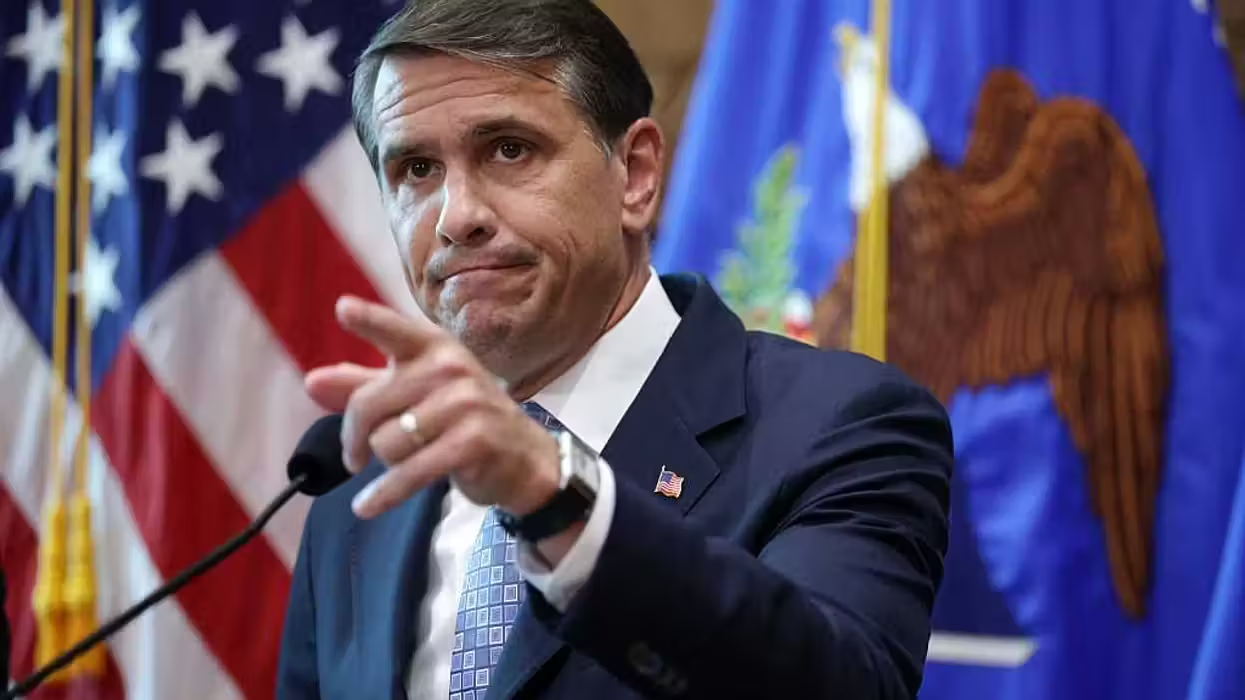
The Senate finally voted Saturday to confirm Todd Blanche as President Donald Trump’s new attorney general. Anyone who wants a Justice Department that enforces the law instead of bending it to politics can breathe a little easier.
Blanche is unusually well-suited for the job. He has seen the justice system from both sides — first as a federal prosecutor and assistant U.S. attorney in the Southern District of New York, then as a defense attorney, including as one of Trump’s lead lawyers during the prosecutions he faced before returning to the White House. Few incoming attorneys general have had a more personal view of what prosecutorial power can become when politics infects the justice system.
Trump’s effort to reform the Justice Department is not complete, but the direction is a stark improvement over what came before.
A new era at the Justice Department has now officially begun, but the turnaround started before Blanche’s confirmation. Speed bumps aside, the direction under Trump’s team is unmistakable: order restored at the southern border, an end to lawfare, and a saner approach to antitrust enforcement. Blanche’s job is not to start that work. It is to finish it.
A timely reminder arrived last week, when the Department of Justice reached a settlement with Paul Vaughn days before Blanche was confirmed.
The Biden Justice Department charged Vaughn, a pro-life father of 11, under the Freedom of Access to Clinic Entrances Act after he participated in a sit-in at a Tennessee abortion clinic in 2021.
FBI agents staged a predawn raid at his home and arrested him in front of his wife and children. Vaughn ultimately received three years of supervised release and no prison time, but other pro-life defendants were not so lucky.
Lauren Handy was sentenced to 57 months in prison. Jonathan Darnel received 34 months. Seventy-six-year-old Joan Andrews Bell got 27 months, and 75-year-old Paula Harlow received 24 months.
When Harlow’s husband pleaded for leniency because of her age and declining health, the judge replied that she should “make every effort to remain alive” in keeping with “the tenets of your religion.” All four were later pardoned by Trump.
The FACE Act protects access to abortion clinics, but it also protects pregnancy centers and houses of worship. Yet the Biden administration’s aggressive prosecution of pro-life demonstrators contrasted sharply with the much thinner record of prosecutions after extremists firebombed and vandalized pregnancy centers following the Supreme Court’s Dobbs decision.
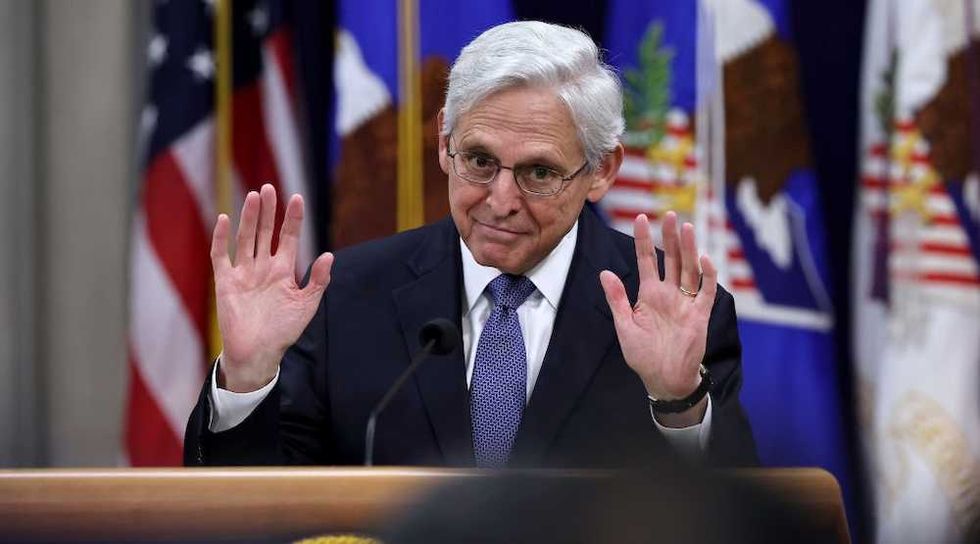
Attorney General Merrick Garland once explained the difficulty by noting that many of the attacks happened at night. Apparently darkness is now a federal jurisdictional problem. Good to know. Garland was almost on the Supreme Court.
RELATED: The Biden tapes blow open the autopen scandal
 Celal Gunes/Anadolu/Getty Images
The pro-life cases were among the most visible abuses of the Garland years, but hardly the only ones. His department drew justified outrage over its treatment of parents protesting school policies; House Republicans later accused the DOJ of having labeled parents as terrorist threats. The FBI also came under fire after an internal memo contemplated cultivating sources in traditionalist Catholic communities — what critics described as a plan to send spies into parishes. And special counsel Jack Smith pursued Trump through the heat of the 2024 campaign.
Even antitrust enforcement became an exercise in questionable priorities. The Justice Department blocked JetBlue from acquiring Spirit Airlines in 2024. Spirit later collapsed, removing a low-fare competitor from an already concentrated airline market. Regulators claimed to be protecting consumers; consumers ended up with one fewer discount carrier.
The Biden administration also moved to block Hewlett Packard Enterprise’s acquisition of Juniper Networks, a deal the intelligence community reportedly deemed vital to national security. The Trump team ultimately allowed the transaction to proceed, strengthening an American competitor in a market where China’s Huawei remains formidable.
RELATED: The right needs a public defender network for lawfare
 Chip Somodevilla/Getty Images
Anti-Christian, anti-conservative, anti-business, and heedless of national-security concerns: We have seen what happens when partisan priorities seep into the Justice Department. Trump’s effort to reform the Justice Department is not complete, but the direction is a stark improvement over what came before.
And the danger of backsliding is obvious. If a Democrat wins the White House in 2028, expect pressure for an attorney general even more aggressive than Garland. Biden himself reportedly regretted choosing Garland and wished he had listened to advisers who preferred the more partisan Doug Jones. That should tell you something.
Todd Blanche is infinitely preferable. He knows prosecutorial power from both sides of the courtroom, and he has every reason to understand how quickly discretion can become abuse.
The Justice Department does not need revenge. It needs restraint, consistency, and equal treatment under the law. Blanche has the experience — and now the authority — to deliver it.