Celal Gunes/Anadolu/Getty Images
Two summers ago, our team at the Oversight Project sat in a conference room asking the same question as the rest of the country: How were they running the government with a broken president?
That was before Joe Biden’s complete malfunction on the debate stage. Even then, we were confident he could not sustain a full re-election campaign. We began examining whether state election laws would permit Democrats to replace him after key ballot deadlines. Leaked Democratic National Committee memos showed that the prospect had already alarmed both pro- and anti-Biden factions.
The silence on the tapes speaks loudly. It suggests knowing and willful conduct, not an innocent paperwork mistake.
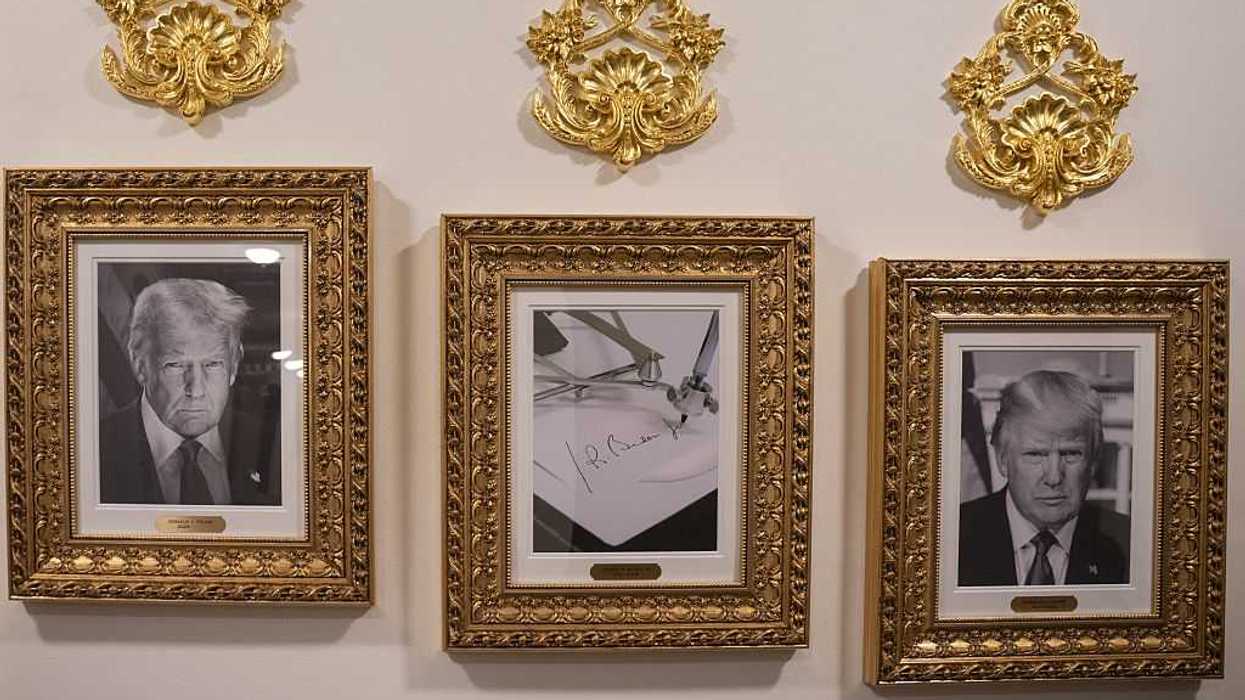
As a clip of Biden stumbling played on the television, someone asked the lawyer’s question: How were they moving paper through the White House, and could Biden even sign it?
After a brief silence, someone answered: Probably an autopen. Let’s find the documents and calendars and figure it out.
The rest became what President Trump has called the scandal of the century: congressional investigations, Justice Department and White House inquiries, evidence of the extraordinary lengths Biden’s aides took to conceal his condition, and even the rearrest of violent felons who should never have received autopenned commutations.
Accountability, however, has remained elusive.
Which is infuriating. What happened during the Biden years was wrong, harmful, and in many instances unlawful. The Constitution vests presidential authority in one person. That person must possess both the capacity and the awareness to authorize official acts. The entire system depends on fixing responsibility on the president whom the voters chose.
That did not happen. For a country that has spent decades lecturing the world about democracy, the Biden presidency became an embarrassment at home.
Monday brought a measure of accountability. After more than two years of litigation, the Biden tapes were released to the American people.
Joe Biden and his well-funded legal team fought us in federal district court and on appeal. We won both times. Biden could have asked the Supreme Court to intervene, but he finally surrendered. His lawyers had so much time and money that they devoted pages of legal filings to posts from my X feed and that of my colleague Jeff Clark, apparently hoping to discredit us before the court. I will always enjoy knowing that the Biden team paid an aspiring left-wing lawyer to study my unvarnished thoughts.
RELATED: Biden audio tapes have just been released — and it’s not good for Joe
 Mandel Ngan/Pool/Getty Images
What does the release of the tapes mean?
First, it pushes the timeline of Biden’s decline back to 2016 and 2017.
The recordings capture Biden’s interviews with ghostwriter Mark Zwonitzer while the two worked on Biden’s memoir, “Promise Me, Dad.” They were made within six months of Biden leaving the vice presidency. On the tapes, Biden forgets the name of Rep. Jim Clyburn, the man who would later rescue his 2020 campaign. He repeatedly says, “I’m so confused” and, “I can’t remember.”
The good days and bad days that defined his presidency were already apparent in 2017. The recordings contain so many pauses and verbal stalls that Biden sounds like a dial-up connection trying to buffer.
That helps explain why the 2020 campaign used COVID-19 as cover to keep him in the basement. Had Biden been forced to speak publicly and off the cuff throughout that campaign, his decline might have become as obvious then as it was during the 2024 debate. Democratic leaders knew they were selling damaged goods long before the public finally saw the label.
Second, the tapes raise serious questions about special counsel Robert Hur’s investigation into Biden’s handling of classified information.
Hur declined to prosecute, concluding that a jury would view Biden as a “sympathetic, well-meaning, elderly man with a poor memory.” Yet the recordings reveal conduct more serious than Hur’s public account suggested.
At several points, Biden acknowledges that the material before him may be classified. The audio then cuts to long stretches of silence redacted for national security reasons. These are not isolated interruptions. Classified redactions cover substantial portions of the recordings.
The transcripts indicate that Biden disclosed information involving the CIA, the Defense Department, and other sensitive national security matters to a ghostwriter who lacked both a security clearance and authorization to receive it. Biden made those disclosures while pursuing a book deal worth $8 million.
The silence on the tapes speaks loudly. It suggests knowing and willful conduct, not an innocent paperwork mistake. The recordings justify a fresh examination of whether Hur’s investigation was designed to uncover the full truth or to contain a politically explosive scandal.
RELATED: Biden freed killers with a pen he didn’t even hold
 Chip Somodevilla/Getty Images
Third, the tapes open the door to criminal inquiries.
Biden told the American people that he “did not share classified information” with his ghostwriter. The tapes contradict that statement. Knowing and willful disclosure of national defense information to an unauthorized person can constitute a federal crime. Unlike a witness with a failing memory, a recording does not need to testify.
The inquiry should not stop with Biden. His White House mobilized in 2024 to discredit Hur for accurately describing the president’s mental condition. Officials who knew the truth attacked the special counsel for saying it aloud. The autopen scandal was institutional, and accountability must extend to the aides who enabled, concealed, and benefited from it.
Investigators must reconstruct the timeline carefully. Biden was plainly diminished in 2016 and 2017, though he deteriorated further by 2024. What was his mental state when he removed classified documents from secure facilities? Did he understand that he was disclosing protected information when he said as much on tape? How did Hur evaluate intent at the time the alleged offenses occurred rather than at the time of his later interview?
Those questions demand answers.
The tapes always belonged to the American people. The Oversight Project merely delivered them to their rightful owners.
America can never again permit a presidential administration to operate by mechanized fiat. Only one person may exercise the powers of the presidency. That person must know what he is authorizing, accept responsibility for it, and actually possess the confidence of the voters who put him there.