Alex Wong/Getty Images
His policies were credited with a decade of prosperity but also blamed for the global economic crash.
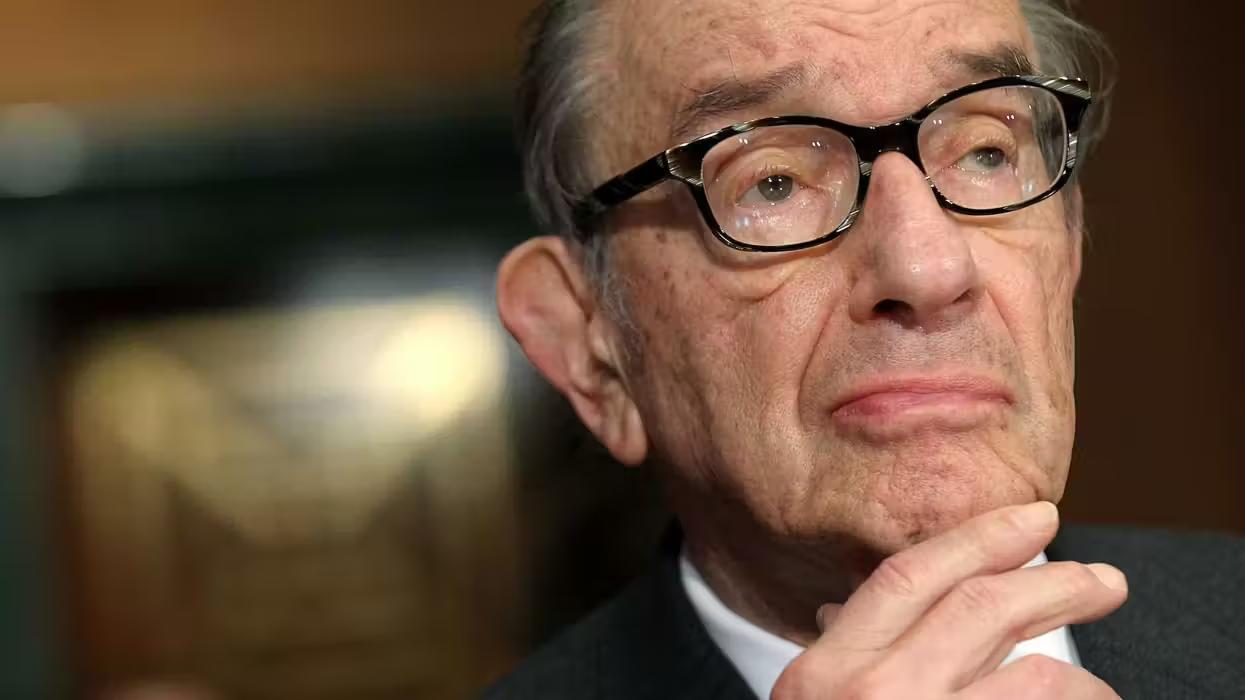
Economist Alan Greenspan has died at age 100, according to his wife.
Greenspan chaired the U.S. Federal Reserve for four terms under four different presidents, beginning in the Reagan administration in 1987 and ending in 2006 under the George W. Bush administration.
'The more flexible an economy, the greater its ability to self-correct after inevitable, often unanticipated disturbances.'
Many credited his economic policies for the prosperity of the 1980s and '90s, but others blame him for the global financial crisis of 2008.
He was married to veteran NBC journalist Andrea Mitchell since 1997. Mitchell said he died Monday from complications of Parkinson's disease.
Former President Ronald Reagan called him "an economist's economist, one of the most widely respected men" in the field when he appointed Greenspan as Fed chairman.
After the financial crisis which Greenspan described as a "once-in-a-century credit tsunami," he admitted that he made a mistake in his assumptions about human nature.
"Those of us who have looked to the self-interest of lending institutions to protect shareholders' equity, myself included, are in a state of shocked disbelief," he said during a 2008 congressional hearing.
"I made a mistake in presuming that the self-interest of organizations, specifically banks and others, were such that they were best capable of protecting their own shareholders and their equity in the firms," he added.
His admission has become the basis for critics of the free market capitalist theory of economics.
RELATED: The Economist gets crushed over sympathetic portrayal of dead Iranian leader
He is also credited with coining the phrase "irrational exuberance" to explain investor behavior that leads to a market bubble.
"Whether by intention or by happenstance, many, if not most, governments in recent decades have been relying more and more on the forces of the marketplace and reducing their intervention in market outcomes," Greenspan said in a 2005 speech.
"We appear to be revisiting Adam Smith's notion that the more flexible an economy, the greater its ability to self-correct after inevitable, often unanticipated disturbances," he concluded.
Like Blaze News? Bypass the censors, sign up for our newsletters, and get stories like this direct to your inbox. Sign up here!