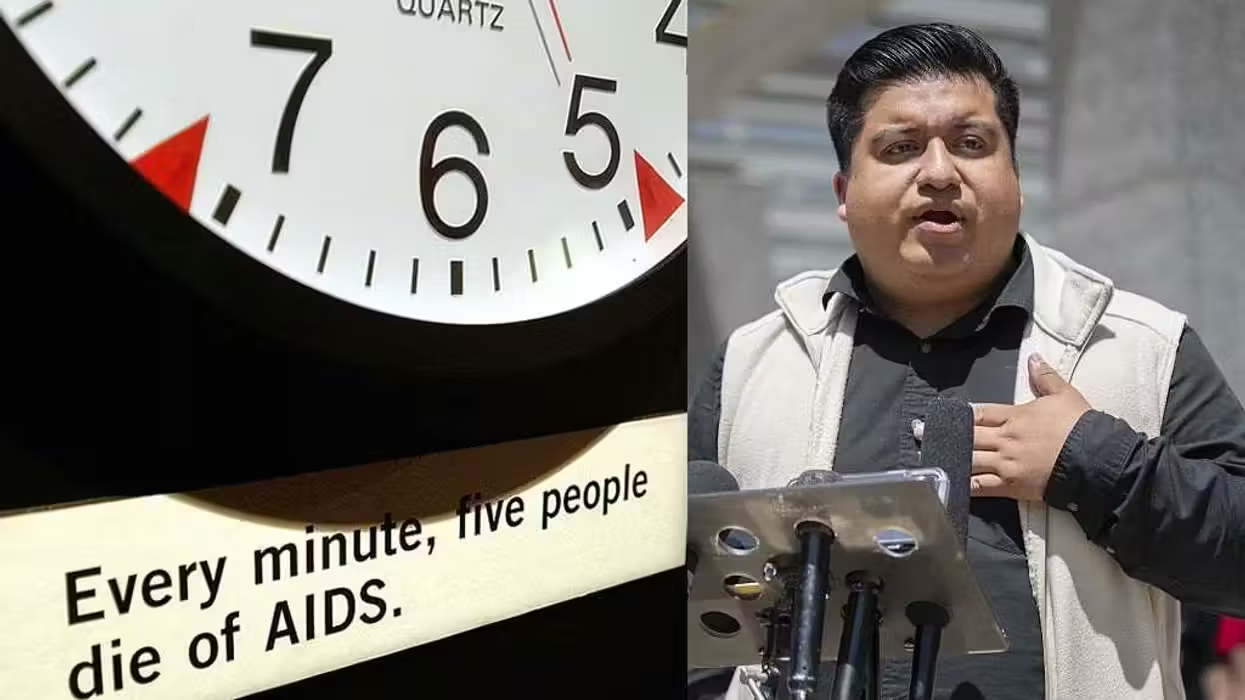
Spencer Platt/Getty Images (L); Minneapolis Councilman Jason Chavez. Christopher Mark Juhn/Anadolu/Getty Images (R)
AIDS killed over 100,000 people in the U.S. during the 1980s. The vast majority of AIDS deaths occurred among homosexuals.
According to the U.S. Centers for Disease Control and Prevention, HIV/AIDS had become the third-leading cause of death among men 25-44 years of age, and in 1989, it had become the second-leading cause of death, surpassing heart disease, cancer, suicide, and homicide.
'Today's vote is a step to try and rectify past harms.'
Seeking to curb the spread of AIDS and save lives, Minneapolis — like other cities around North America — voted in 1988 to shut down its adults-only bathhouses, which are effectively super-spreader sites frequented by homosexuals looking for sex.
The ban, which impacted three establishments, was supported by numerous homosexuals at the time, including Minneapolis' first-known gay city councilor, Brian Coyle, who later died of AIDS-related illnesses.
The radicals now running the city voted 9-2 on Thursday to repeal the ban on adult bathhouses and sex venues.
Ahead of the vote, homosexual Councilman Jason Chavez — the LGBT activist who co-authored the two ordinances required to repeal the ban — characterized the decades-old effort to protect homosexuals from the ravages of AIDS as "wrong" and hateful.
"Bathhouse restrictions have a history that is intertwined with anti-2SLGBTQIA bigotry, in particular the history of homophobia in Minneapolis," said the gay son of Mexican immigrants who had trans- and LGBT-activist flags on his desk but no American colors.
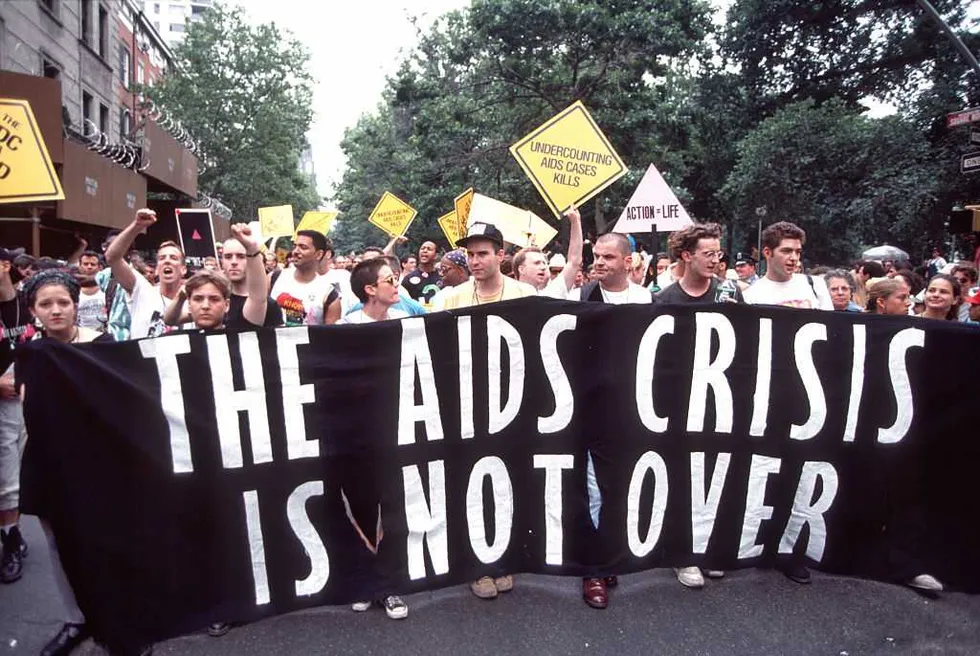 Allan Tannenbaum/Getty Images
"Today's vote is a step to try and rectify past harms," Chavez continued. "In fact, when this ban first passed, the ordinance declared AIDS to be of particular danger to persons in this community — this community meaning the community I'm a part of and proud to be a part of. It stated that this disease was found to occur in discernible population groups and that the definition of high-risk sexual conduct targeted acts associated specifically with gay men. To be clear, it was a law targeting gay men."
Homosexual- and bisexual-identifying men are still the population most affected by HIV/AIDS. The CDC noted that in 2022, for instance, 71% of all new HIV infections in the U.S. were among homosexual and bisexual men.
HIVinfo, the federal government's resource for up-to-date HIV/AIDS information, noted that "receptive anal sex carries the highest risk of HIV transmission among all types of sex. The risk of transmission is about 13 times greater with receptive anal sex than with insertive anal sex."
A 2010 study published in the Journal of Sex Research found on the basis of a two-stage probability sample of men exiting a gay bathhouse that:
A 2001 study published in the American Journal of Public Health investigated differences in risk behavior among homosexuals who went to bathhouses, public cruising areas, or both, and concluded that "targeting HIV prevention in the bathhouses would reach the segment of men at greatest risk for HIV transmission."
Councilwoman Elizabeth Shaffer, one of the two officials who voted to keep the ban in place, opposed it both because she apparently didn't think that commercial sex resorts for homosexuals was a municipal priority and because her constituents expressed opposition.
Shaffer told MPR News that one constituent in particular, an individual who worked for former state Sen. Allan Spear — Minnesota's first openly non-straight senator — told her "that many gay men in his own network either oppose the return of bathhouses or have real questions about whether this is the right path for a variety of reasons."
Democratic Mayor Jacob Frey, who evidently didn't share such concerns, announced on Sunday that he would sign the repeal into law.
Chavez noted that Minneapolis cannot immediately erect new super-spreader sites.
"We still need to work on zoning, the safety and regulations," Chavez said. "So bathhouses won't be able to open tomorrow or next week."
Like Blaze News? Bypass the censors, sign up for our newsletters, and get stories like this direct to your inbox. Sign up here!