Swim ink 2/Corbis/Getty Images (L); John Moore/Getty Images (R)
The Citizenship Clause of the 14th Amendment states, "All persons born or naturalized in the United States, and subject to the jurisdiction thereof, are citizens of the United States and of the State wherein they reside."
President Donald Trump issued an executive order on his first day back in office making it U.S. policy not to issue citizenship documents to a person whose mother was unlawfully in the country and whose father was neither an American citizen nor a permanent resident at the time of the person's birth.
'The Court has made a mistake that will seriously affect the country's future.'
This order has been at the center of a legal battle that culminated in the U.S. Supreme Court's determination on Tuesday in Trump v. Barbara that "children born in the United States to parents unlawfully or temporarily present are 'subject to the jurisdiction' of the United States and are citizens at birth under the Fourteenth Amendment's Citizenship Clause."
Unwilling to suffer the fallout of the high court's ruling, some conservatives are looking for legal ways to prevent America from cheapening citizenship and becoming a spawning ground for opportunistic foreigners.
Missouri Sen. Eric Schmitt (R) noted in the wake of the consequential ruling that "the majority tried to constitutionalize unlimited birthright citizenship. But Justice Kavanaugh MAY have left Congress a door."
Justice Brett Kavanaugh wrote in a partially dissenting opinion:
The Executive Order does not violate the Fourteenth Amendment. But the Order does contravene a federal statute, 8 U.S.C. § 1401(a). Congress could — consistent with the Fourteenth Amendment — amend § 1401(a) or otherwise enact new legislation establishing exceptions to birthright citizenship for children born to foreign citizens unlawfully or temporarily in the country. But Congress has not yet done so.
RELATED: SCOTUS rules on Trump's birthright citizenship order
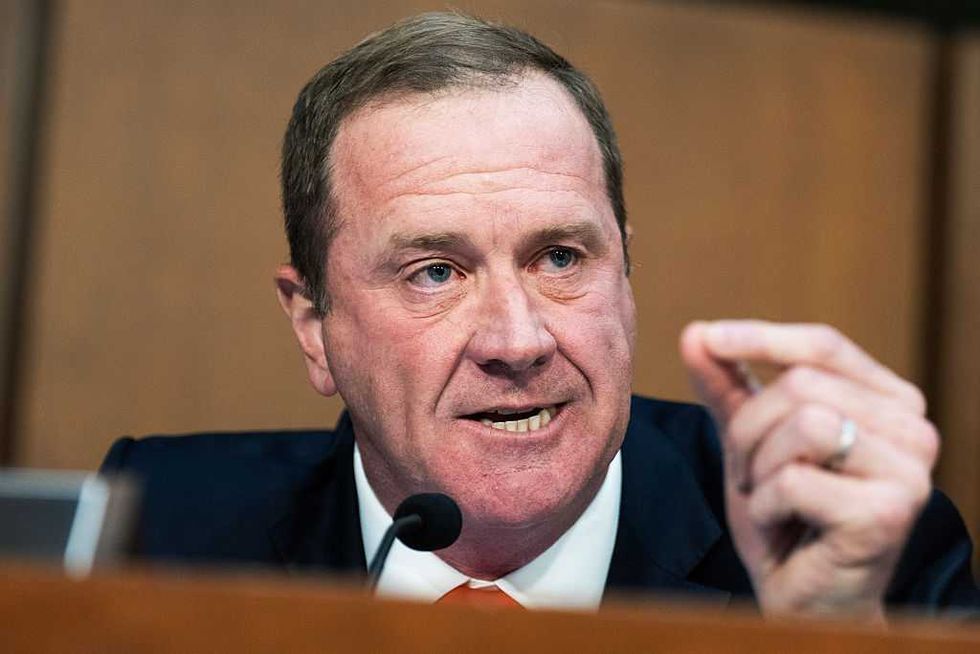 Sen. Eric Schmitt. Tom Williams/CQ-Roll Call, Inc/Getty Images
Recognizing that the high court's decision "will destroy the republic" but is unfixable with ordinary legislation, Schmitt advocated that "we must do what the Constitution commands in moments of national crisis: We must amend the Constitution and restore American citizenship. We must again put 'We the People' first."
"When the Court entrenches its mistake as a constitutional command, the remedy must match the injury," the Missouri senator wrote. "Congress can propose an amendment under Article V, and the states can ratify it. That process is purposefully difficult. It requires two-thirds of each chamber of Congress and ratification by three-quarters of the states."
The senator announced that he is filing legislation to amend Section 301 of the Immigration and Nationality Act.
Schmitt's proposed "American Citizenship Act" would clarify the meaning of the Citizenship Clause such that a person born in the United States would be "deemed subject to a foreign power if neither parent of such person is a United States citizen or has been lawfully admitted for permanent residence at the time of such person's birth."
The act would not apply retroactively to persons already born.
"That amendment will restore the original American understanding of citizenship. It will restore the right of the American people to define their own political community," Schmitt said. "And it will ensure that citizenship once again reflects allegiance, permanence, and membership in the American nation."
The clarification proposed by Schmitt appears to be in keeping with the longstanding American understanding of the clause referenced by Justice Samuel Alito in his dissent in Barbara.
Alito, like Justice Clarence Thomas, railed against the majority's apparent revisionist history and suggested that the court broke from tradition in its interpretation of "subject to the jurisdiction thereof," taking it to mean "subject to the laws that apply to everyone who is present within the country's borders."
The conservative justice stressed that this interpretation presents at least three "fatal problems" on textual grounds:
Alito said in conclusion that "the Court has made a mistake that will seriously affect the country's future."
President Donald Trump suggested that the Supreme Court's mess could be cleaned up "in Congress through Legislation, with the support of the President."
He stressed that "no long and unwieldy Constitutional Amendment is necessary!"
Like Blaze News? Bypass the censors, sign up for our newsletters, and get stories like this direct to your inbox. Sign up here!