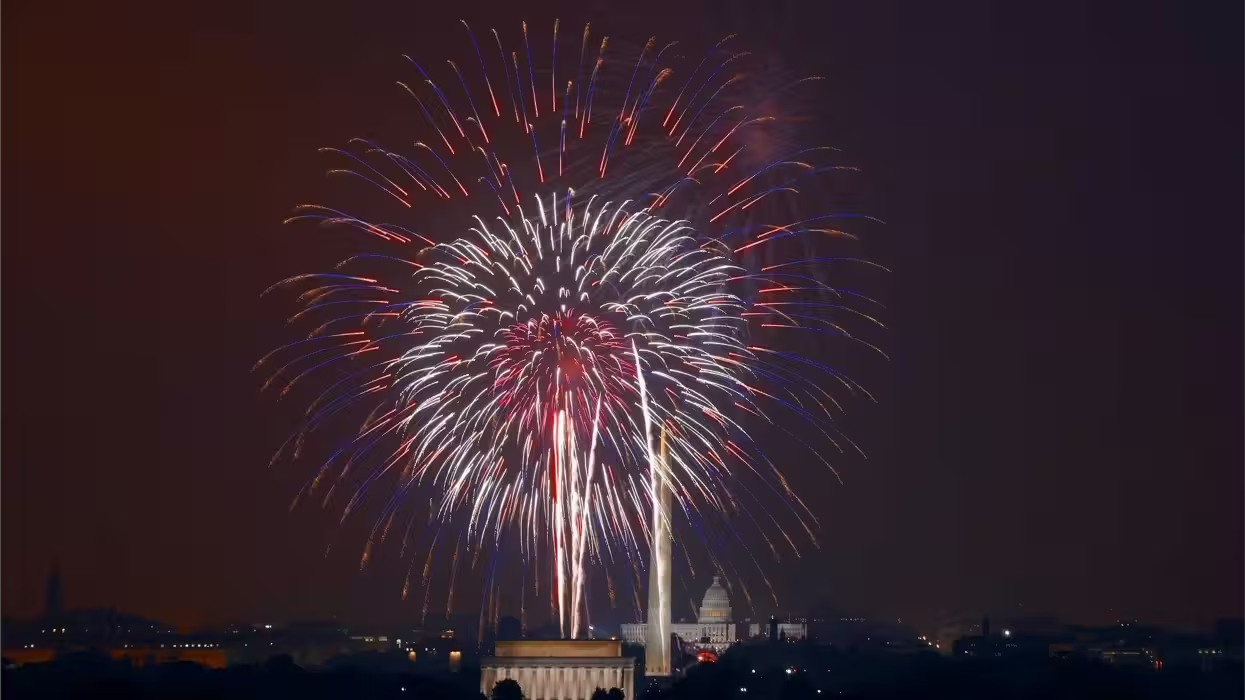
July 4 fireworks, Washington, D.C. Carol M. Highsmith/Library of Congress
The Fourth of July holds a special place in every American’s heart. In fact, as every patriot knows, the day has come to represent liberty and American greatness ever since the Declaration of Independence in 1776.
Since then, the day has seen a series of significant events, a number of notable births and deaths, and a couple of coincidences so perfect they almost don’t seem real over the course of the building of the greatest nation on earth.
'I am apt to believe that it will be celebrated, by succeeding Generations, as the great anniversary Festival.'
Here are some snapshots of historical milestones on Independence Day that have led to the country we know and love today.
RELATED: 'One nation under God': Christians to march through DC as part of 2,000-mile Eucharistic procession
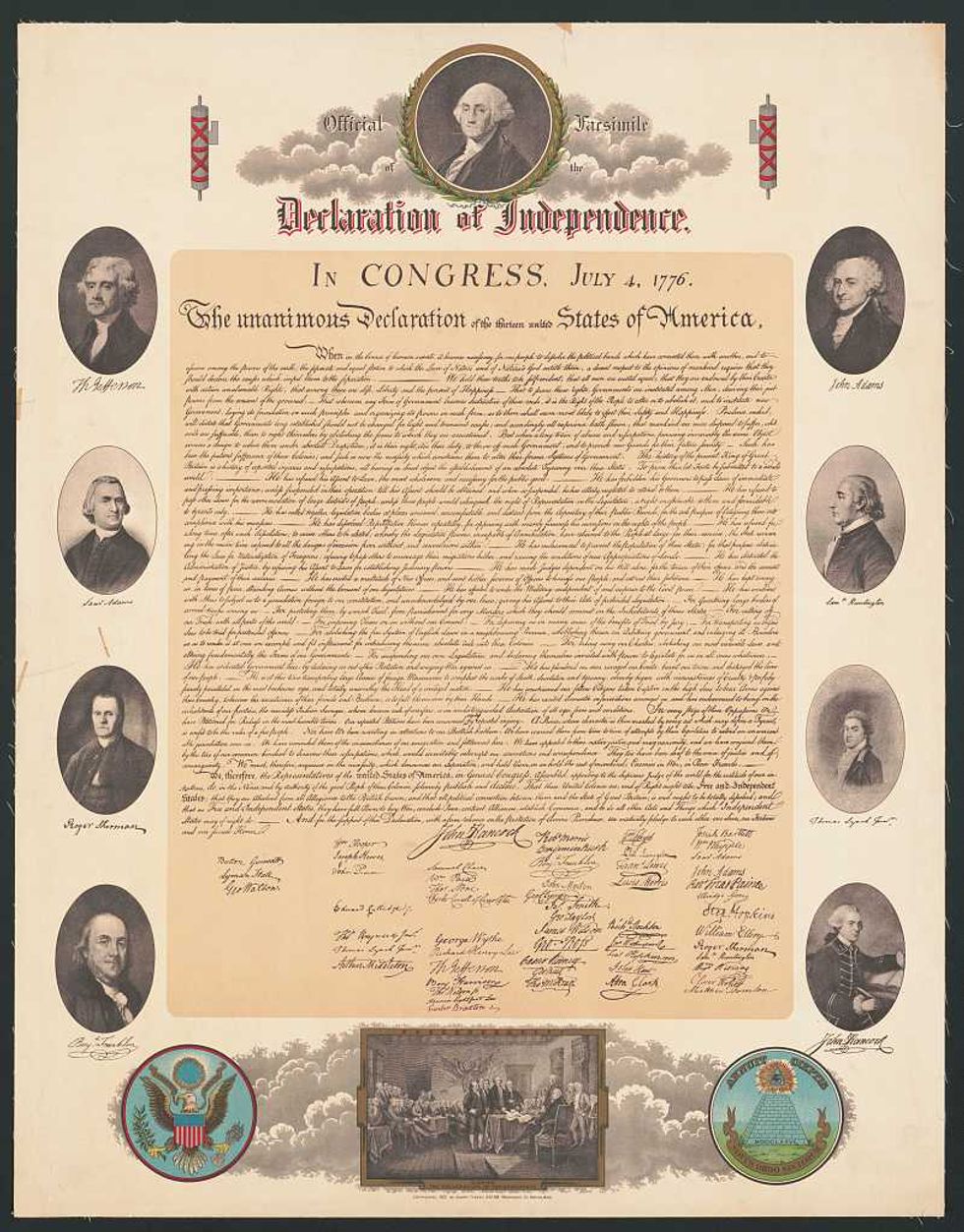 Official facsimile of the Declaration of Independence. Boston, Massachusetts. C. 1903/Library of Congress
1776 – The United States Declaration of Independence is adopted by the Second Continental Congress. John Adams, in a July 3 letter to his wife, Abigail, wrote that July 2 (the day Congress voted to approve the Lee Resolution) would be a day of celebration for Americans. Our celebrations today, though marking the official public announcement two days later, closely resemble his words:
The Second Day of July 1776, will be the most memorable Epocha, in the History of America. I am apt to believe that it will be celebrated, by succeeding Generations, as the great anniversary Festival. It ought to be commemorated, as the Day of Deliverance by Solemn Acts of Devotion to God Almighty. It ought to be Solemnized with Pomp and Parade with Shews, Games, Sports, Guns, Bells, Bonfires, and Illuminations from one End of this Continent to the other from this Time forward forever more.
1802 – The United States Military Academy at West Point officially opens.
1803 – The Louisiana Purchase is announced to the American people.
John Adams II, son of President John Quincy Adams and the grandson of President John Adams, is born.
1804 – Nathaniel Hawthorne, author of "The Scarlet Letter" (1850) and "The House of the Seven Gables" (1851), is born.
1817 – Construction of the Erie Canal begins in Rome, New York.
1826 – Former Presidents John Adams and Thomas Jefferson both die on the same day — the 50th anniversary of the Declaration of Independence. It's enough to send a shiver down any patriot's spine!
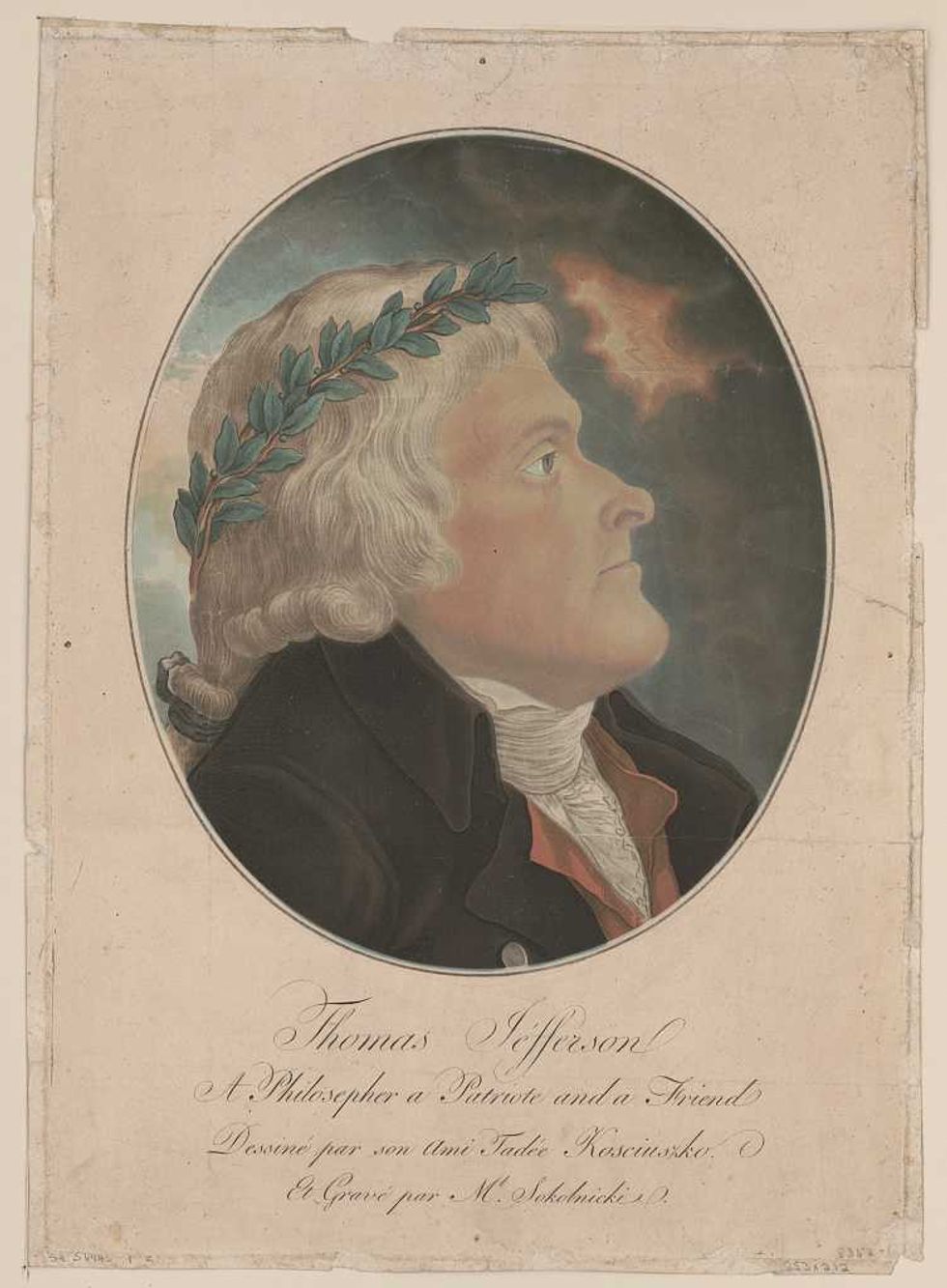 Thomas Jefferson, a philosopher, a patriot, and a friend. Michał Sokolnicki, 1760-1816, etcher/Tadeusz Kościuszko, 1746-1817, artist/Library of Congress
1826 – Prolific American composer Stephen Foster is born. Foster is known for songs like "Oh! Susanna" and "Camptown Races."
1827 – Slavery is abolished in New York state.
1831 – James Monroe, the fifth U.S. president, dies in New York City. Monroe famously coined his eponymous doctrine warning European nations not to meddle in the affairs of the Western Hemisphere. Monroe’s presidency (1817-1825) has been called the “Era of Good Feelings.”
1838 – The Iowa Territory, which was first part of the Louisiana Purchase, is officially recognized. President Martin Van Buren appoints Ohio’s Robert Lucas as Iowa’s first territorial governor.
1847 – James Anthony Bailey is born in Detroit, Michigan. Bailey is best known for running the successful Barnum & Bailey Circus.
1855 – Walt Whitman’s "Leaves of Grass" is self-published in Brooklyn, New York. Whitman spent the next decades of his life editing and adding to this collection, resulting in several editions in circulation during his lifetime. These later editions, for example, "absorbed" an elegy he wrote for the assassinated Abraham Lincoln, "When Lilacs Last in the Dooryard Bloom'd."
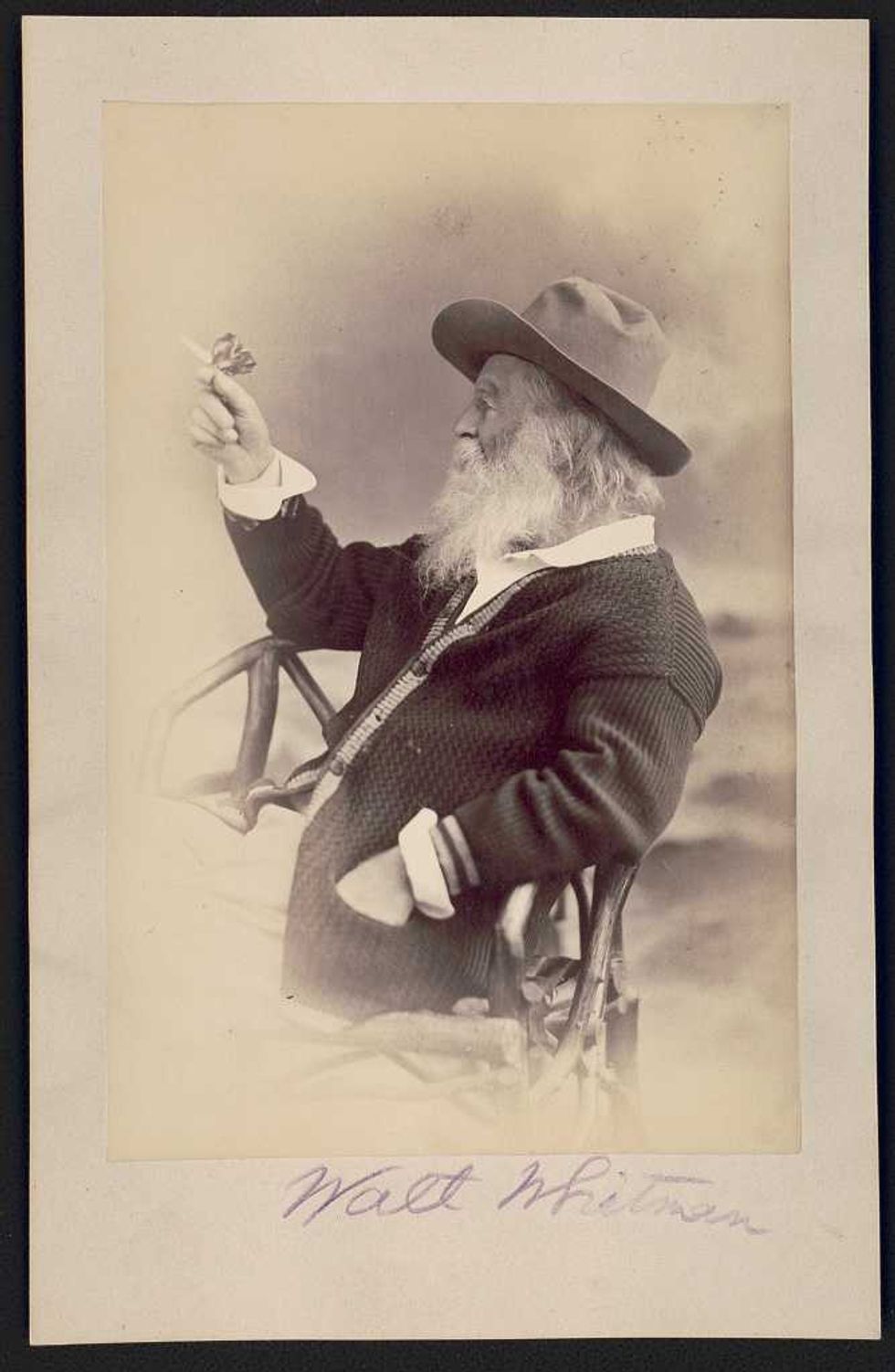 Walt Whitman, half-length portrait, seated, facing left, wearing hat and sweater, holding butterfly. Phillips & Taylor, photographer/Library of Congress
1863 – The Siege of Vicksburg, which began on May 18, ends. The Battle of Gettysburg ended just the day prior, lasting from July 1 to 3.
1872 – Calvin Coolidge, the 30th president of the United States, is born. Coolidge’s 1923 State of the Union address was the first presidential speech to be broadcast live on radio.
1876 – Centennial year since the founding of the United States. Celebrations centered on the Centennial Exposition in Philadelphia.
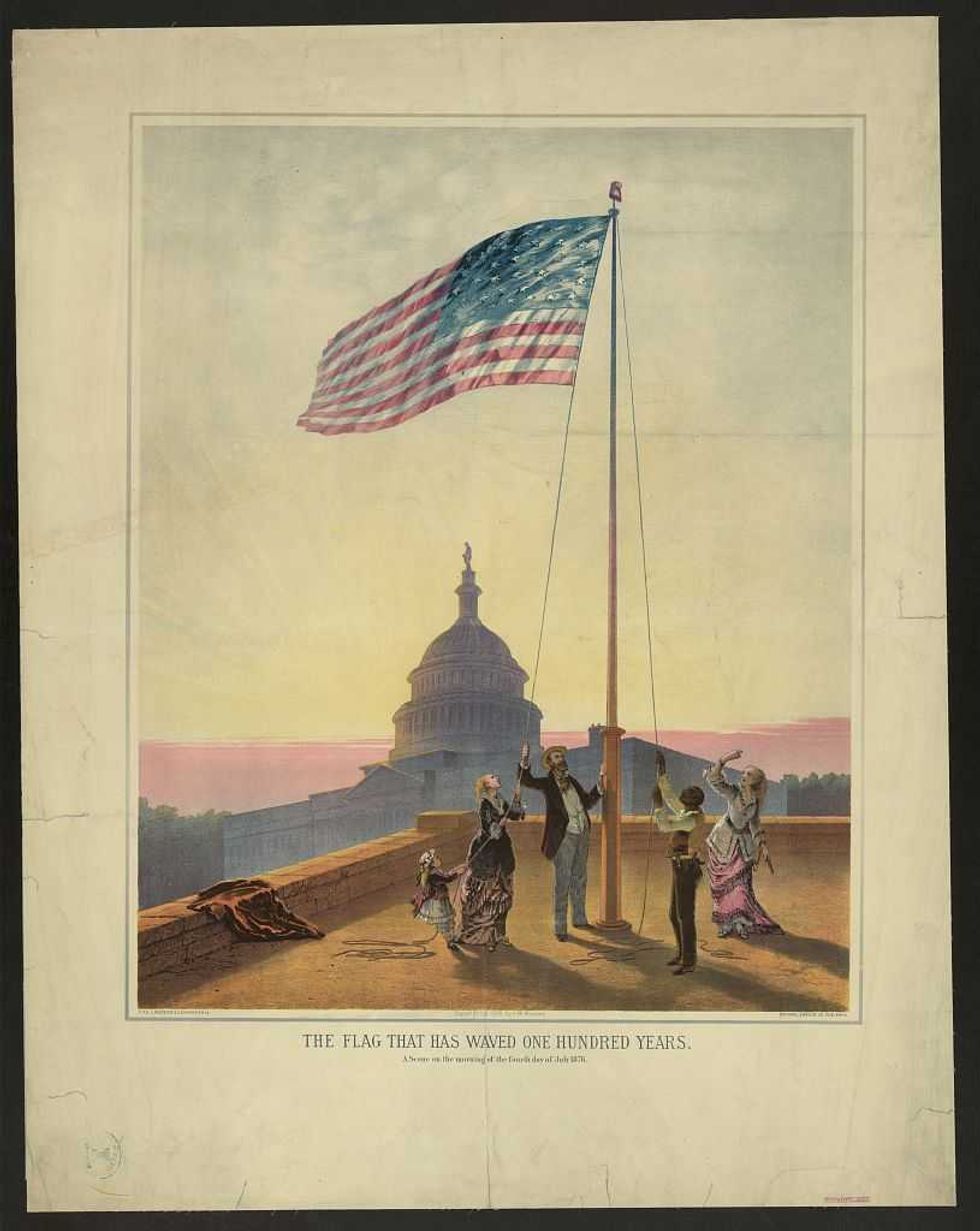 The flag that has waved 100 years. A scene on the morning of the Fourth of July 1876. Print shows African American man and others looking up as they raise the American flag with the U.S. Capitol in the background.. Dominique C. Fabronius; E.P. & L. Restein's oilchromo, Phila.; National Chromo Co. pub., Phila./Library of Congress
1881 – Ulysses S. Grant III, grandson of general of the armies and U.S. President Ulysses S. Grant, is born. Grant III had a distinguished career in the United States Army, rising to the rank of major general. He graduated from the same West Point class as General Douglas MacArthur in 1903.
1884 – The Statue of Liberty is presented to U.S. Minister to France Levi Morton in a ceremony in Paris. The colossal statue was then disassembled and shipped to the United States. President Grover Cleveland dedicated the completed statue on October 28, 1886.
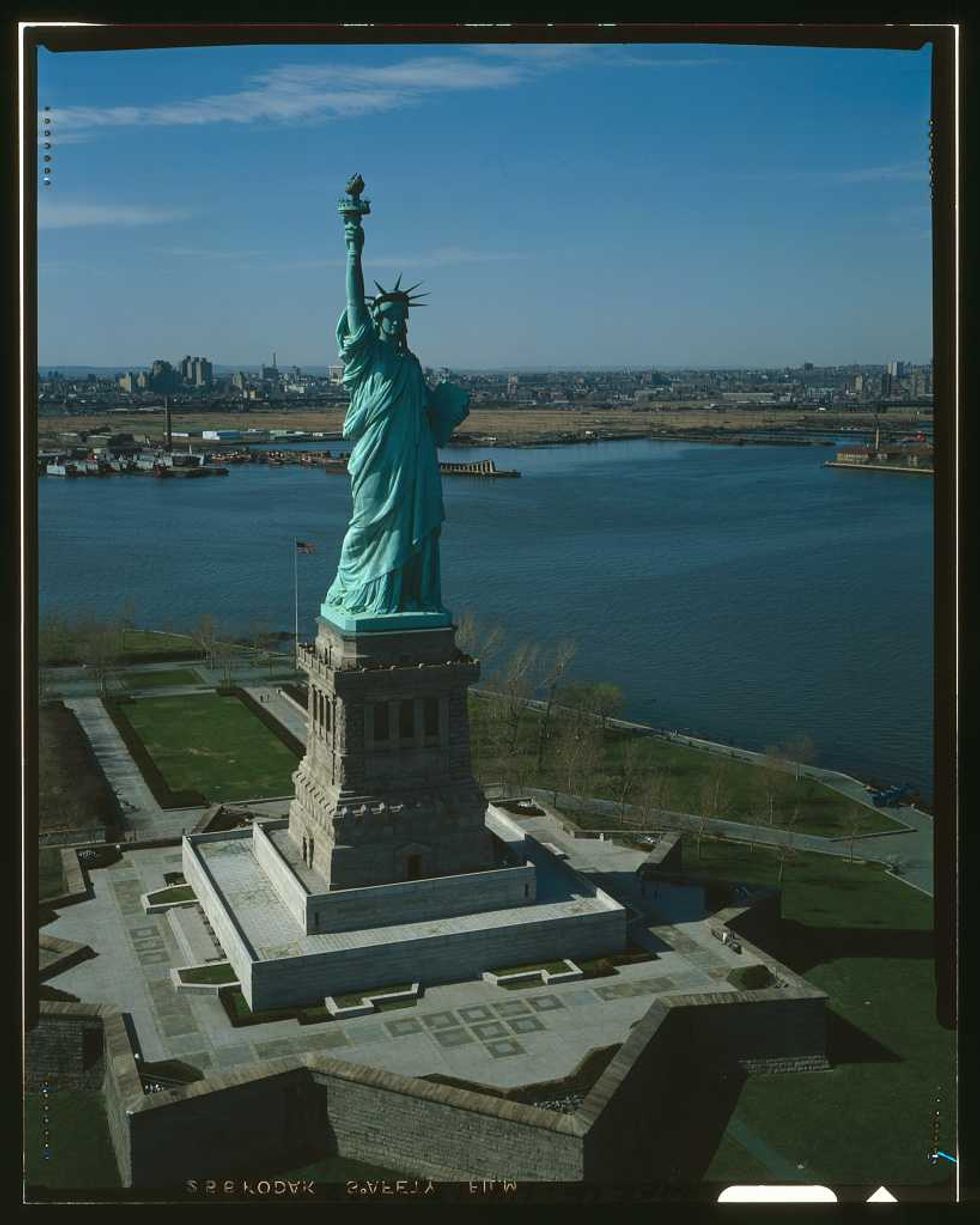 Statue of Liberty, Liberty Island, Manhattan, New York County, NY. Survey HAER NY-138/Library of Congress
1891 – Hannibal Hamlin, 15th vice president of the United States under President Abraham Lincoln, dies.
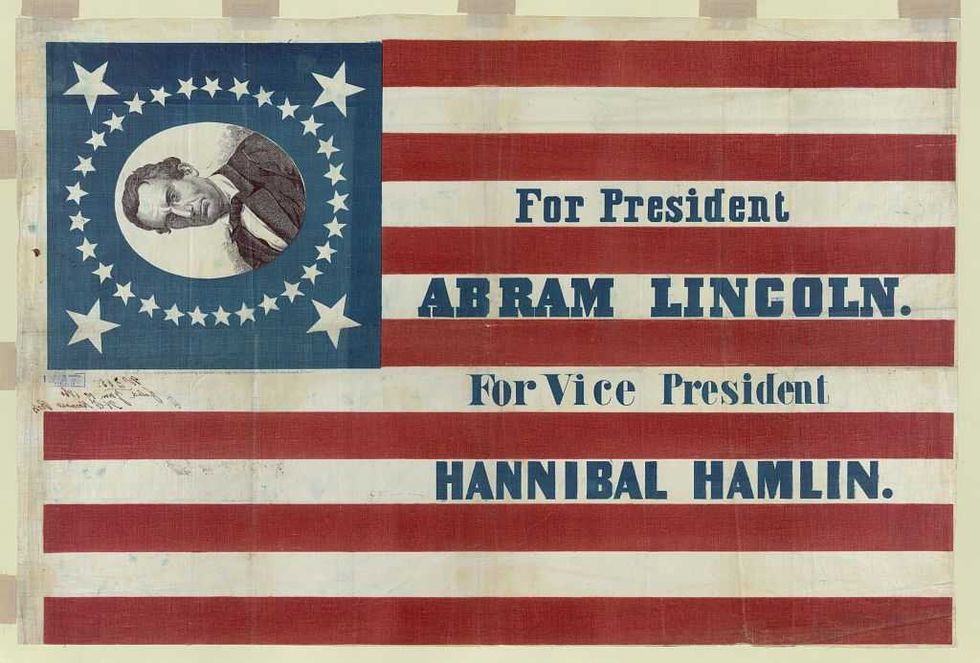 H.C. Howard/Library of Congress
1894 – The brief Republic of Hawaii is proclaimed before being annexed as a territory of the United States just four years later in 1898.
1910 – The Johnson-Jeffries race riots erupt throughout the country after Jack Johnson, a black man, beat James J. Jeffries, a white man who came out of retirement, in what was called the "Fight of the Century." An article at the time said: "When news that Johnson had defeated Jeffries flashed over the wires last night, riots between whites and blacks followed in a dozen cities of the country, and reports this morning increase the number and add to the list of injured."
1913 – President Woodrow Wilson addresses Union and Confederate Civil War veterans at the Great Reunion of 1913 on the grounds of Gettysburg. Wilson’s speech commemorated the 50th anniversary of the battle. Reflecting on the 50 years that had elapsed since that famous battle, Wilson said:
They have meant peace and union and vigor, and the maturity and might of a great nation. How wholesome and healing the peace has been! We have found one another again as brothers and comrades in arms, enemies no longer, generous friends rather, our battles long past, the quarrel forgotten — except that we shall not forget the splendid valor, the manly devotion of the men then arrayed against one another, now grasping hands and smiling into each other's eyes. How complete the union has become and how dear to all of us, how unquestioned, how benign and majestic, as state after state has been added to this our great family of free men!
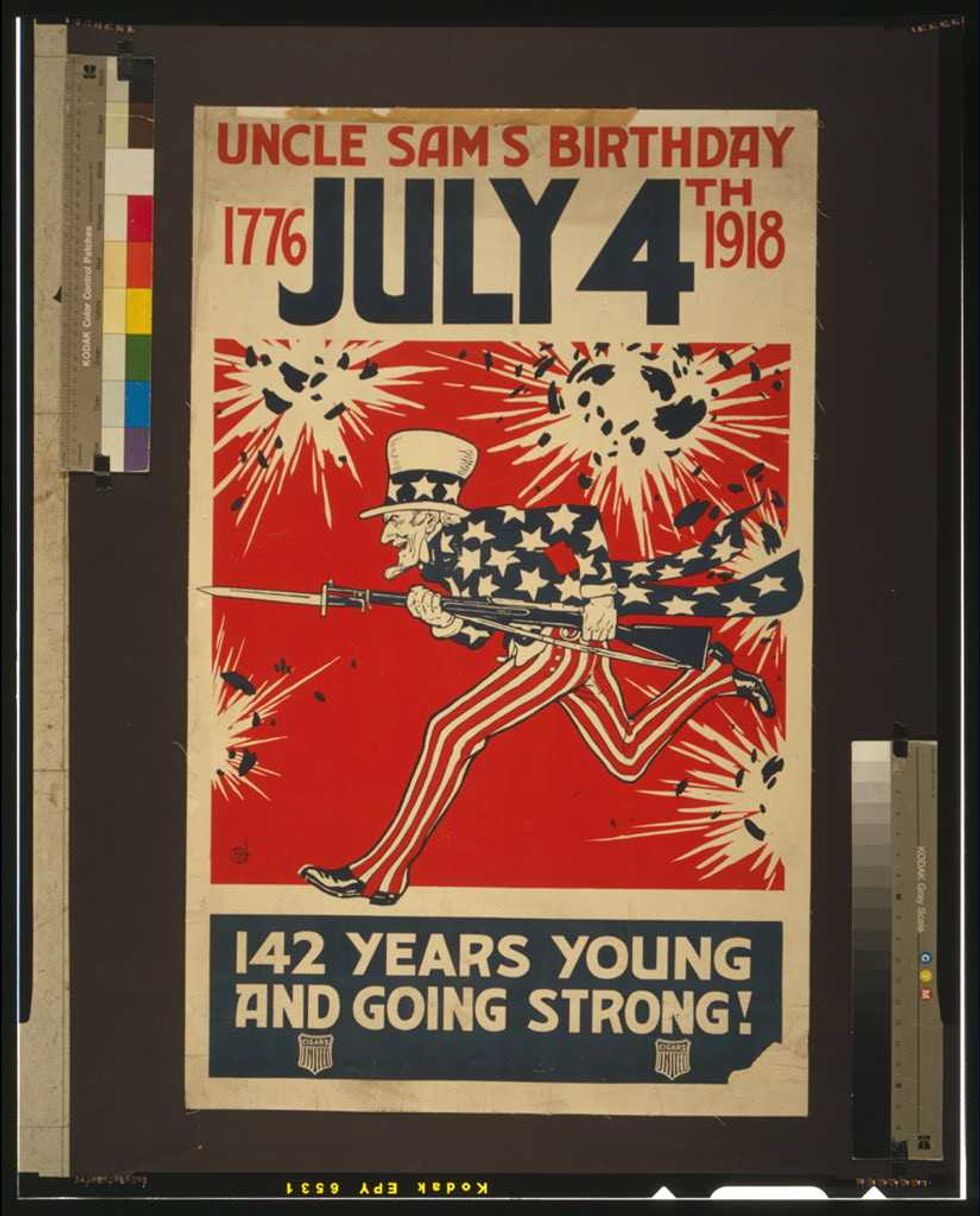 Poster showing Uncle Sam running with a bayonet, amid bursting shells. 1918. Library of Congress
1939 – Baseball legend Lou Gehrig delivers his famous speech at Yankee Stadium after his ALS diagnosis. Focusing on his blessings in life rather than the “bad break” of the deadly disease, Lou Gehrig famously said, “Today, I consider myself the luckiest man on the face of the earth.”
1959 – The 49-star United States flag officially flies for the first time, following the addition of Alaska to the United States. The 49-star flag flew for exactly one year.
1960 – The 50-star United States flag officially flies for the first time, following the addition of Hawaii to the United States.
1976 – America’s bicentennial celebrates America's 200th anniversary since the Declaration of Independence. The celebration consisted of around 66,000 recognized events.
1995 – American painter Bob Ross dies.
1997 – NASA’s Mars Pathfinder space probe successfully lands on Mars.
2004 – The cornerstone of the Freedom Tower is laid at Ground Zero in New York City. CBS News reported Gov. George E. Pataki (R) said, "Let this great freedom tower show the world that what our enemies sought to destroy — our democracy, our freedom, our way of life — stands taller than ever before.” The granite cornerstone is inscribed: "To honor and remember those who lost their lives on September 11, 2001, and as a tribute to the enduring spirit of freedom. — July Fourth, 2004."
2009 – The Statue of Liberty’s crown is reopened to the public for the first time since the September 11, 2001, attacks.
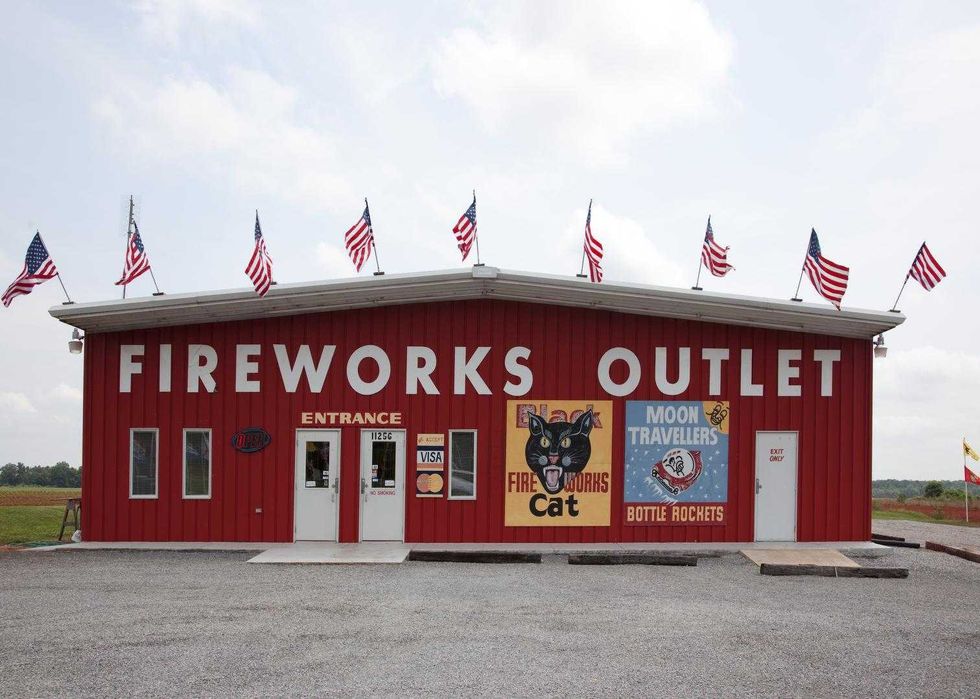 Fireworks outlet near Decatur, Alabama. 2010. Carol M. Highsmith/Library of Congress
Like Blaze News? Bypass the censors, sign up for our newsletters, and get stories like this direct to your inbox. Sign up here!