Drew Angerer/Getty Images
A simple check at the airport has become a national conversation after an activist used the ultimate trick to stop his phone from being searched.
The high-profile stunt, now coming to light, has kicked off a fresh round of debate about the justified reach of government power into your personal data.
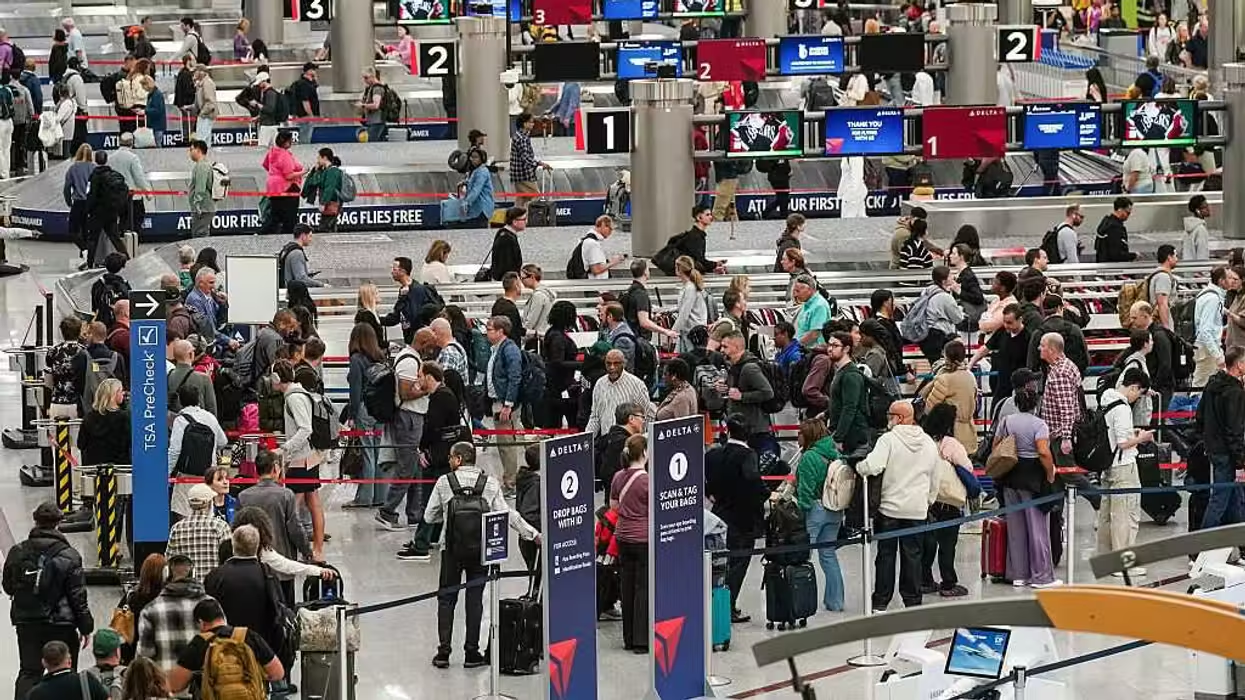
Samuel Tunick was allegedly on a federal watch list when he was stopped at Hartsfield-Jackson Atlanta International Airport while returning from a vacation last year.
'It just seems like a good idea to protect my private data.'
Tunick is a known activist associated with a movement that fights against what progressives labeled "Cop City" in Atlanta. This refers to a police and fire training center that was erected in the southern city in spring 2025.
Tunick was stopped by Customs and Border Protection officers upon his return from the Dominican Republic in January 2025, the New York Times reported, and authorities wanted to search his phone.
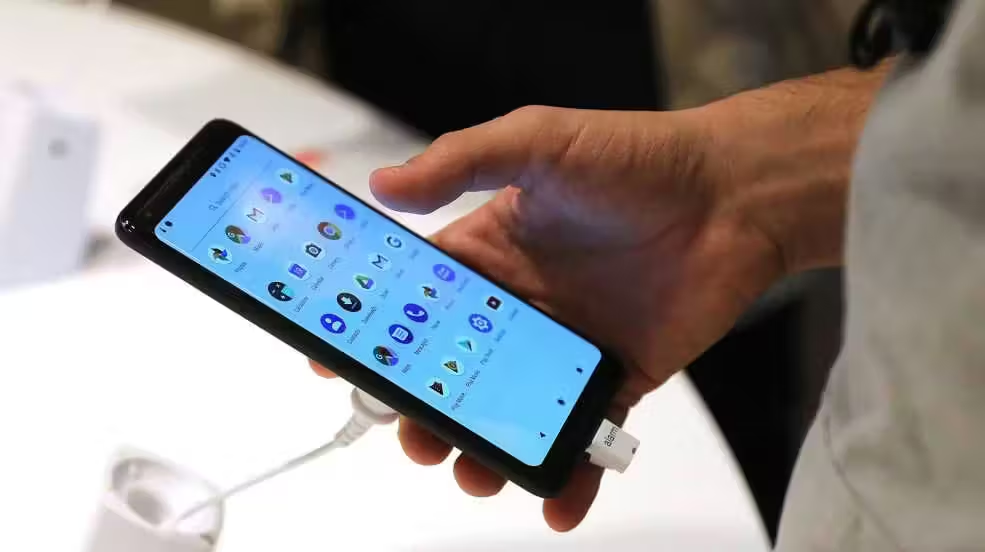
The activist was reportedly questioned before eventually turning over the device, a Google Pixel phone.
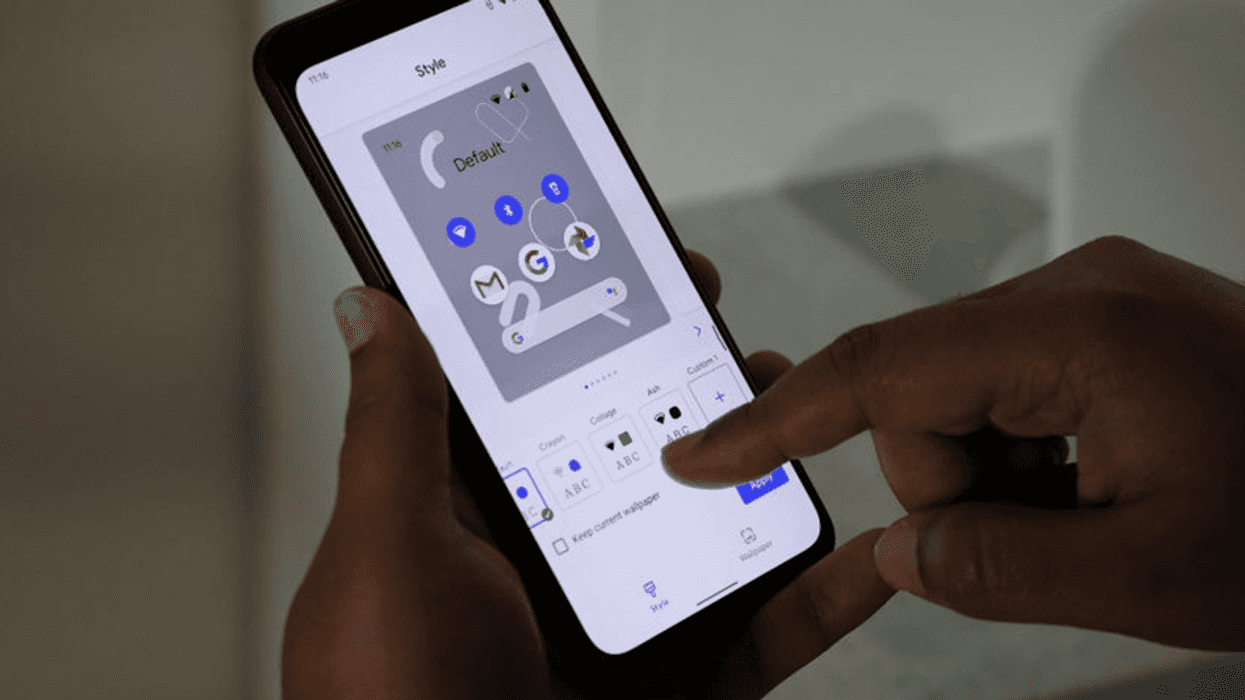
But with the help of a security-centric operating system called GrapheneOS, Tunick provided officers with a passcode that, when they entered it, erased the contents of his phone.
"Knowing the kind of surveillance that activists have been subjected to, it just seems like a good idea to protect my private data that I don't necessarily want corporations or governments to have access to, just out of the principle of privacy," Tunick told the Times.
The 30-year-old is now facing federal obstruction charges for "knowingly" destroying, damaging, wasting, or disposing of digital contents for the purpose of "preventing and impairing" a government search.
Tunick told the outlet that his charges stem from the national security memo that calls for the investigation of participants in "criminal and terroristic conspiracies," which includes organized networks and entities behind targeted campaigns of "intimidation, radicalization, threats, and violence designed to silence opposing speech."
RELATED: Tracking device exposes Amazon's secret plans for rare books
 Elijah Nouvelage/Bloomberg/Getty Images
Theodore Hertzberg, the U.S. attorney for the Northern District of Georgia, provided the following statement to Atlanta News Now:
Obstructing federal law enforcement is a serious matter that has serious repercussions. Individuals who destroy or attempt to destroy property, including data, to prevent lawful search and seizure should expect to face prosecution and punishment for their actions.
A spokeswoman for U.S. Customs and Border Protection told the Times that her agency has the authority to search electronic devices of anyone entering or leaving the United States, regardless of citizenship, in order to enforce laws around terrorism, national security threats, and more.
She reinforced that less than 0.01% of electronic devices of international travelers' phones had been searched in the last fiscal year.
RELATED: This team accidentally let AIs loose to attack companies — and won't share how bad the problem is
 Spencer Platt/Getty Images
Tunick said that he was just one of "hundreds of thousands" of people in his movement and that he was initially intrigued by "Cop City" from an "environmental justice" angle.
He called it especially important when it was combined with the "concerning trend that we've seen over the last several years of expanding and militarizing the police at the exact time when tens of millions of Americans are demanding the exact opposite."
Law Commentary notes that Tunick has pleaded not guilty and that the case remains pending in the U.S. District Court for the Northern District of Georgia.
Like Blaze News? Bypass the censors, sign up for our newsletters, and get stories like this direct to your inbox. Sign up here!