Celal Gunes/Anadolu via Getty Images
My paternal grandmother, Giuseppina Scianna, was born on October 12, 1893, in Lercara Friddi, Sicily. Grandma Josey, her mother, Rosa Barbusia, and two siblings came to America in 1910, hoping to reunite with their husband and father, Giuseppe Scianna, who had come to New York to build a better life for his family.
My grandmother spoke broken English, but I remember her telling me how proud she was to be an American because, in Lercara Friddi, people believed America’s streets were lined with gold. She was especially proud to have been born on Columbus Day. To her, Christopher Columbus represented the opening of a world that eventually gave her family a chance to thrive here.
If conquest itself is the indictment, history provides no shortage of defendants. That is the part of Mamdani’s moral ledger that seems curiously blank.
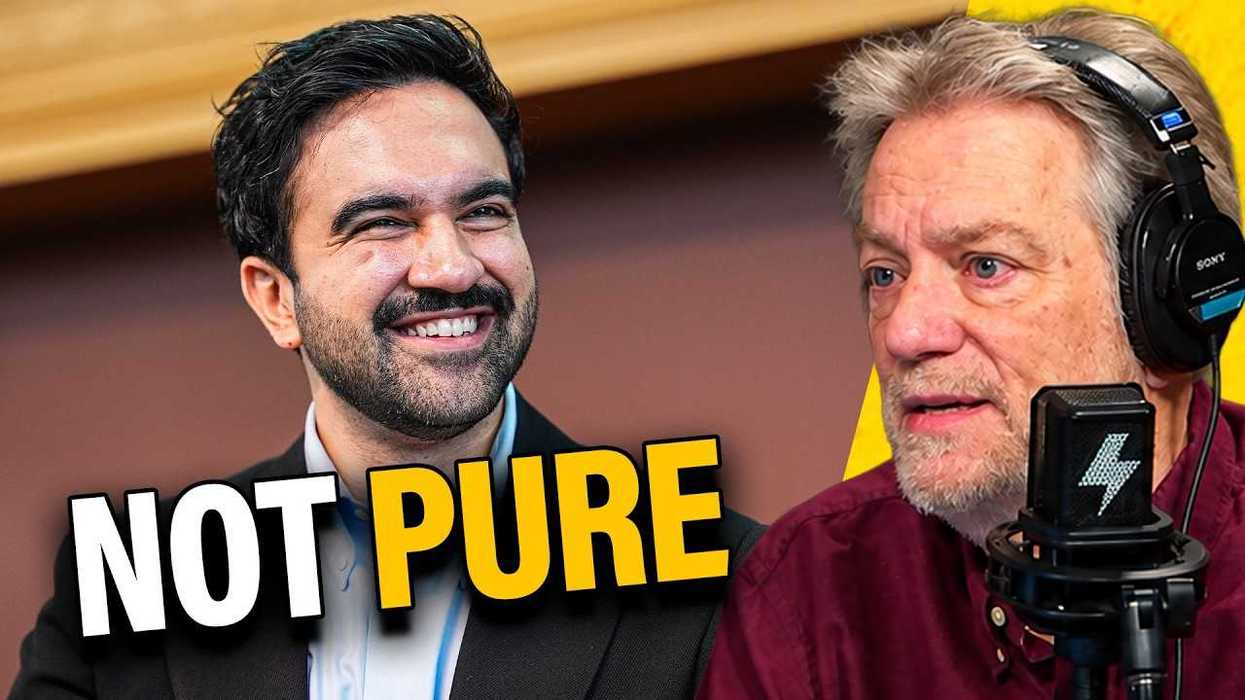
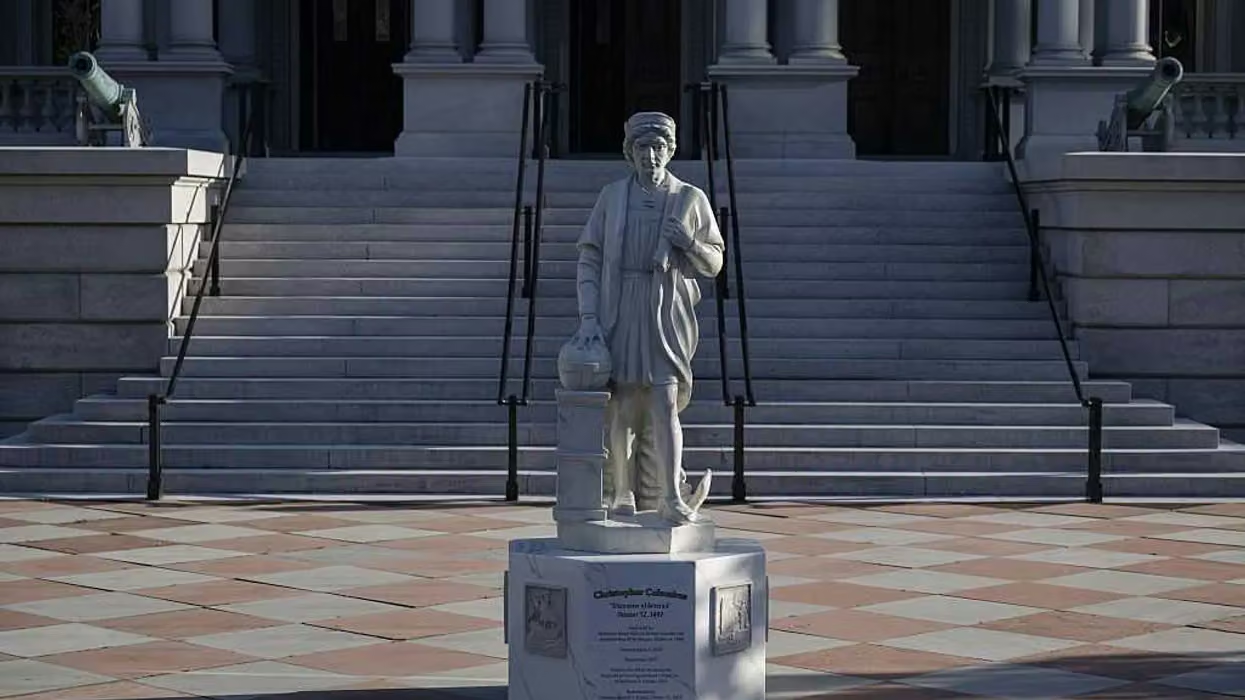
The man New York Mayor Zohran Mamdani (D) publicly disparages was Cristoforo Colombo, a Genoese navigator who altered the course of history. Mamdani made his contempt plain in 2020 when he posed in Astoria giving the middle finger to a Columbus statue and captioned the photo: “Take it down.”
Maybe the replacement could be Mehmed II. After all, Michelangelo’s Pietà arrived in New York aboard the Italian liner Cristoforo Colombo for the 1964 World’s Fair. Why not import a statue of Mehmed the Conqueror from Istanbul and give Astoria a lesson in historical consistency?
Mamdani did not invent the anti-colonial lens through which he sees the world. His father, Mahmood Mamdani, is a prominent scholar of colonialism and postcolonial politics; his mother, Mira Nair, has made films about displacement, immigration, and identity. Their son’s politics likewise run through an anti-colonial framework, whether the subject is Columbus, Israel, or American power.
Fine. Apply it consistently.
In January 1492, Ferdinand and Isabella defeated the last Muslim kingdom in Spain, Granada. Later that year, they sponsored Columbus’ voyage across the Atlantic. History, unfortunately for modern morality plays, is not tidy.
On October 12, 1492, the Niña, Pinta, and Santa María reached the Bahamas on the first of Columbus’ four transatlantic voyages. His voyage did not make the Americas suddenly exist, of course, but it began the sustained contact between Europe and the Western Hemisphere that transformed both. The Library of Congress describes the encounters that followed as irreversible and often brutal, but also world-changing.
Columbus was a formidable mariner. His voyages expanded European geographical knowledge and helped set in motion the Columbian Exchange, which carried American crops such as tomatoes, potatoes, and corn to Europe and European plants, animals, technologies, and diseases in the other direction. His own writings also show a strong Christian evangelical purpose. None of that requires pretending that his legacy was spotless.
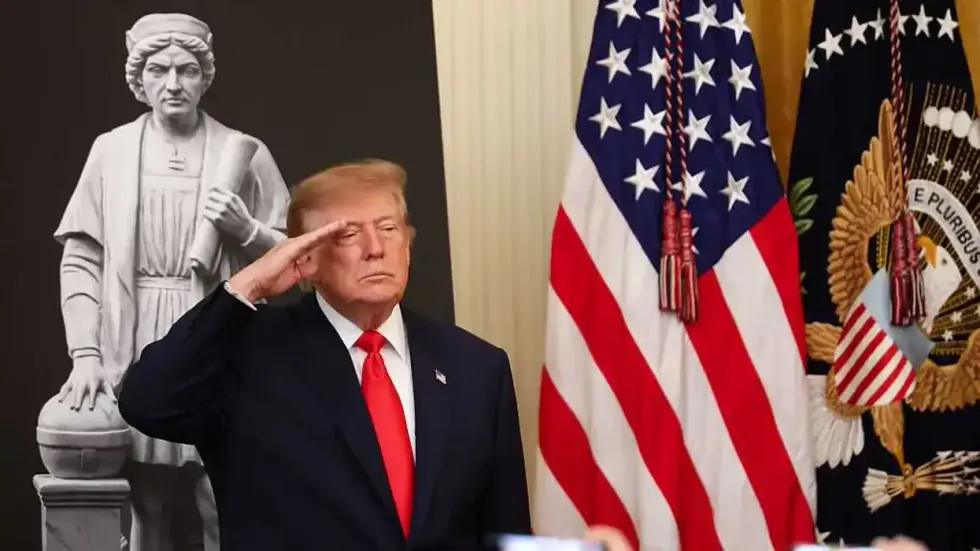
RELATED: Trump pays homage to Columbus, unveils special tribute from Italy
 Kevin Dietsch/Getty Images
It does require something more serious than a middle finger.
Mamdani associates Columbus with colonization and the mistreatment of indigenous peoples. That is his prerogative. But once conquest becomes the moral standard, consistency becomes mandatory. Why is Western conquest treated as a permanent indictment, while conquest elsewhere so often becomes historical wallpaper?
Take Sicily. Muslim armies began conquering the island in 827, and Muslim rule lasted until the Norman conquest in the 11th century. Muslim empires also conquered North Africa, most of the Iberian Peninsula, and large parts of the Middle East. If conquest itself is the indictment, history provides no shortage of defendants.
That is the part of Mamdani’s moral ledger that seems curiously blank.
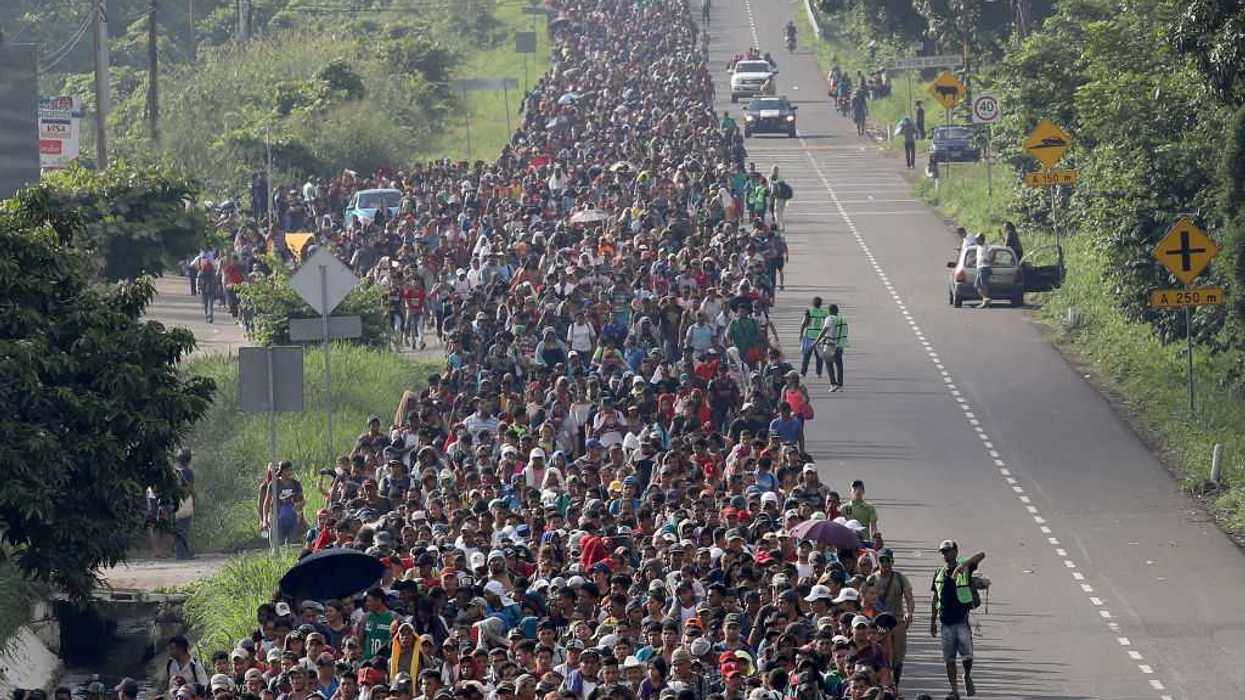
His relationship with New York’s Italian-American community has not helped. Nearly half a million New Yorkers identify Italian ancestry. Yet his administration’s much-ballyhooed map of immigrant enclaves initially omitted Little Italy. After criticism, Mamdani promised to add it.
If he wanted to convince Italian-Americans that his contempt for Columbus was not contempt for them, forgetting Little Italy was a strange way to do it. Zohran, who wouldn’t know arancini if he tripped over one on Mulberry Street, could hardly have scripted the insult better.
Then came Columbus Day. Mamdani found time this year to celebrate Italian Heritage Month by honoring socialist Rep. Vito Marcantonio. He also skipped the Columbus Day parade, after attending or participating in a long list of other ethnic and civic celebrations around the city.
RELATED: The DSA’s plan for immigration is the worst one yet
 John Moore/Getty Images
Apparently St. Patrick, Puerto Rico, the Dominican Republic, the West Indies, Bangladesh, Sikh New Yorkers, Pride, and Labor Day can all make the mayoral calendar. Columbus cannot.
The same habit of selective condemnation appeared in Mamdani’s October 7 statement. He correctly called Hamas’ 2023 attack “horrific war crimes” and mourned the Israelis who were murdered and abducted. Then he pivoted quickly to accusing Israel of “genocide,” “occupation,” and “apartheid”. The asymmetry is familiar: Western or Israeli power is examined with a microscope; comparable histories of conquest elsewhere rarely receive the same treatment.
Mamdani and his comrades in arms currently have no problem supporting Muslims who conquer via political representation and whose connection with the DSA indicates that they aspire to replace American constitutional principles with a new kind of governance.
If Giuseppina Scianna were alive in 2026, she would proudly honor Columbus at the New York City parade and be appalled that the mayor, who — if it were today — would likely justify the Islamic conquest of Sicily but doesn’t embrace the greatness of a nation discovered by an Italian explorer who paved the way for the greatest nation in the history of civilization.