Scott Olson/Getty Images
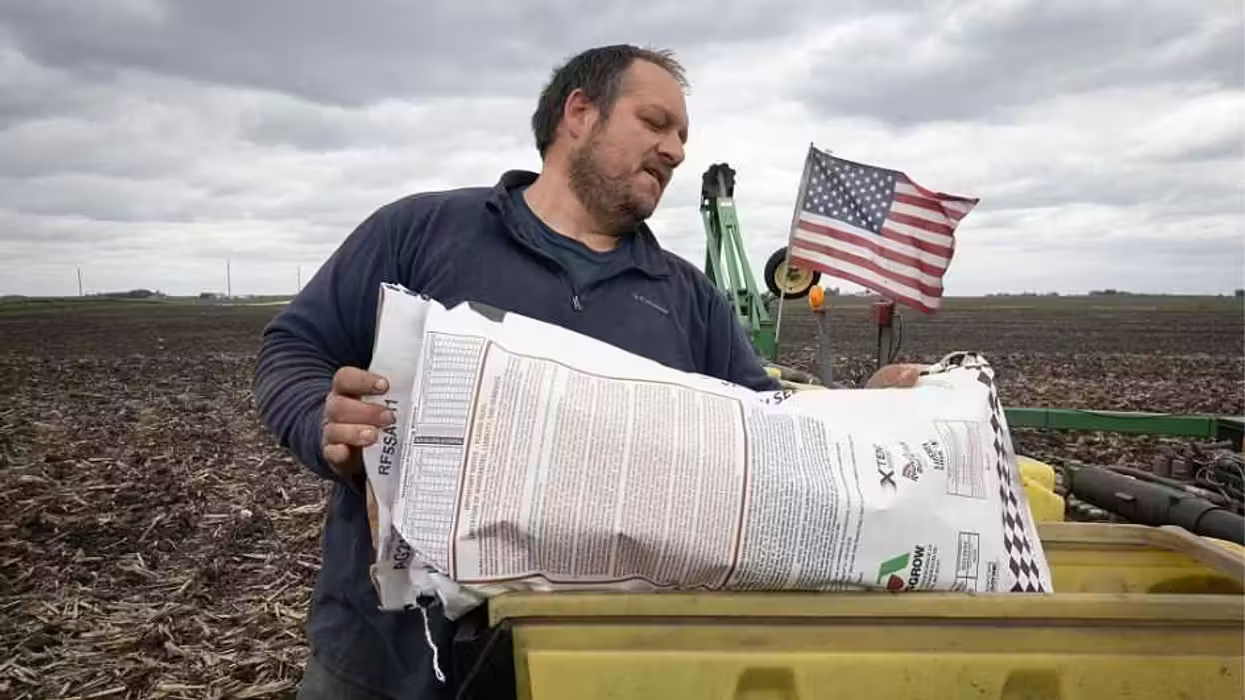
While suburban consultants call in sick with mild lower-back aches from ergonomic office chairs, Iowa corn growers lose arms to steel PTO shafts on 200-horsepower tractors.
Agricultural labor is unforgiving. In fact, farming is more dangerous than working as a police officer or firefighter, with 23 fatal injuries per 100,000 workers.
I am the son of a farmer. I know firsthand what backbreaking labor actually costs and how brutally the modern system devalues it.
Heavy steel farm implements chop, grind, and crush human tissue without delay. Spinning driveshafts running at 1,000 revolutions per minute yank loose shirttails into gearboxes within milliseconds. Grain bin entrapments swallow dozens of operators every harvest season, suffocating men under 50,000 pounds of shelled corn in 20 seconds flat.
Even so, today some of the greatest dangers facing American farmers aren't found in the fields. They're found on the balance sheet.
U.S. Department of Agriculture reports project total farm debt to hit $624.7 billion very soon. A brand-new John Deere combine can cost as much as $1 million on the lot, while the increasing computerization of farm equipment has produced a years-long battle over whether farmers can repair machines they ostensibly own. In July, the Federal Trade Commission and five states reached a settlement with Deere & Company requiring it to give farmers and independent repair shops access to software and other repair tools previously available only to authorized dealers.
That is a rare piece of good news. American Farm Bureau Federation records show that Chapter 12 farm bankruptcies rose by 46% last year, with more than 315 cases filed in federal court. Farm families sign multimillion-dollar operating notes every spring, gambling their ancestral property on diesel prices and unpredictable rainfall.
For too many farmers, crushing debt becomes a death sentence. Centers for Disease Control data shows farmers take their own lives at a rate 3.5 times higher than the national workforce average. The official body count stands at 43.2 suicides per 100,000 farm workers. Behind every statistic is a family who loses a husband, father, brother, or son.
RELATED: The day my father handed me the gun
 NurPhoto/Getty Images
A grower drags himself out of bed at four in the morning to pull 16-hour shifts in 100-degree heat. He provides endless tons of cheap grain for coastal grocery chains. His personal paycheck yields negative operating margins and endless bank interest notices.
Extreme isolation magnifies the misery, leaving men alone for hours on end, with overdue land mortgages and loaded shotguns. Rural mental health services remain nonexistent, forcing decent, hardworking Americans to fight crippling depression with manual labor until their bodies give out.
America lost 15,000 individual farm operations in 2025, an average of 41 every single day. Thomas Jefferson championed a nation of independent yeoman farmers owning land free of debt. Wall Street hedge funds buy up those foreclosed family tracts on county courthouse steps today.
The USDA found that the only sales category in which the number of farms actually increased was farms with annual sales of $1 million or more. Half of all American farmland is now operated by farms with sales of at least $500,000.
Global fertilizer empires and multinational grain trusts operating from high-rise office buildings accelerate this destruction. Commercial nitrogen fertilizer costs continue to surge, making every harvest more expensive and turning the simple act of breaking even into a Sisyphean struggle.
Who would willingly sign up for such a life today? The numbers reveal a troubling answer.
The average American farm owner is 58 years of age. Farm kids watch their fathers spend a lifetime battling debt and despair only to see little reward at the end. Many understandably walk away from the family business. America is running out of farmers, and the consequences will reach every dinner table in the country.
I’m not an American citizen, but I am the son of a farmer. I know firsthand what backbreaking labor actually costs and how brutally the modern system devalues it. When you grow up on a farm, you learn early that livestock don't take holidays. The crops don't wait for good weather, and equipment breaks precisely when you need it most.
It is an existence defined by physical risk and absolute exhaustion. The work is thankless, and the farmer lives a largely invisible existence. He is ignored by many and mocked by those who have never done a day of physical work in their lives.
To ignore or mock the farmer is to undermine the very foundation of self-reliance. A country that destroys its independent producers surrenders its national independence to foreign supply chains and corporate conglomerates. Conservative ideals depend on preserving private property rights and local community ownership.
And American food security depends on those who begin work at sunrise and end long after it has set. Saving the American farmer requires restoring basic economic sanity to rural property rights. Urgent action is needed before the damage becomes irreversible.