Michael L. Abramson/Getty Images
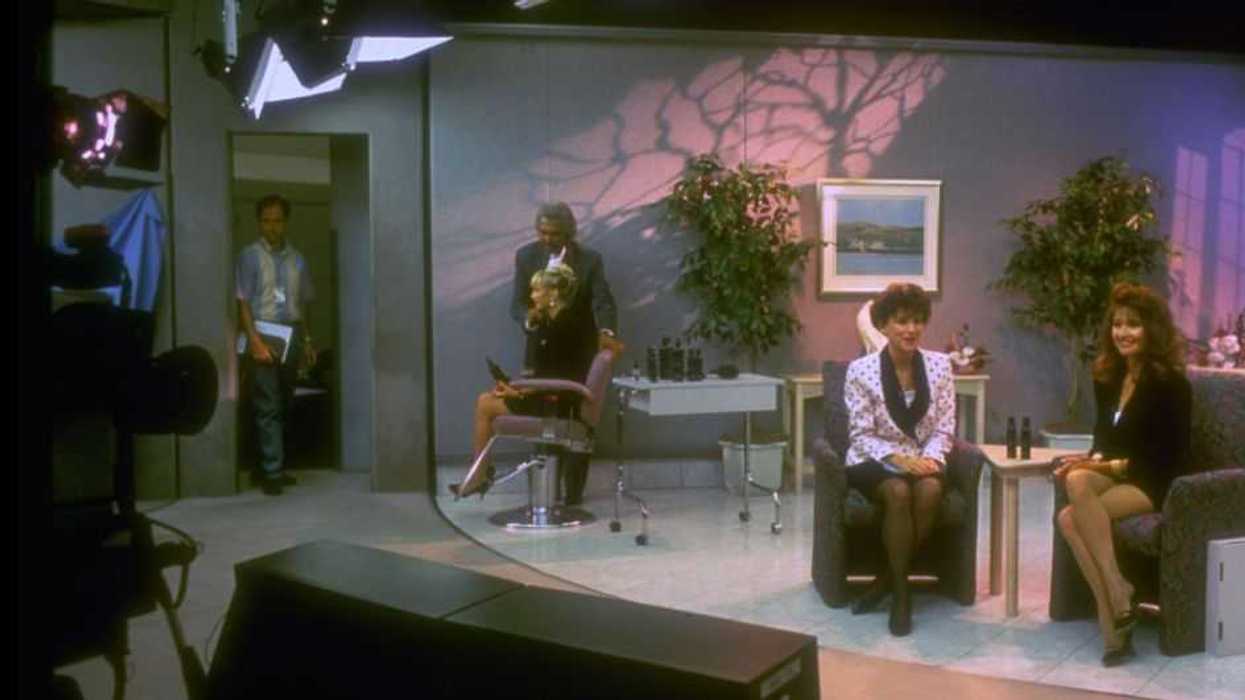
Those of a certain age will remember the era of infomercials and QVC.
For the younger set, “infomercials” were long-form commercials on cable TV, usually late at night. They ran for five, 10, even 30 minutes, incorporating elements of narrative — usually with laughable skill — to give the feeling that you were watching an actual show rather than a paid advertisement. They hawked products for the home and kitchen with a number to call to place your order.
Most of us are just going to click onto the next thing, unaware that the News-ique (TM) item left a Truth-ette (TM) trace in our minds.
QVC — “Quality, Value, Convenience” — was/is a TV channel that was nothing but one big infomercial, with on-camera hosts showing off products and bantering with each other and customers who called in. It was online shopping before there was an online.
Both marketplaces were famous for offering products that simulated much more valuable items. One such product was the pinnacle: a cubic zirconia stone that was (supposedly) visually indistinguishable from a diamond. It’s got everything: sparkle, allure, and the look of a real diamond at a fraction of the price!
The best part is the name: Diamonique. Those branding this luxury obviously followed the old drag queen convention for choosing a stage moniker: Take a name denoting quality, seriousness, or at the very least referring to an actual person, then give it a little comic twist that lets you know immediately you're dealing with an imitation. Classic drag queen names of this type include:
Hedda Lettuce
Virginia Hamm
Anita Mann
... to name just a few.
As you can see, Diamonique fits right in.
So glittering was Diamonique that this imitation spawned imitators of its own, the best of which is Diamelle. When you can’t afford Diamonique, turn to Diamelle!
What’s amusing in jewelry marketing doesn’t carry over in news and journalism — or what is alleged to be news and journalism. There’s a “news” marketing practice all over social media that gives you what appears to be a news story but is not.
I call this News-ique (TM). It has the look and feel of real news but at less than .01% of the value. It’s all over Twitter/X and other social media platforms.
The News-ique (TM) formula:
Post nothing else. Do not follow up with a link. Watch outrage flow, and collect clicks and cash.
Here is an example of News-ique (TM), a post on X from an alleged news account, Europa.com. The post includes a picture of the subject against a background that looks “newsy” and “official.”
It says this:
Poland's Spokeswoman for Children, Monika Horna-Cieślak, used her official powers to take the children of a woman who was rude to her and place them in an orphanage.
Horna-Cieślak, 36, who is herself childless, had intervened in a public park in Warsaw before being told by the mother of an unruly child to mind her own business. She then leveraged her authority to have the children seized and placed into care.
Why is it News-ique (TM) and not news? Because there’s no link to a fuller source or documentation. There is no follow-up in the thread, only responses from X users.
I do not know if this item is real. I have not checked by doing my own search. It does not matter if this particular item is real or not; it is representative of countless posts every day that use the News-ique (TM) formula. My concern is not the content of the story, but the packaging, intent, and effect.
News-ique (TM) works because it presents plausible outrages. It’s believable that a head of a government ministry for children’s concerns would abuse her position and target a mother who criticized her. This type of thing happens. We know government officials sometimes abuse their authority and get away with it.
But what if there is more to this story about a Polish official?
What I’m about to write is pure speculation used to demonstrate possibilities. I’m not giving you facts; I don’t even know if the original claim is true.
Let’s assume the core of the claim is true. What if the mother did not merely tell the minister to mind her own business? What if she smacked her with her purse? What if she made false and defamatory claims about her online? What if the minister observed that mother abusing her child?
The whole story changes if any of those factors are true. If the mother were abusing her child and the minister intervened, then the minister would have been doing the job she is in office for. She looks like a heroine instead of a villain.
Again, everything I just wrote was speculation. That’s the point: Without context, detail, and at least some provenance for the original claim, all we are doing is writing fiction while treating that fiction as fact.
The political and cultural content cuts in both directions. This example plays to the fears — often real and legitimate — of people with a right-wing bent and to libertarians and other freedom-minded people. But News-ique (TM) items just as often flatter the assumptions of left-leaning people.
RELATED: FACTION NEWS: The day the media taught me it’s always wrong to be right
 H. Armstrong Roberts/Classicstock/Getty Images
The News-ique (TM) approach contributes to political, cultural, and emotional pollution. It leaves an impression of truth in the minds of readers and “consumers.” And no, it doesn’t just work on “stupid people.” It works on most people, smart and stupid, left and right, hysterical or stoic. Items that flatter and confirm our prior assumptions are mentally sticky; they leave a trace you might call Truth-ette (TM). Few are immune.
At best, News-ique (TM) is irresponsible and lazy when the content is real and tells a true story. At worst, and I suspect in the majority of cases, it’s a deliberate choice to shade the truth and deprive readers of full context. Outrage gets clicks and cash; sober consideration does not.
Some might push back: “You can use Google/Siri/Whatever to check for yourself.” True. But most people won’t. Not even smart people will usually take the time unless they’re going to comment or use it in an essay or podcast. Most of us are just going to click onto the next thing. We won’t necessarily be aware that the News-ique (TM) item left a Truth-ette (TM) trace in our minds.
Sometimes, we’ll subconsciously incorporate that item into our view of what’s true about the world. This has happened to me and has probably happened in cases I’m unaware of. When I become aware that I’ve been foolish and failed to check veracity, I admit it in the same thread where I made the claim. Better not to react without having the facts first.
There is nothing you or I can do to stop News-ique (TM). There is no way to change the social media incentive structure so this is not a profitable game. The only thing we can do is increase our skepticism and discernment.
“Then just stay off social media” is not a workable answer either. Social media is toxic and full of mind games. But it is also the medium through which we can learn many actually true things happening in the world that mainstream news simply will not tell us.
Social media is where we can find “citizen journalists” like Nick Shirley who document problems like fraudulent Somali day cares paid for by American taxpayer dollars. When mainstream media gets wind of stories like Shirley’s, it works hard to discredit them, as you see in this CBS News piece. It is also where we can hear directly from politicians and government officials without ABC/NBC/CBS/NPR/NYT leaving out important words to slant the story.
We are never going to have a world “back” where “official news” can be relied on. That world never existed anyway; we just didn’t have any way to fact-check the fact-checkers before.
If you see a “news story” on Twitter/Instagram/TikTok, make sure you know whether it’s news or News-ique (TM). Check whether context or links are given. If they are, cross-reference the claim against other sources. If they are not, you are reading News-ique (TM).
Diamonique can give you sparkle for the soirée at an affordable price. News-ique (TM) is a bad bargain at any price.