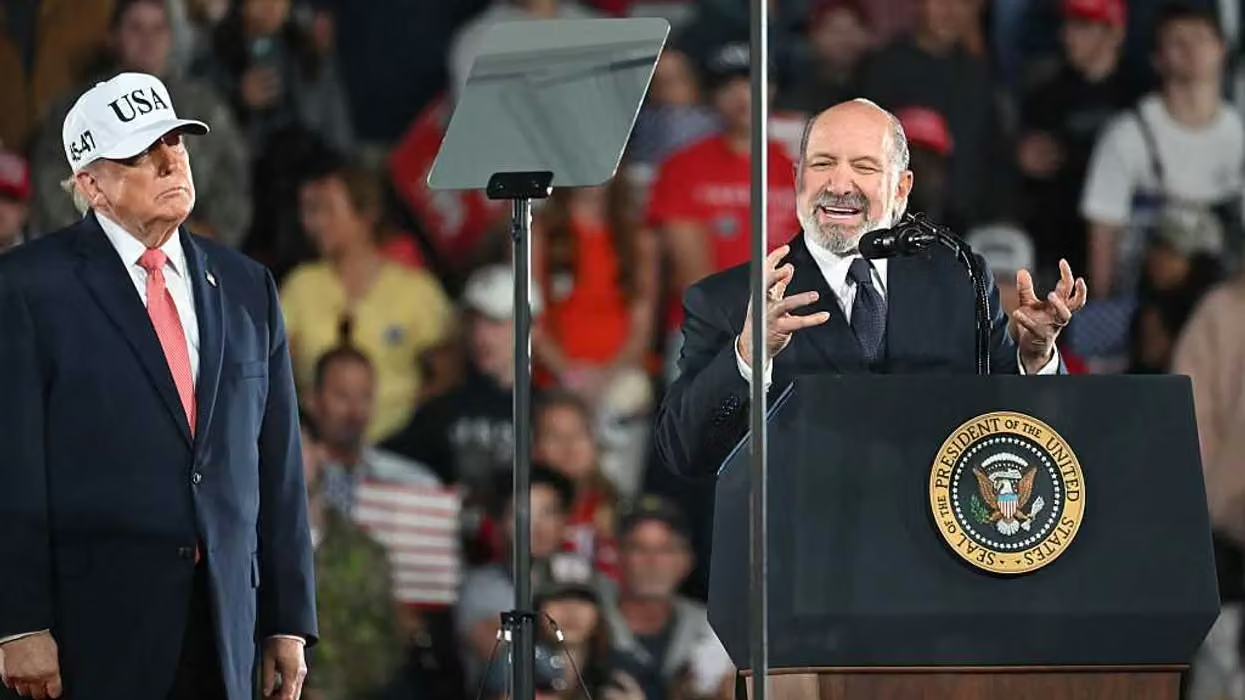
Photo by Kent NISHIMURA / AFP via Getty Images
Amid the fallout of the Nvidia scandal that unfolded at the end of October and culminated in CEO Jensen Huang's resignation last week, Commerce Secretary Howard Lutnick has been under increased scrutiny — making his upcoming schedule all the more remarkable.
President Trump will be traveling to the Philippines on Monday followed by a stop in China, where he will be speaking with Russian President Vladimir Putin and Chinese President Xi Jinping in a trilateral meeting.
'Rapid advancement in cloud computing and [super intelligence] infrastructure have made it increasingly possible to access advanced American computing capabilities remotely.'
And Lutnick, despite the controversy he has faced in light of Nvidia's dealings with China, will accompany President Trump on the trip, according to Semafor.
Senior administration officials have reportedly grown frustrated with Lutnick for allegedly hesitating to follow Trump's orders and impose export controls on sensitive chips to China.
One of the companies that had not been blocked for chips, Megaspeed, is a Chinese-linked company at which Alice Huang, the woman at the center of the Nvidia scandal, was once an executive. It is still unclear whether Alice Huang was working for Beijing as a spy.
Many officials in the administration reportedly see the chip "loophole" as a national security risk.
 Photo by Andrew Harnik/Getty Images
Lutnick has agreed to testify before the Senate Banking Committee after Senator Tim Scott (R-S.C.), the chair of the committee, requested that he voluntarily appear next month.
Treasury Secretary Scott Bessent, with whom Lutnick has reportedly been at odds for some time, is also expected to accompany President Trump on the Asia trip.
The tensions between the Treasury and Commerce Departments seemingly reached a high point on Monday when Treasury took matters into its own hands to close the loophole Lutnick had been tasked with closing.
On Monday morning, the Bureau of Industry and Security, at the direction of the Department of Treasury and the National Security Council, published an interim final rule to address illegitimate remote access of advanced AI chips.
"Rapid advancement in cloud computing and [super intelligence] infrastructure have made it increasingly possible to access advanced American computing capabilities remotely, including through data centers located outside countries subject to U.S. export restrictions," the BIS press release said. "This IFR addresses this evolving technological landscape by further aligning protections governing remote access to advanced computing capabilities with existing controls on the physical shipment of sensitive American technology."
Like Blaze News? Bypass the censors, sign up for our newsletters, and get stories like this direct to your inbox. Sign up here!