Tasos Katopodis/Getty Images
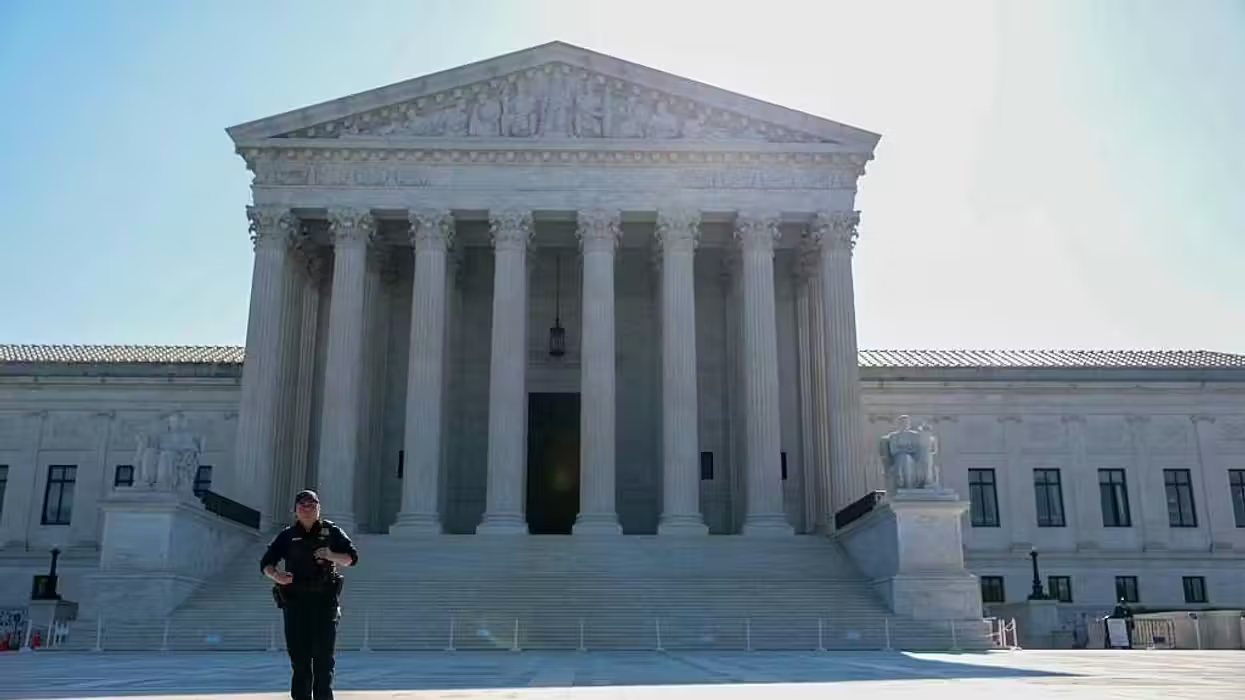
The Supreme Court issued a shocking ruling on Wednesday about a congressional map in Louisiana that was drawn to give black voters a boost in representation.
The case, Louisiana v. Callais, involved a challenge by Louisiana voters in a congressional district that was redrawn after the 2020 census. The Supreme Court struck the map down, concluding it is an "unconstitutional racial gerrymander" that cannot be justified under Section 2 of the Voting Rights Act.
'That map is an unconstitutional racial gerrymander.'
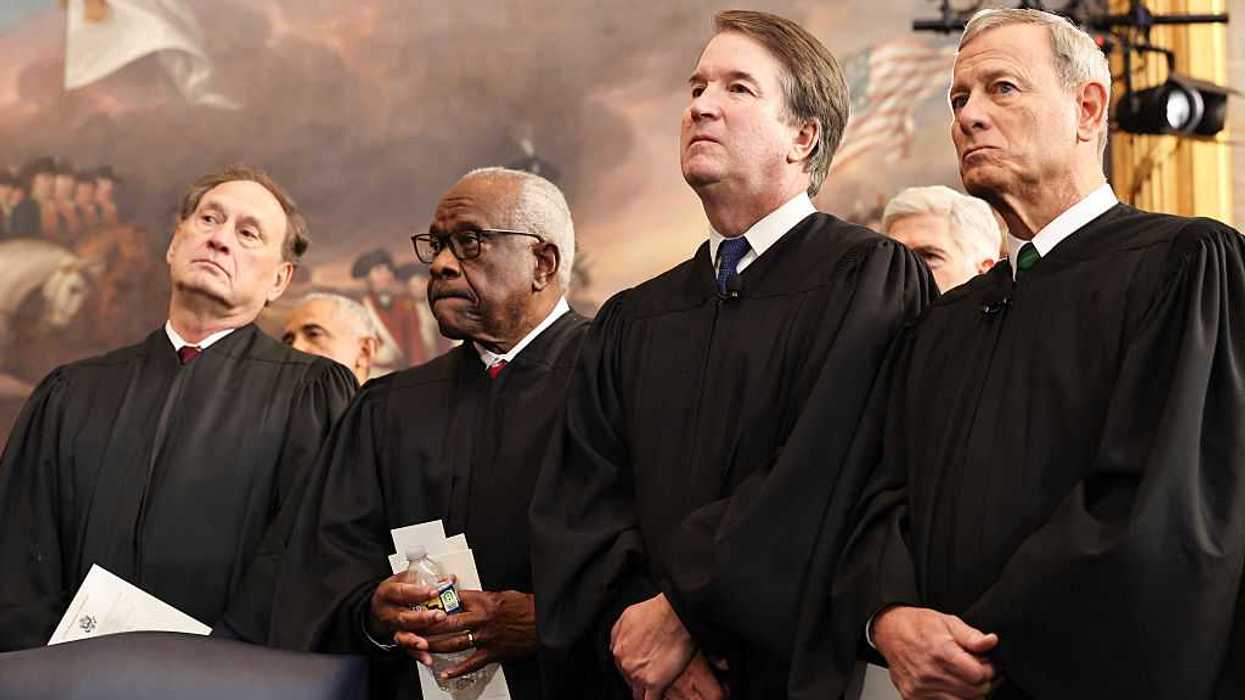
Justice Samuel Alito penned the majority opinion of the court and was joined by his five fellow conservative justices. Justices Elena Kagan, Sonia Sotomayor, and Ketanji Brown Jackson dissented, and Justice Clarence Thomas wrote a concurring opinion in which he was joined by Justice Neil Gorsuch.
The Supreme Court decided that the "time had come" to deliver a clear answer on what for 30 years had simply been assumed about Voting Rights Act case law.
RELATED: SCOTUS rules on law banning 'conversion therapy' — and 2 liberal justices break rank
 Chip Somodevilla/POOL/AFP/Getty Images
Succinctly put, the opinion of the court, stated in the syllabus, holds: "Because the Voting Rights Act did not require Louisiana to create an additional majority-minority district, no compelling interest justified the State’s use of race in creating SB8, and that map is an unconstitutional racial gerrymander."
Justice Thomas, in his concurring opinion, went farther, arguing that the prevailing wisdom of the last 30 years of VRA case law and districting practices has been fraught with error. The court "led legislatures and courts to 'systematically divid[e] the country into electoral district along racial lines,'" thus rendering Section 2 "repugnant to any nation that strives for the ideal of a color-blind Constitution," he wrote.
Thomas concluded his concurring opinion with the proclamation: "No §2 challenge to districting should ever succeed."
The liberal justices of the Supreme Court lamented the decision and its implications for Section 2: "The consequences are likely to be far-reaching and grave. Today’s decision renders Section 2 all but a dead letter."
Assistant Attorney General Harmeet Dhillon celebrated the decision of the court on social media: "Extremely gratified to see this decision we’ve been waiting for! I was proud to co-author the brief for the United States as amicus in this important case, perhaps one of the most important developments in decades in Voting Rights Act jurisprudence!"
Like Blaze News? Bypass the censors, sign up for our newsletters, and get stories like this direct to your inbox. Sign up here!