Bloomberg/Getty Images
When you think of serious off-road vehicles, Hyundai probably isn't the first name that comes to mind. Jeep, Ford Bronco, Toyota TRD Pro, and even Honda's TrailSport models have spent years building their reputations with buyers who want to get off the pavement.
Now Hyundai wants a piece of that market. My "Drive" co-host, Karl Brauer, and I recently tested Hyundai's latest XRT vehicles on an off-road course near Bentonville, Arkansas, and we both came away impressed. This is more than just adding black wheels and aggressive-looking bumpers.
Hyundai has sent designers, engineers, and marketing staff to off-road events, including Jeep gatherings and the King of the Hammers race, to learn what enthusiasts want.
Hyundai is making a serious investment in off-road capability, and it has already announced a body-on-frame midsize pickup truck that will arrive by 2030. That's a significant move for an automaker better known for affordable sedans, practical SUVs, and hybrids.
There's also a business reason behind the push, one that became clear during our conversations with Hyundai representatives.
When Hyundai introduced XRT, short for Extreme Rugged Terrain, the package was largely cosmetic. Dark wheels, black exterior trim, and tougher-looking styling gave everyday SUVs an adventurous appearance without fundamentally changing what they could do.
That wasn't enough for customers.
Melvin Batista, Hyundai's senior manager of product planning for North America, explained the company's thinking when I interviewed him for "The Drive."
"Our customers wanted to add a little bit more capability," Batista told me, particularly for camping and other outdoor activities.
Hyundai responded with all-terrain tires, suspension lifts, better ground clearance, improved approach and departure angles, and recovery equipment. The company eventually introduced the more capable XRT Pro designation.
The 2026 Palisade XRT Pro, for example, comes with an electronic rear limited-slip differential designed to improve traction when one wheel encounters slippery or uneven terrain. It also includes dedicated terrain modes, all-terrain tires, increased ground clearance and recovery hooks.
These are functional improvements, not just styling changes.
On the off-road course in Missouri, I got to see how Hyundai's latest XRT vehicles handled uneven terrain. I was impressed by the combination of traction technology, available camera views, and additional ground clearance, particularly in vehicles that are still designed to be comfortable daily drivers.
Last year, I drove Honda's TrailSport vehicles at an off-road event with professional instructors, and I was surprised by what those SUVs could do. Hyundai's latest XRT offerings are moving into similar territory.
That doesn't make a Palisade XRT Pro a Ford Bronco Raptor or a Jeep Wrangler Rubicon. Those vehicles are designed for much more aggressive off-roading. But if you're heading to a campsite, navigating a rough access road, crossing a muddy field, or reaching a remote fishing spot, there's real value in having the extra capability.
Here's something else Hyundai has learned: Customers who buy rugged-looking vehicles aren't necessarily planning to crawl over rocks every weekend. Many want the appearance, the added capability, and the confidence of knowing their vehicle can handle an occasional adventure.
During the event, Hyundai representatives told us that XRT buyers tend to have higher incomes and spend more on accessories and services than other customers. As Karl pointed out during our discussion, that's exactly the kind of customer automakers want to attract.
Look at what Toyota has accomplished with TRD and TRD Pro, or what Ford has done with Bronco and Raptor. Buyers aren't necessarily purchasing these vehicles strictly for transportation. They're buying in to an outdoor lifestyle, and many are willing to pay more for the equipment that goes with it.
The broader aftermarket supports that strategy. According to research highlighted by the Specialty Equipment Market Association, automotive accessories and performance parts generated approximately $52.9 billion in U.S. sales in 2025, with modified trucks and SUVs representing an important part of that business.
Of course, capability has to match the marketing. If an automaker advertises a vehicle as ready for the trail, it had better perform when someone actually takes it there.
That's the challenge Hyundai is beginning to address. Batista said the company has sent designers, engineers, and marketing staff to off-road events, including Jeep gatherings and the legendary King of the Hammers race, to learn what enthusiasts want.
It's a smart approach. If you're going to compete with brands that have decades of off-road credibility, you need to learn from the people who actually use these machines.
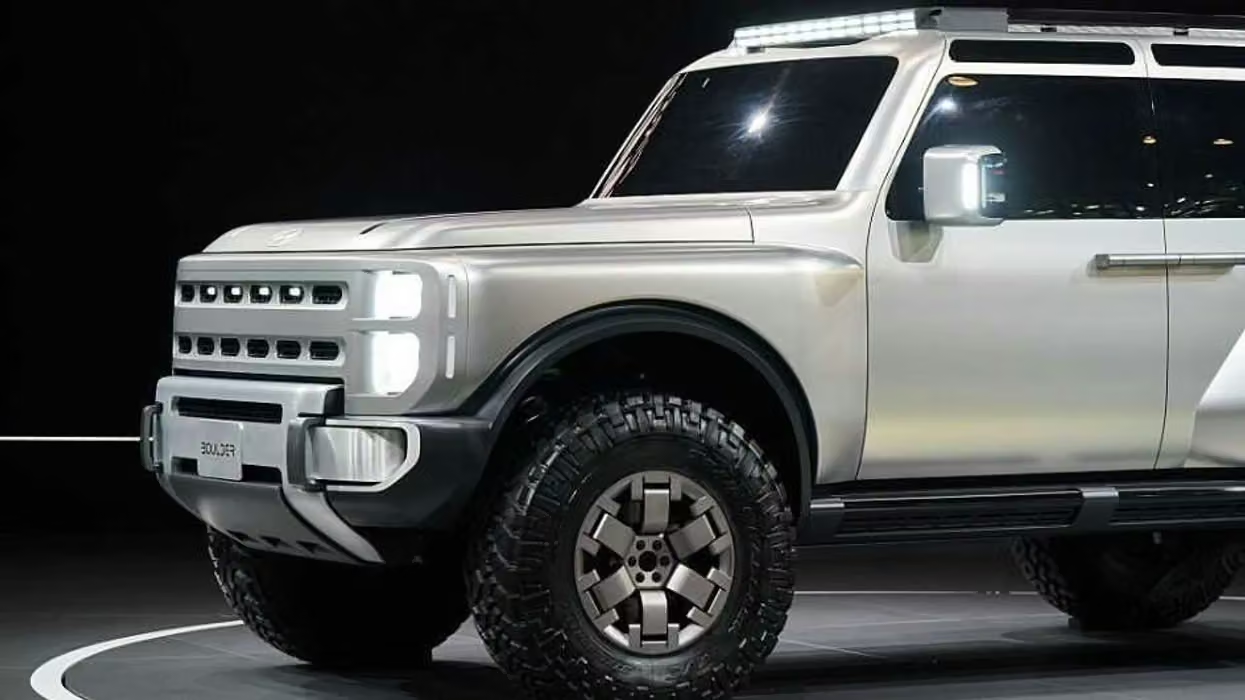
The bigger news is what's coming next. At the 2026 New York International Auto Show, Hyundai unveiled its Boulder Concept, a rugged SUV design study built around a body-on-frame architecture.
That's the traditional construction used by many serious trucks and off-road SUVs, with the body mounted to a separate structural frame. It can provide advantages for heavy-duty towing, durability, and demanding off-road use.
Hyundai has confirmed that its first production vehicle using this architecture will be a midsize pickup, scheduled to arrive by 2030.
The Boulder itself remains a concept, and Hyundai hasn't promised to build that SUV. Batista was careful to explain that the pickup comes first. But the direction is clear. Hyundai wants to compete in a market currently dominated by established names such as the Toyota Tacoma, Ford Ranger, and Chevrolet Colorado.
And it isn't abandoning its existing SUVs in the meantime. The redesigned 2027 Tucson will offer a Hybrid XRT Pro model combining a new-generation hybrid powertrain with additional rugged capability. The new Tucson also introduces updated terrain-management technology and a more aggressive design.
Hyundai is expanding its lineup in both directions: Performance-oriented N models for drivers who want speed and handling, and XRT models for buyers who want to explore beyond the pavement.
RELATED: 5 cars from the 2026 New York International Auto Show you might actually want to buy
 VIEW Press/Getty Images
For consumers, the important thing is understanding what you're actually getting.
An XRT badge alone doesn't mean every Hyundai wearing it has the same off-road hardware. The equipment varies by model, and there's a meaningful difference between a vehicle with rugged styling and one with upgraded suspension, specialized traction equipment, and additional ground clearance.
Before paying extra for an off-road package, compare the actual equipment. Look at the tires, available all-wheel-drive system, ground clearance, underbody protection, recovery points, and traction technology. Consider how much towing capacity you need and whether the vehicle can handle the terrain you realistically expect to encounter.
And don't forget how it drives the rest of the time. A serious off-road vehicle can be fantastic on a trail and less comfortable on the highway. Most buyers need something that can handle commuting, grocery shopping, and family trips before they ever reach a dirt road.
Hyundai isn't ready to replace your Jeep Wrangler or Bronco Raptor, and the company isn't claiming that it can. But after experiencing its latest XRT vehicles firsthand, I'm convinced the company is taking this market seriously.
For buyers, that's good news. More competition means more choices, especially for drivers who want to venture off the pavement without sacrificing the comfort and practicality of an everyday SUV.