© 2026 Blaze Media LLC. All rights reserved.
Utah is trying to shut Kalshi out of the state. The Trump administration says not so fast.
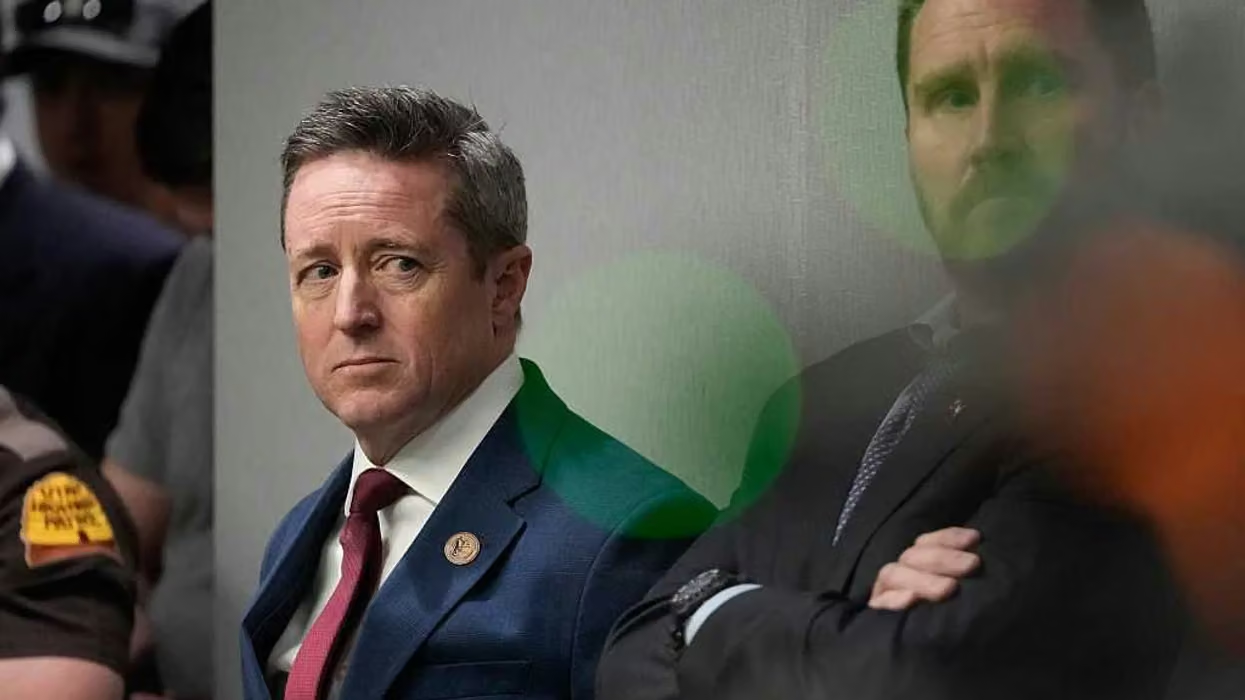
The Commodity Futures Trading Commission sued Utah and Attorney General Derek Brown on October 26, after the state filed a civil enforcement action against the prediction-market operator. Two days later, Utah charged Kalshi and co-founders Tarek Mansour and Luana Lopes Lara with 14 criminal counts, including 13 felonies, alleging violations of its anti-gambling laws. Those are charges, not convictions.
An exchange operating under federal supervision should not have to guess from one court order to the next whether its business is legal.
This is more than a quarrel over one app. The fight is over whether a federally registered derivatives exchange can operate nationwide or must answer to 50 different sets of gambling rules.
The Trump administration is right to intervene. Prediction markets offer a way to trade on the likelihood of future events. Their prices can convey information as well as opportunities to hedge risk. Utahns should be able to use a legal, federally supervised market rather than be pushed toward less accountable alternatives.
CFTC Chairman Michael Selig made the federal case when he announced the Utah lawsuit. Event contracts, he said, provide information about future events beyond their value to investors. Congress entrusted the commission with overseeing registered derivatives markets, and Selig has pledged to defend that jurisdiction. At the time, the agency said it had brought proceedings against nine other states.
A practical argument exists for nationwide rules. Prediction markets depend on liquidity: More participants generally make it easier to trade and help prices reflect what traders collectively expect. Contracts on elections, economic indicators, and international events do not stop at state borders. A patchwork of 50 state licensing regimes could fragment trading, raise costs, and handicap smaller competitors.
But the legal fight is not settled. It is most contentious over contracts based on sporting events, which states say look and function like ordinary bets. Utah's position is hardly frivolous: An August federal district court ruling held that the Commodity Exchange Act did not prevent the state from enforcing its gambling laws against Kalshi's sports contracts.
 Samuel Boivin/NurPhoto via Getty Images
The appeals courts are divided. In April, the Third Circuit sided with Kalshi in its dispute with New Jersey, finding that the contested sports-event contracts qualified as federally regulated swaps. The Ninth Circuit later ruled against Kalshi in Nevada, and the Sixth Circuit rejected its arguments in Ohio and Tennessee. On November 17, the Fourth Circuit ruled that Maryland could proceed with enforcement against the platform. New Jersey has asked the Supreme Court to resolve the dispute, with 39 states and the District of Columbia supporting review.
Those conflicting decisions show why Congress should clarify the boundary between federal derivatives oversight and state gambling regulation. They do not persuade me that Utah's attempt to drive Kalshi out is sound policy.
State regulators have a legitimate interest in preventing fraud, protecting minors, and addressing problem gambling. Federal registration does not magically answer every such concern. Yet state officials should also explain what their preferred restrictions will accomplish — and where willing customers will go if the regulated market disappears.
Critics are right that a contract paying out on a football score can look like a sports bet to the person buying it. Calling that contract a swap does not settle the legal question. But treating every event contract as a state-regulated wager is no answer, either. Congress should draw a workable line, and the CFTC should enforce clear rules on market manipulation, disclosures, and consumer safeguards. An exchange operating under federal supervision should not have to guess from one court order to the next whether its business is legal.
RELATED: ‘This is a real job’: Prediction market has a $120K gig for one gamer as 'GTA VI' launch closes in
 Leon Neal/Getty Images
The risks of prohibition are not imaginary. In 2025, the American Gaming Association estimated that Americans wagered $673.6 billion annually through illegal or unregulated gambling operators, depriving states of an estimated $15.3 billion in tax revenue. Those numbers cover a much wider gambling market, not prediction markets specifically; they cannot tell us how much Utah would collect from Kalshi. They do illustrate the size of the market that flourishes outside legal channels.
The Taxpayers Protection Alliance has made a related point in Washington state, where we urged lawmakers to let consumers use licensed sports-betting app such as DraftKings and FanDuel beyond tribal casinos as proposed. That is a different legal question from Kalshi’s federal status, but the principle is familiar: Restricting convenient legal options does not necessarily eliminate demand.
Utah is entitled to defend its laws in court, of course. It should not mistake a statewide crackdown for a national regulatory strategy. Congress and the CFTC should establish clear rules for these markets, including meaningful consumer protections, rather than leave users and businesses to navigate a litigation map.
Utah can fight over jurisdiction. It cannot wish the demand away. It’s past time for a better approach.
Want to leave a tip?
We answer to you. Help keep our content free of advertisers and big tech censorship by leaving a tip today.