Jack Guez/Getty Images
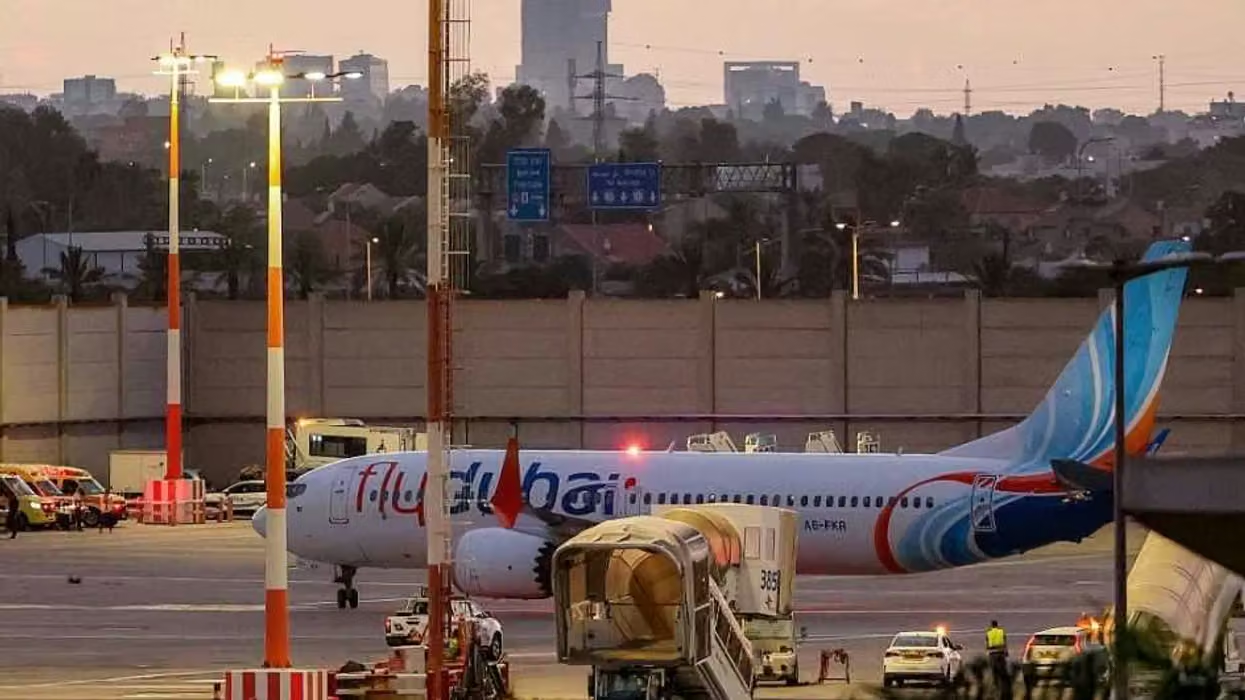
On September 30, a Flydubai co-pilot attacked his captain with an axe and attempted to crash a passenger jet bound for Israel. The aircraft plunged into a rapid descent before passengers and crew managed to subdue him. All aboard survived.
The most disturbing detail emerged days later. According to ABC News, the suspected attacker, Hamam al-Hammami, had previously been removed from flying duties at Oman Air after extremist material was discovered in his possession. Somehow, he subsequently found himself in the cockpit of another airline, entrusted with the lives of more than 170 passengers.
The last place you want a fanatic dreaming of a heavenly harem is behind the controls of a passenger jet.
Of course, Americans routinely put their lives in the hands of strangers in less dramatic circumstances. Every day, millions climb into Ubers driven by people they have never met. But at least you can access important information about the driver before you hop into the back of a dodgy-looking Honda Civic. There's a clear photo, a rating, and sometimes comments from previous passengers detailing whether Abdul has a personal grudge against pedestrians.
Yet when you step onto a high-altitude cattle truck and climb thousands of feet into the air, you put your fate in the hands of two strangers about whom you know practically nothing. You can't ask them to slow down. You can't tell them to watch the road. And you certainly can't demand to be let out.
The federal government spends billions ensuring that nobody brings a bottle of liquid over three ounces past security. Overly handsy agents force passengers to remove shoes and jewelry, undo belts, and thoroughly debase themselves. Meanwhile, the individuals steering the aircraft through turbulence at 500 miles per hour are entrusted with a degree of responsibility that makes the security theater in the terminal look almost comical.
Pilots, of course, undergo extensive background checks, medical examinations, and security screening. But the Flydubai incident raises an uncomfortable question: What happens when those systems fail to identify someone who wants to destroy the aircraft?
Consider the absurdity of the armored cockpit door introduced after 9/11. That door was built to keep hijackers out. It operates as a vault-like barrier designed to protect pilots from threats in the cabin. But if someone in that room decides to turn the aircraft into scrap metal, the reinforced door can become an unscalable wall, preventing flight attendants and passengers from saving their own lives.
We saw precisely how dangerous that arrangement could become in 2015, when a Germanwings co-pilot deliberately crashed an Airbus A320 into the French Alps, killing all 150 people aboard. He had locked the captain out of the cockpit.
In the Flydubai incident, the captain managed to unlock the cockpit, allowing others to intervene. Had he failed, the outcome could have been very different.
A recent RealClear Investigations report examined the incident and the broader threat posed by extremists within commercial aviation. It raised a rather important question. How do airlines identify and deal with ideological fanatics within their own ranks?
Not very well, it seems.
Airlines can track fuel consumption down to the last gallon, yet apparently failed to recognize the danger posed by a man reportedly flagged for extremist material at a previous airline.
In the wake of the Flydubai incident, two additional cases, involving United Airlines pilots Ibrahim Mossallam and Sina Amjadian, raised further questions about airline security.
Mossallam came under scrutiny after describing Hamas' October 7, 2023, attack on Israel as "resistance by a brave people." United initially removed him from service in 2023. After he reportedly returned to flying, the airline withheld him from flight duties again in October 2026, pending another review.
Israeli authorities barred Amjadian from operating flights to Israel following a security review prompted by his reported social media activity. According to the Jerusalem Post, Amjadian had shared images featuring Iranian Supreme Leader Ali Khamenei and Islamic Republic flags while criticizing Israeli military strikes. The review also considered allegations — circulated by third parties on social media — that Amjadian had expressed support for Hezbollah and Iran's Revolutionary Guard Corps.
 L-R: Mario Tama/Getty Images; Nir Keidar/Anadolu/Getty Images
These security failures expose a dismal administrative process that ignores glaring red flags. If an employee at Google or GM posts public endorsements of suicide bombings and high-altitude hijackings, corporate HR flags the account within minutes. In commercial aviation, those same signals vanish into a black hole of indifference.
The current system conducts criminal history checks, terrorist watch list screening, and medical evaluations. What it does not routinely do, according to RealClear Investigations, is examine pilots' public social media activity for indications of extremist sympathies.
Nor does it have a reliable way to keep track of pilots' physical health and mental stability — crucial elements of a pilot's operational capability. An individual suffering from a severe psychological crisis, extreme sleep deprivation, or an undetected cardiac condition may pose a serious threat to hundreds of passengers, even without any intention of harming them.
Yes, the Federal Aviation Administration requires periodic medical examinations, and pilots must disclose relevant medical conditions, medications, and treatment histories. Airlines may impose additional requirements. But the system still relies heavily on self-reporting. A doctor can check blood pressure, test eyesight, review medical history, and ask questions about mental health. What he cannot necessarily discover during a routine examination is a dangerous condition the pilot has chosen to conceal.
The cockpit represents one of the most demanding work environments imaginable. Operating a commercial flight demands instant reaction times, emotional composure, and sound judgment. The last place you want a fanatic dreaming of a heavenly harem is behind the controls of a passenger jet.
Passengers pay exorbitant fees on the basic assumption that the person flying the aircraft is not only fully vetted, but also mentally sound and physically capable of getting them to their destination safely.
The problem is not that airlines conduct no screening. They conduct plenty. The problem is what happens when crucial warning signs fall outside the screening process, or when one airline discovers a serious concern that apparently fails to follow a pilot to his next employer.
Aviation regulators must wake up. They must align their security priorities with reality. Passengers deserve rigorous evaluation of the people responsible for their lives, both before those pilots enter the cockpit and throughout their careers.
We surrender our shoes, our liquids, and our dignity before boarding. It's reasonable to demand that the people flying the plane receive at least as much scrutiny.