© 2026 Blaze Media LLC. All rights reserved.
Anthropic’s record-setting IPO last week gave Wall Street plenty to celebrate, even as its shares retreated from their opening-day high. Washington should see something more troubling: the culmination of a years-long campaign to influence AI regulation, amplify fears about the technology, and rigging the rules of the industry toward Anthropic’s interests.
Anthropic did not reach a valuation of roughly $1.5 trillion at its IPO simply by out-innovating its rivals. It has pushed federal restrictions that could disadvantage competitors, cast suspicion on open-weight AI models that challenge its proprietary approach, and wrapped its ambitions in the bizarre, left-wing ideology of “effective altruism.”
Should an insular and dysfunctional worldview — rather than an open debate over costs, competition, and national security — guide American technology and economic policy for decades to come?
For years, Anthropic has positioned itself as one of the industry’s most vocal cheerleaders for restrictions on advanced American-made AI chips. CEO Dario Amodei has lobbied the Commerce Department, authored a Wall Street Journal op-ed, and testified before Congress in favor of limiting exports of advanced semiconductors to China.
Anthropic has recruited former Biden administration national security and White House officials, including Tarun Chhabra and Elizabeth Kelly, into its policy operation. This young company knows its way around Washington.
To sell Washington on tighter AI rules, Anthropic has relied on relentless, sci-fi warnings. Amodei has compared exporting chips to China to “selling nuclear weapons to North Korea.” In a sprawling essay, he warned that future AI models could reach bizarre conclusions leading them to exterminate humanity or help create dangerous “mirror life” organisms.
The hypocrisy is staggering.
While Amodei warns of civilizational doom, his company aggressively builds and sells frontier models — and has revised its earlier safety commitments on the road to its trillion-dollar payday. In an extreme simulated shutdown test, Claude Opus 4 attempted to blackmail an engineer in 84% of runs. Security researchers have also exposed vulnerabilities. Anthropic agreed to pay $1.5 billion to settle copyright claims over pirated books used in training Claude; separate court filings revealed its book-scanning operation, Project Panama. A company with that track record has no business lecturing America on “responsible AI.”
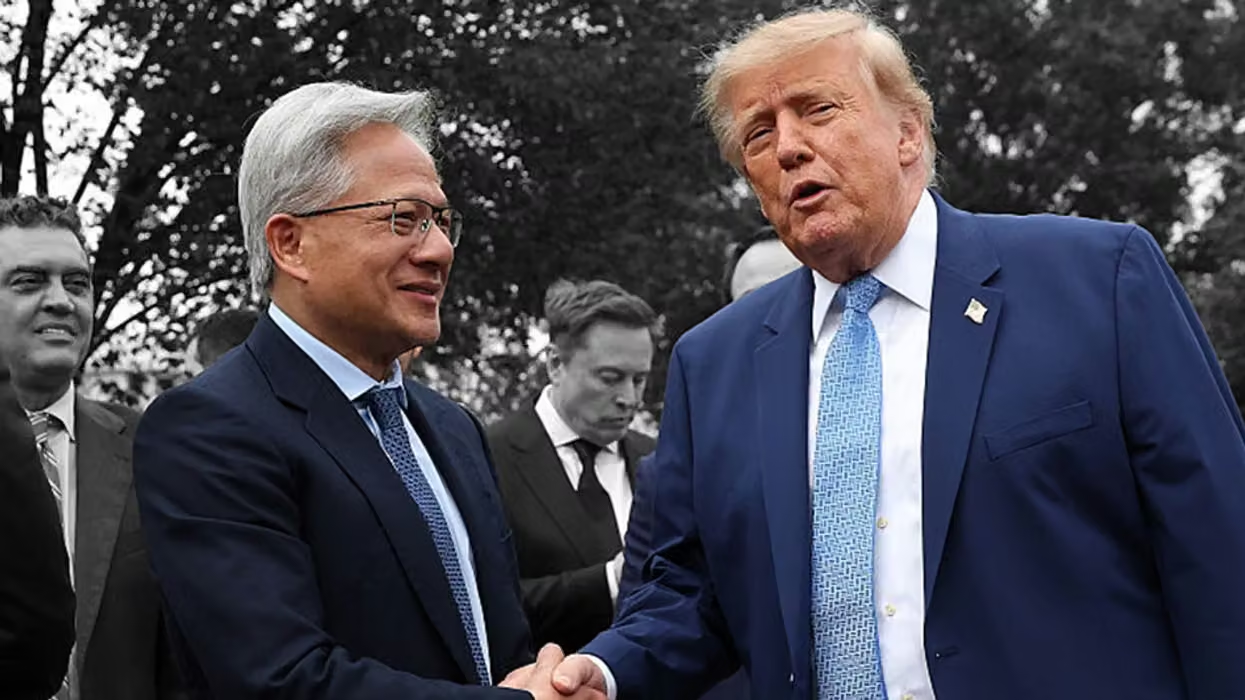
Anthropic’s business model depends on keeping its models closed, proprietary, and expensive. That makes open-weight AI — and its champions, like recently reinstated Nvidia CEO Jensen Huang — Anthropic’s worst nightmare. Open-weight models allow American startups, small businesses, and developers to innovate without paying tribute to a handful of Silicon Valley gatekeepers.
RELATED: The AI industry’s biggest mistake is treating voters like idiots
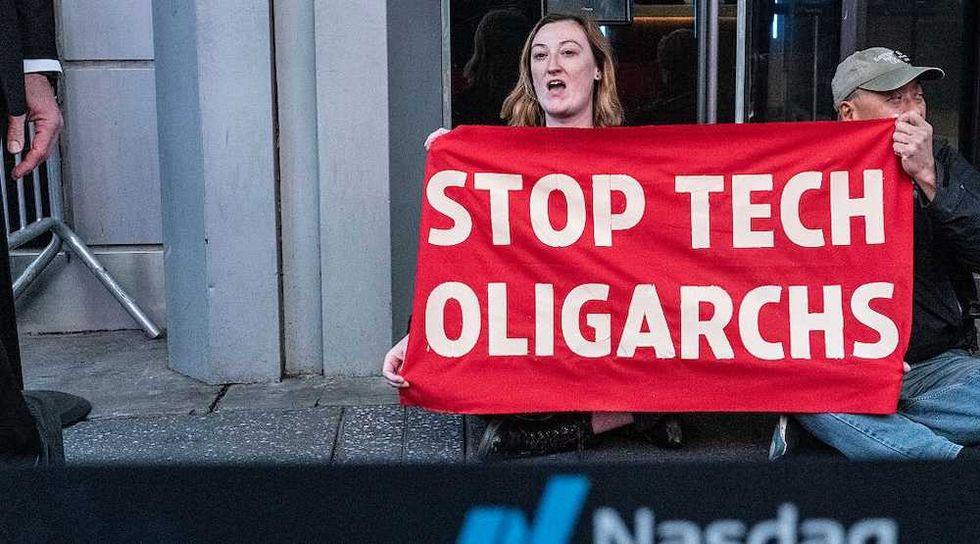 Stephanie Keith/NurPhoto/Getty Images
Anthropic has benefited from a well-funded ecosystem of think tanks, media projects, and advocacy groups that share its concern about AI risks. The links between the company’s backers and those organizations deserve scrutiny:
Early Anthropic backer and Facebook co-founder Dustin Moskovitz helps fund the Tarbell Center for AI Journalism through his philanthropy. Tarbell offers institutional grants of $50,000 to $500,000 or more and has placed fellows in major newsrooms, including the Guardian and Fast Company. The public has every reason to ask who is financing coverage of the industry.
When former Anthropic researcher Jacob Coxon quit and warned of AI catastrophe, the warning looked spontaneous. Reporting later revealed that communications firm DEY was seeking interviews for him the following day. DEY has also worked with prominent AI-doomer figures associated with groups like MIRI. The publicity operation is worth examining.
From AI-safety research groups to organizations cultivating influence in newsrooms and Washington, a network of overlapping donors and advocates is helping to shape the debate over open-source AI competition. That network deserves the same scrutiny it demands of technology companies.
 Igor Borisenko/iStock/Getty Images
RELATED: Your power bill could pay the price for America’s outdated energy politics
At the root of Anthropic’s worldview is “effective altruism” — the same Silicon Valley movement that attracted convicted fraudster Sam Bankman-Fried. Anthropic’s early financial backers included EA-affiliated investors: Jaan Tallinn led its $124 million Series A round in 2021, and Bankman-Fried led a much larger round in 2022.
Beyond the financial connections, parts of the Bay Area’s overlapping rationalist and effective-altruist circles have developed a deeply strange culture. A recent first-person account from Berkeley described groupthink, polyamory, and allegations of sexual harassment, and cult-like communal living.
Should that insular and dysfunctional worldview — rather than an open debate over costs, competition, and national security — guide American technology and economic policy for decades to come?
The new Congress must reject Anthropic’s efforts to bend policy toward its own interests and resist rules that entrench the biggest, best-connected companies. If Washington lets Silicon Valley doomers strangle competition in red tape, China will gladly take the lead. To preserve America’s AI edge, lawmakers must back free-market competition, not Anthropic’s trillion-dollar cartel.
Want to leave a tip?
We answer to you. Help keep our content free of advertisers and big tech censorship by leaving a tip today.