Print Collector/Getty Images
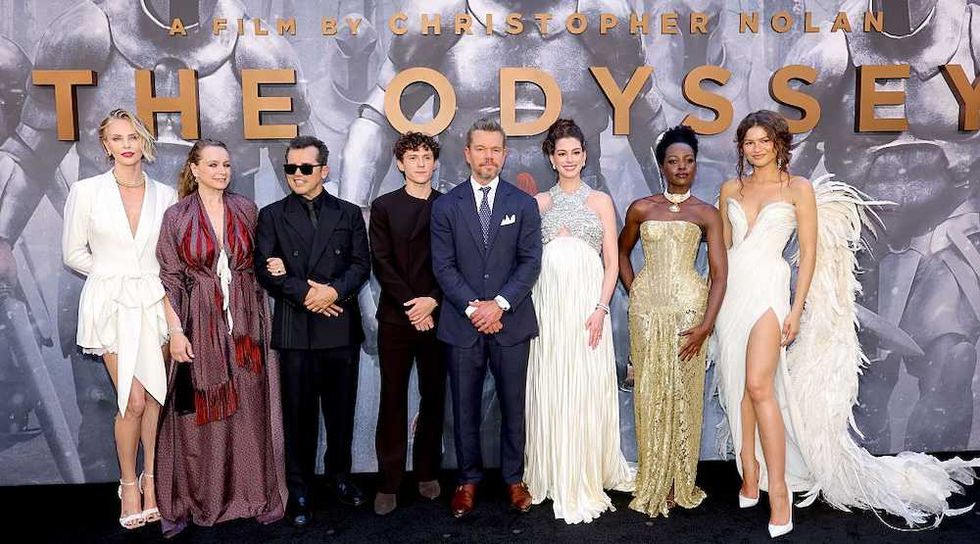
Christopher Nolan has done it again. Contrary to what you may have heard, “The Odyssey” is a profoundly conservative film.
Rather than modernize Homer or turn the poem into another sermon about race, gender, or contemporary politics, Nolan has made a movie about the collapse of civilization itself. The central question is not simply whether Odysseus will make it home. It is whether a civilization built on pagan foundations possesses the moral resources to repair the evil it has unleashed.
If the West fears civilizational collapse, it will not find salvation in pagan Greece. It must look to Christ, the light to the gentiles.
Visually, “The Odyssey” delivers everything audiences expect from Nolan: breathtaking cinematography, immense scale, intricate storytelling, and dialogue as dry as dust. His familiar playfulness with time returns, though here it serves a larger question about humanity’s future, much as it did in “Interstellar.”
I watched the film in a packed IMAX theater in Phoenix after management announced that the air conditioning had failed. On a summer day in Arizona, that news did not put me in the mood for a left-wing sermon.
The movie quickly proved worth the suffering.
It transcends easy political labels. Nolan offers neither a DEI lecture nor a simplistic allegory about current events. Some Christians may look for “Jesus the returning king,” as they did in Aragorn in “The Lord of the Rings.” Nolan gives them something more profound.
The film’s organizing principle is what its characters repeatedly call “Zeus’ law.” Strangers must be welcomed with hospitality and given a meal. The suitors who consume Penelope’s estate year after year invoke this law to justify their presence. The principle is summarized this way: Treat others as you would want to be treated if you were a stranger.
After all, the stranger might be a god.
The contemporary resonance is obvious. The endless demands for hospitality recall modern debates over immigration, borders, and suicidal empathy. Yet Nolan’s deeper point is philosophical rather than partisan.
What happens when a civilization’s highest moral principle becomes an instrument of injustice?
RELATED: ‘OD’ SQUAD: Whining, wacko stars can’t keep ‘Odyssey’ from box office glory
 Mike Coppola/Getty Images/Universal Pictures
Everyone appeals to Zeus’ law, yet civilization continues to collapse. A command intended to protect strangers becomes a weapon used by scoundrels to exploit their hosts.
The problem lies in the gods themselves.
Odysseus repeatedly remarks that human beings cannot understand them. At one point, he asks a figure he believes to be Athena why the gods refuse to communicate clearly with humanity. She gestures toward the natural world and replies that they already have.
The gods are immanent. They exist within nature.
Here Nolan reminds us what religion we are dealing with. Zeus is not the creator. Poseidon is not the creator. Athena is not the creator. They are powers inside the natural order, not a transcendent source above it.
They are limited, lustful, wrathful, jealous, and consumed by the same quarrels that plague human beings. Their petty rivalries drive the Trojan War. Poseidon even demands that Agamemnon sacrifice his daughter in exchange for favorable weather.
Civilization possesses Zeus’ law, but wicked men manipulate it. The gods remain distant, capricious, and ultimately unknowable. Odysseus cannot appeal to divine justice or mercy. He cannot truly pray for forgiveness. He cannot seek redemption.
He has only his cunning.
Odysseus is a notorious fraud, willing to deceive others even when his schemes bring them harm. Dante later places Ulysses in the eighth circle of hell among those who used fraud rather than virtue.
As Nolan moves between memory, the present, and the future, Odysseus slowly grasps what he and the Greeks became during the Trojan War. They were greedy, lustful, and violent men, made in the image of their gods, who used war as permission to indulge their darkest desires.
Two scenes reveal this with devastating clarity.
Circe explains that she transformed Odysseus’ men into pigs because pigs were what they had already become inwardly. When she restores them to human form, she remarks, “Put back on your disguise.”
Later, during a necromantic ritual to summon the dead, Odysseus learns that the souls below remain consumed by the people who wronged them in life. They still demand justice. He must confront the fact that he sent countless victims to the underworld himself and that those wrongs cannot be undone.
RELATED: Christopher Nolan: Our ‘Odyssey’ avoids ‘cultural prejudices’ to appeal to ‘modern audiences’
 Gabe Ginsberg/WireImage
Together, these scenes expose the true consequences of evil.
Sin is not merely a feeling of regret to be processed through therapy. It leaves victims. It destroys families. It creates wounds that remain long after the guilty conscience begins seeking relief.
This prepares the film’s emotional climax.
Disguised as a beggar, Odysseus confesses to Penelope, who sits concealed behind a screen almost like a priest in a confessional, what he and the Greeks did at Troy.
It is the film’s thematic high point.
Yet Nolan quietly asks a question that modern therapeutic culture rarely confronts: What then?
Odysseus can confess everything, but those he harmed remain harmed. The families he destroyed remain destroyed. The dead remain dead.
Confession may relieve the conscience of the guilty. It does nothing for the widow, the orphan, or the murdered.
Justice requires payment and restoration. Odysseus does not even attempt restitution, probably because he understands that nothing he can do would make things right for one family, much less the multitudes he wronged.
Greek cunning cannot solve Greek guilt.
Greek religion offers no means of restoration because its gods are merely parts of nature. Greek philosophy offers little more. Plato gives us the demiurge. Aristotle gives us the impersonal unmoved mover. Neither offers atonement.
Here the film becomes a devastating indictment not only of paganism but of modern therapeutic deism. Confession without atonement may feel emotionally satisfying. It remains morally insufficient.
The gods, preoccupied with lust and petty rivalries, cannot repair what sin has destroyed. Neither can impersonal nature.
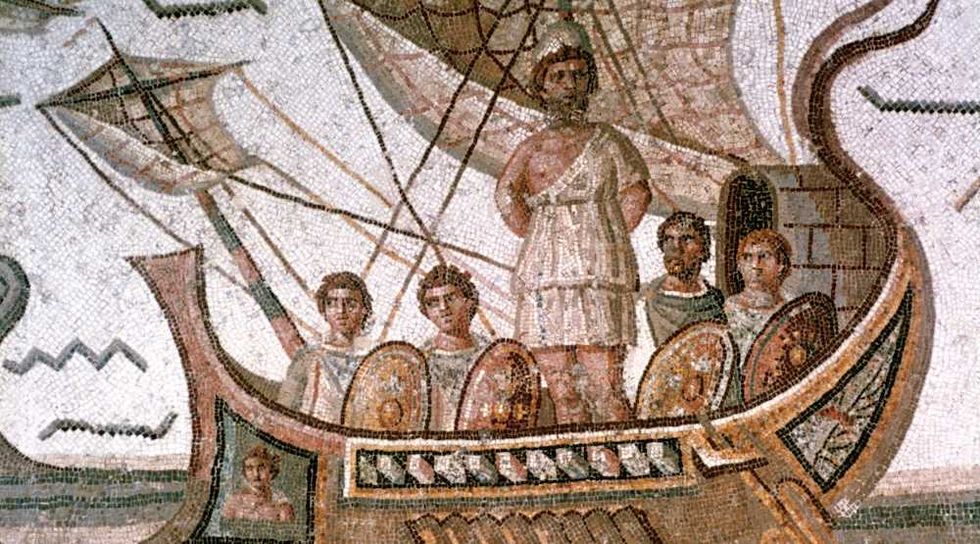
In the end, Odysseus must leave his kingdom and sail west, attempting reconciliation by burying the dead he abandoned. Yet the audience knows that this gesture cannot truly repair what he has done.
RELATED: You can’t handle the movies anymore
 Art Media/Print Collector/Getty Images
Nothing can restore the lives he destroyed. Nothing can undo Troy.
The pagan world has ended.
It is one of the bleakest endings imaginable because polytheism itself is bleak.
As Odysseus and Penelope sail west, she observes that civilization is collapsing. Odysseus replies that songs will remember those who could write.
That line should strike conservatives and liberals alike.
We too sense the possible end of civilization as strangers invoke hospitality against hosts overcome by suicidal empathy and as every past wrong becomes a permanent political claim. The Greeks sacked Troy, but Troy began the war. Today, Americans recite land acknowledgments while ignoring the brutal conflicts among native tribes before European settlement.
To paraphrase Alfred, Lord Tennyson, who deserves at least one mention in a discussion of “The Odyssey,” human history is written red in tooth and claw.
Memory cannot save civilization. Neither can hospitality. Neither can confession.
Here Nolan’s film points beyond itself.
We live more than 2,000 years after Christ. We live after the apostle Paul stood before the philosophers of Athens and proclaimed the God they did not know: the creator of heaven and earth, who once overlooked their ignorance but now commands all people everywhere to repent because He has appointed a day to judge the world through the man He raised from the dead.
“The Odyssey” leaves us standing where Paul found the Athenians: surrounded by culture, philosophy, religion, and extraordinary achievement, yet still unable to answer humanity’s deepest problem.
That civilization collapsed once. Any civilization built on the same foundation will collapse again.
If the West fears civilizational collapse, it will not find salvation in pagan Greece. It must look to Christ, the light to the gentiles.