Simone Risoluti - Vatican Media/Vatican Pool/Getty Images
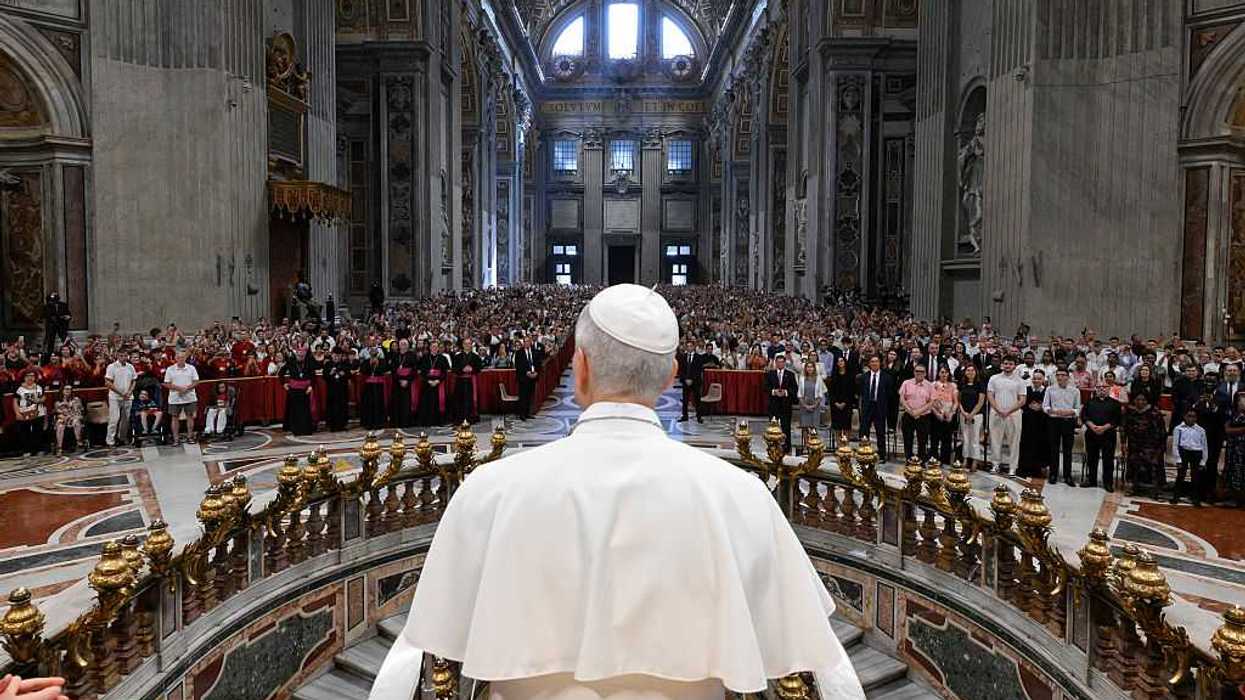
Four hundred years ago this month, Pope Urban VIII consecrated St. Peter's Basilica in Rome. On Nov. 18, Pope Leo XIV marked the anniversary with a special Mass in the basilica, built over the tomb of the apostle whose name gives the building its significance.
While the Archbasilica of Saint John Lateran is for Catholics the highest-ranking church, holding the title "mother and head of all the churches of the City and the World," St. Peter's is critically important — and not just because it is the largest Christian church in the world, an architectural marvel replete with iconic Christian artwork, and the church most closely associated with the papacy.
'That is the truth which he bore witness to together with the Roman martyrs.'
Cardinal Thomas Collins, archbishop emeritus of Toronto, told Blaze News, "St. Peter's basilica is immensely important for Christians because it was built over the tomb of St. Peter. This was true of the original shrine, and then for the ancient basilica that was there for over a thousand years, until in the 1500s the pope ordered it demolished to be replaced by the current basilica, which took many years to complete."
"To this day, the papal altar is directly above the tomb of Peter," continued Cardinal Collins. "It was most significant that before the Mass inaugurating his pontificate, Pope Leo descended below the altar to venerate the tomb of Peter, of whom he is the successor."
RELATED: Pope Leo XIV is following in John Paul II’s footsteps
 Laszlo Szirtesi/Getty Images
One of the readings at the anniversary Mass was Matthew 16:13-19, in which Christ asks his disciples who they say he is. Peter answers, "You are the Messiah, the Son of the living God."
Jesus responds by blessing Simon Peter, declaring that he will build his church upon this rock, and promising him the keys to the kingdom of heaven.
Reflecting on this reading in his homily, Pope Leo XIV said that the basilica, "in each of its elements, serves a single reality: the faith, the faith of Peter, the Catholic faith, our faith. The whole basilica, therefore, echoes the question posed by Christ to his disciples. 'But you, who do you say that I am?'" according to a Vatican media translation.
"Hearing the words of Jesus, we — who come from so many different nations — are taken by the hand of Saint Peter, so that together we may profess the truth that saves: Lord, you are the Christ, the Son of the Living God," continued the pope. "This is the confession of Peter, the Confessio Petri. That is the truth which he bore witness to together with the Roman martyrs; a confession that made the soil of the Vatican Hill fruitful so that it might bear the fruit of holiness throughout the centuries."
"Dearest brothers and sisters, we are that fruit, living stones, a temple of the Holy Spirit, built upon the foundation which is Christ," added the pope.
On Nov. 18, 326, Pope Saint Sylvester I consecrated the first basilica over the burial site of the apostle who was crucified upside-down during the Neronian persecution.
Pope Julius II ordered the original basilica demolished in 1506 to make room for what ultimately became the basilica that Pope Urban VIII consecrated on Nov. 18, 1626 — the basilica that stands today.
In addition to Saint Peter, approximately 90 popes are buried in the basilica and the Vatican Grottoes.
 Dan Kitwood/Getty Images
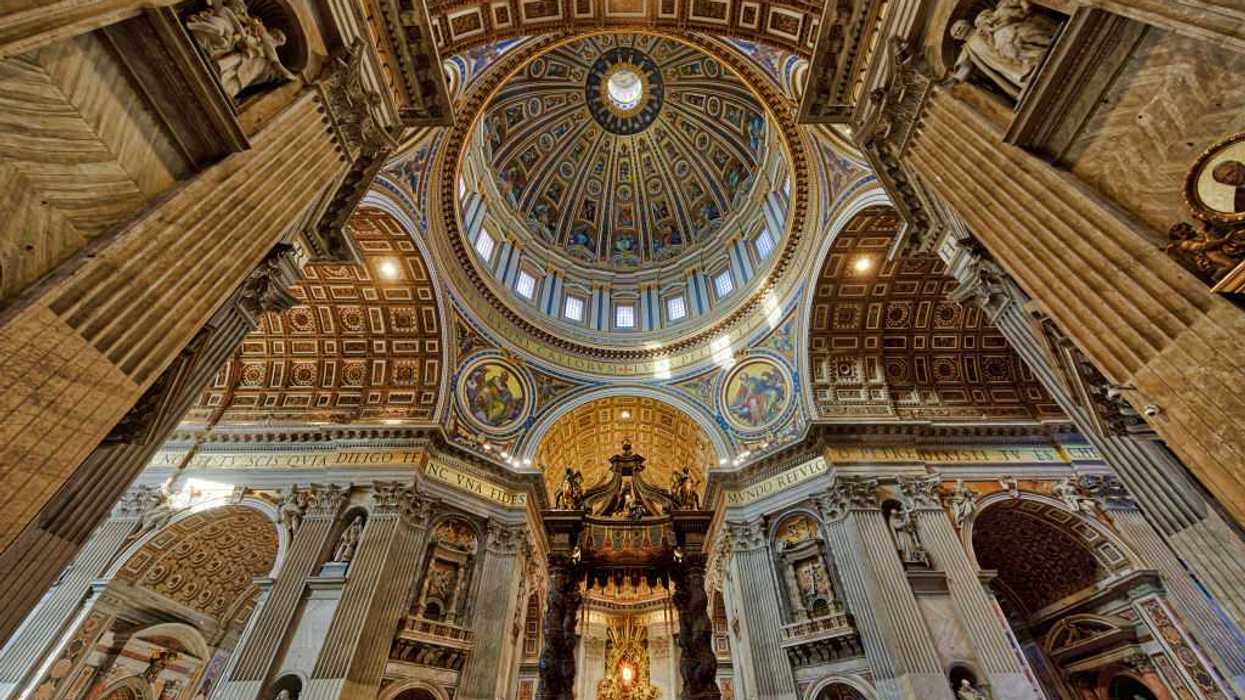
The basilica — the product of over a century of work and the designs of master architects including Bernini, Bramante, Raphael, and Michelangelo — even incorporates stone taken from the Colosseum, as documented in 16th-century construction records. According to Christian tradition, the ancient amphitheater was also a site of martyrdom for early Christians.
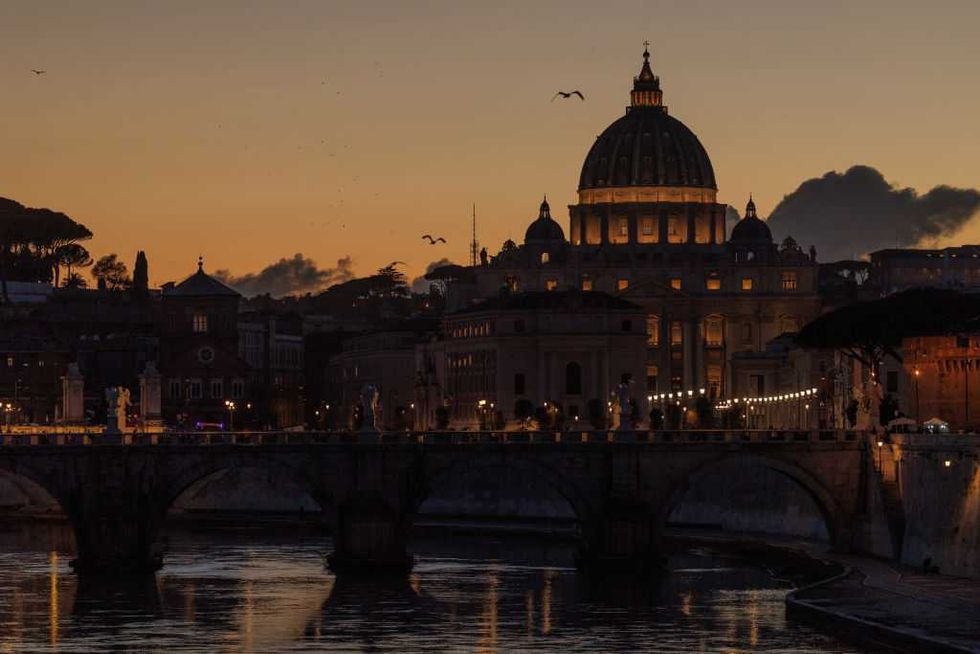
St. Peter's is also the traditional site of 23 royal and imperial coronations, from Charlemagne in 800 to Holy Roman Emperor Frederick III. The basilica is 613.51 feet long, while its dome rises 446.19 feet.
"It is, of course, a masterpiece of art and architecture, containing the Pieta and other astonishing works of art, but even apart from that, it is profoundly important for disciples of Christ because it is the tomb of the apostle to whom Jesus gave the keys of the kingdom and where Peter’s successor presides in charity over the Church," Cardinal Collins told Blaze News.
Pope Leo XIV also described the basilica as "a living testimony to the Church’s continuity of faith, guaranteed by fidelity to the living tradition passed on from the first of the Supreme Pontiffs down to the present day."
Like Blaze News? Bypass the censors, sign up for our newsletters, and get stories like this direct to your inbox. Sign up here!