Torsten Asmus/Getty Images
On Friday, October 13, the FAA issued a rare and ominous warning to ground most flights from coast to coast. The sudden move stirred speculation over the cause, from bad AI to foreign cyberattacks and even connections to the near-24-hour Microsoft global outage. The truth, though, is so simple that it’s silly.
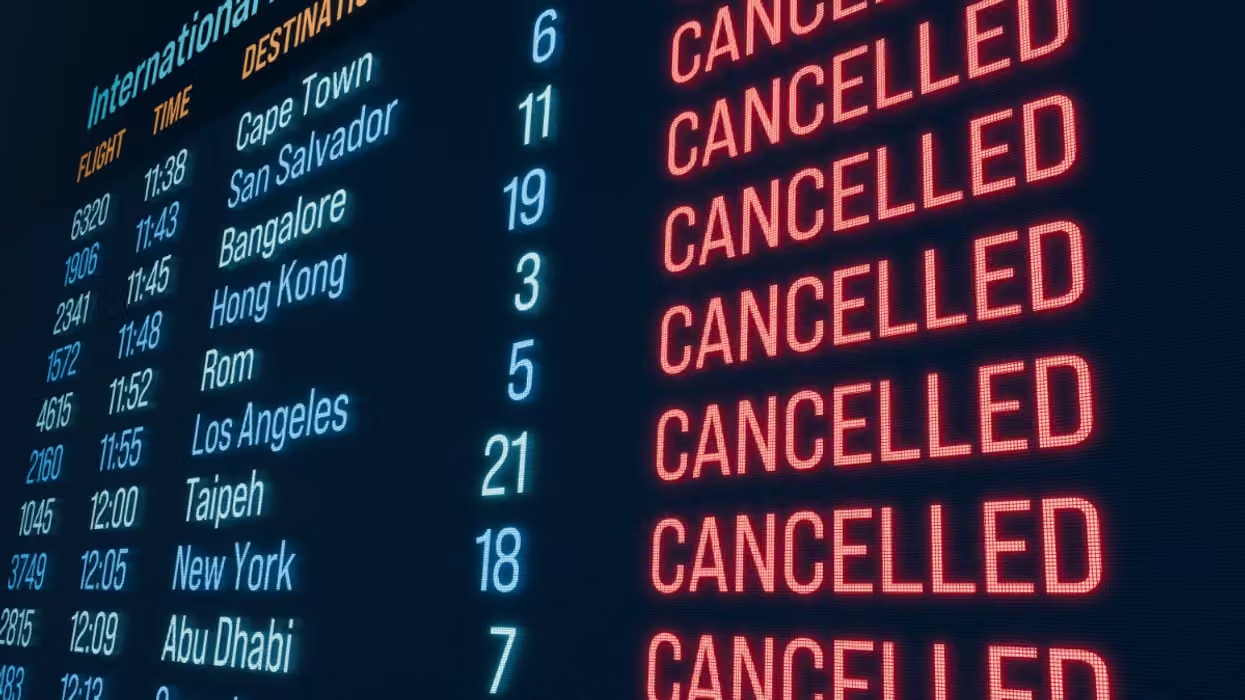
The FAA ground stop was a major event. According to PBS, at least 600 flights were diverted, while 11,000 more flights were at risk of cancellation, stranding an estimated 1.5 million passengers.
'The FAA’s legacy equipment became unstable when data began flooding the FAA FTI network.'
This was only the second time in American history that flights were nationally grounded. The first, of course, happened during the terrorist attacks on September 11, 2001.
The ground stop lasted for a little more than four hours, but flight delays and cancellations continued throughout the weekend. Operations didn’t fully return to normal until Monday.
Users on X quickly started to speculate on what kind of major event could cripple the entire air travel system.
Fox News reported that the Department of Homeland Security wasn’t ruling out a cyberattack as a factor in the ground stop, at least not initially.
Others speculated that the stoppage had something to do with the new AI tools that the FAA recently rolled out, called Strategic Management of Airspace, Routes, and Trajectories, to help manage air traffic.
Some, even somewhat cheekily, tried to draw a correlation between the ground stop and Microsoft’s entire 365 suite failure that took out Outlook, Teams, and other critical Microsoft services for an entire day. Perhaps it caused the failure. Microsoft quickly absolved itself of any blame.
It was none of those, though. According to U.S. Transportation Secretary Sean P. Duffy, the issue stemmed from radar and communications system failures at air traffic control facilities around the nation, prompting the sudden ground stop to ensure the safety of pilots, passengers, and crew members.
Two locations in particular were responsible for the instability: a radar site in Amarillo, Texas, and a radio communications site in El Dorado, Arkansas, which later spread to 17 other air traffic control facilities.
RELATED: White House brings Pete Buttigieg's FAA joke down to Earth with a rainbow reminder
 Mark Makela/Getty Images
The FAA issued a Q&A, stating that “the FAA’s legacy equipment became unstable when data began flooding the FAA FTI network, at a rate of 1,000 connection attempts every 4 to 5 seconds. This disrupted the system and created instability with aircraft communications and radar feeds.”
The cause of the data flood was possibly a new router that was installed at the El Dorado location, in addition to new fiber-optic cables that replaced the old copper cables. Seemingly, the combination of the new upgrades in conjunction with the FAA’s old systems — some of which are 30 years old — created a bottleneck that destabilized communications. Once both locations were isolated from the main system, the network reverted to working order, making it safe for flyers to travel again.
The FAA continues to look into the direct cause of the incident, but officials assure Americans that it’s safe to fly in the United States.
There is currently no reason to believe that the air traffic system was under attack by cybercriminals, foreign or domestic. The FAA also insisted that the network instability had nothing to do with the new AI-powered SMART system that was rolled out to all 22 major U.S. air traffic control centers days prior. Lastly, the FAA noted that none of the newly upgraded equipment failed.
Instead, it appears that the new technology overloaded the old technology in a way that no one saw coming.
To ensure that a major instability event like this doesn’t happen again, the FAA has disabled a broadcasting feature found on the new routers that is believed to have contributed to the initial problems.
Blaze News reached out to the FAA for further clarification on the new fiber-optic cables and routers, whether the same upgrades will be deployed in other air control centers, and what the FAA plans to do to prevent future events. We did not receive a response by the deadline.
Like Blaze News? Bypass the censors, sign up for our newsletters, and get stories like this direct to your inbox. Sign up here!