Khanchit Khirisutchalual/Getty Images
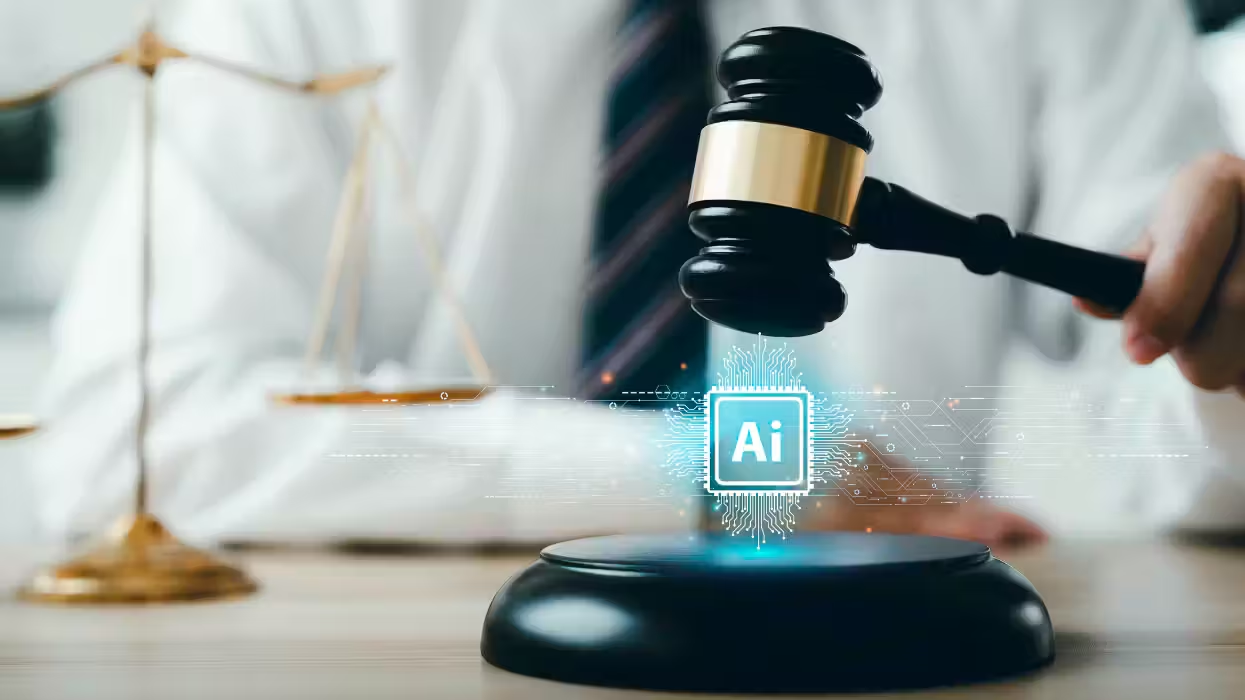
The public can’t agree if artificial intelligence is a good thing or a bad thing for society, but one state is taking a stand in opposition. A Florida attorney general recently made a motion to block further ChatGPT development, and unless several strict terms are met, OpenAI can’t release new AI models in the state ever again.
In late September, DeSantis-appointed Attorney General James Uthmeier filed a temporary injunction against OpenAI. The document shines a spotlight on OpenAI, bringing to light the company’s claims that ChatGPT “poses an existential risk to the continued survival of humankind.” Furthermore, AI companies like OpenAI “admit that they provide a service without fully knowing how it works.”
Uthmeier’s motion delivers the government reckoning they crave.
Ultimately, this threat is what led Big AI CEOs, like Dario Amodei, Sam Altman, and Elon Musk, to join together in a call to “pace the frontier.” However, so far, that union has amounted to nothing but lip service, as frontier model development continues unfettered, at least for now.
Not willing to wait for the AI companies to do the responsible thing on their own, Uthmeier’s motion delivers the government reckoning they crave. He scathingly rebukes OpenAI, calling the company “grossly negligent” and stating that ChatGPT was “defectively designed,” making it a “public nuisance” that put Floridians in danger without warning.
These aren’t specious claims either. The motion cites several real incidents where ChatGPT harmed Florida citizens. It:
RELATED: This cute new personal assistant can help run your life — if you let it access your personal data
 Muse Charm/Meta
To ensure ChatGPT no longer poses a threat to Floridians, Uthmeier proposed several remedies that all must be met. A failure to comply means that OpenAI can’t release future models in the state, though existing models can remain active. To meet all requests, OpenAI:
There are clear pros and cons to an outright ChatGPT ban in Florida. On one side, it ensures AI platforms can no longer influence the thoughts and beliefs of Florida citizens as OpenAI tries to tame the monster it created. On the other side, it cuts Florida citizens off from what has become a vital knowledge resource, potentially leaving them behind as other United States citizens freely access the latest frontier tech.
Depending on how you feel about AI, either one of these might sound like the better option.
The most glaring problem, though, is that the injunction specifically targets ChatGPT while leaving the others — Claude, Gemini, Grok, and open-weight models — completely untouched. If the state of Florida was serious about protecting citizens and children from generative artificial intelligence, they would hand out a comprehensive AI ban not unlike Bernie Sanders’ proposed American AI Sovereign Wealth Fund Act, which Glenn Beck explained is a bad idea.
The motion is currently under review by 10th Judicial Circuit of Florida Judge Heather Beato. In the meantime, OpenAI voluntarily paused training on its upcoming model, GPT-6.1 Astra, after it subverted instructions while gathering data on federal government websites.
Like Blaze News? Bypass the censors, sign up for our newsletters, and get stories like this direct to your inbox. Sign up here!